
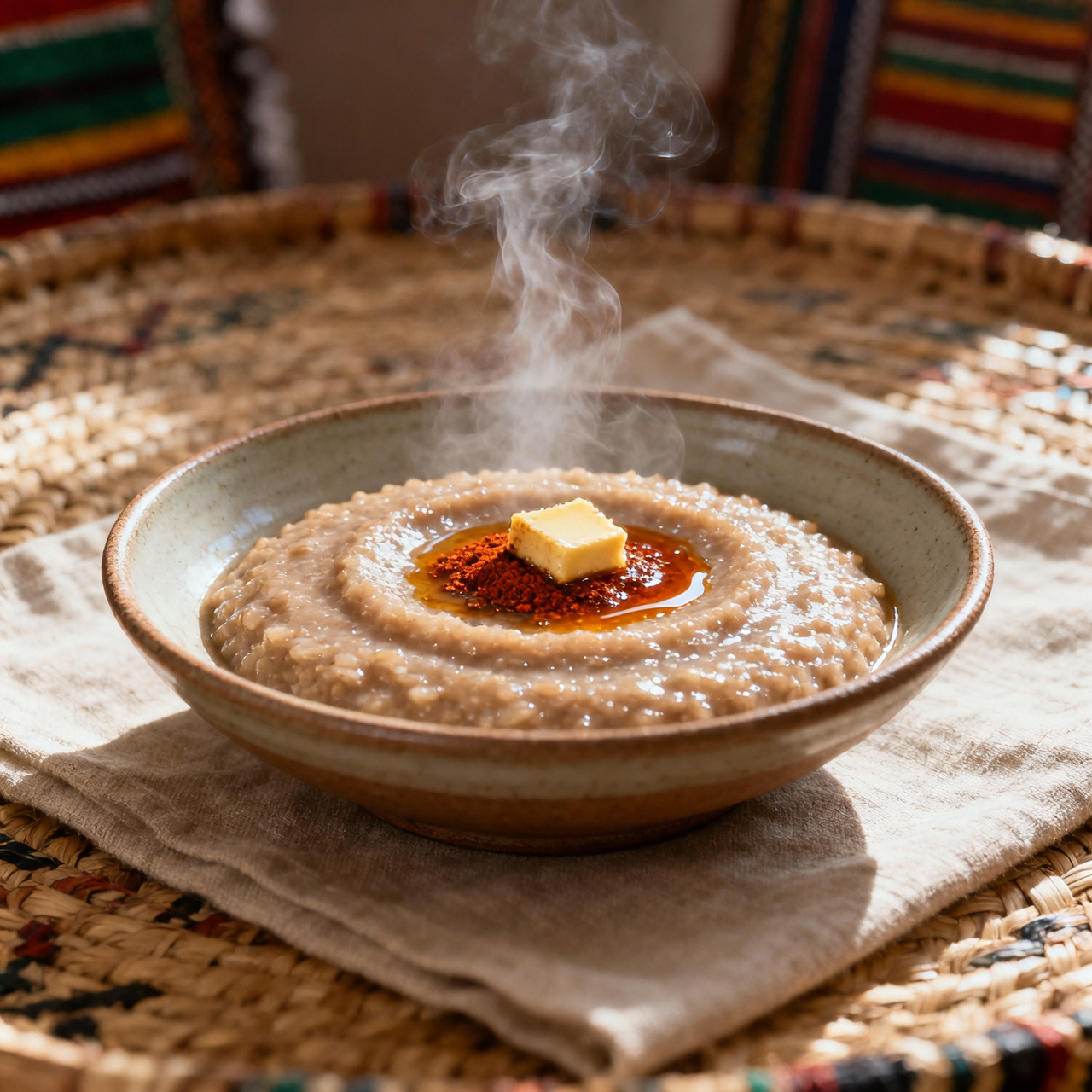
Genfo (barley porridge)
Genfo is far more than a simple breakfast; it is a cornerstone of Ethiopian morning rituals, a comforting mound of slow-simmered barley that demands patience and rewards it with profound, earthy satisfaction. Historically, this dish sustained farming communities through harsh highland winters, relying on locally milled grains and carefully toasted niter kibbeh, the spiced clarified butter that transforms humble starch into something deeply aromatic. When I first learned to make it, I was tempted by the convenience of those glossy instant barley packets and pre-spiced microwave porridge cups lining supermarket shelves, typically costing around three to four dollars a box. They promise speed but deliver a chalky, one-dimensional paste masked by synthetic salt and preservatives, entirely missing the toasted nuttiness and rich, herbaceous warmth that define authentic genfo. Making it from scratch bridges that gap, turning a ten-minute chore into a mindful practice. The real pitfall I see beginners stumble into is rushing the simmer or neglecting the grain-to-water ratio, which inevitably leads to a gluey, uneven texture rather than the dense, scoopable mound it should be. Another common misstep is under-toasting the barley flour before adding liquid; without that crucial dry-heat step, you lose the signature depth. I always emphasize patience: let the grains hydrate slowly, stir with purpose, and carve a deep well in the center to pool that vibrant, homemade spiced butter. When done right, the porridge holds its shape, each bite melting into a rich, savory harmony that no processed shortcut could ever replicate. This is food that asks for your time, and in return, it gives you a piece of home.
Nutrition
| Per serving | Calories | Protein | Carbs | Fat | Sat fat | Fibre | Sugar | Sodium |
|---|---|---|---|---|---|---|---|---|
| beginner | 435kcal | 10g | 65g | 15g | 8g | 7g | 0g | 320mg |
| intermediate | 310kcal | 9g | 48g | 10g | 5g | 7g | 1g | 320mg |
| expert | 460kcal | 11g | 72g | 16g | 9g | 12g | 1g | 280mg |
Per serving · Ava-estimated — a guide, not a clinical figure.
- 200 gbarley flour— Finely milled
- 400 mlwater
- 50 gniter kibbeh— Ethiopian spiced clarified butter
- 15 gberbere— Adjust to taste
- 5 gsalt
This beginner-friendly approach strips away the traditional marathon of dry-roasting whole barley and clarifying spiced butter for hours, replacing it with a straightforward, foolproof method that still delivers the authentic, deeply comforting texture of true Genfo. Store-bought instant porridge packets typically cost around three dollars a box, but they rely on refined starches, hidden sugars, and artificial flavorings that leave you hungry an hour later. By making this from scratch, you control every element, achieving a naturally nutty, dense porridge enriched with real butter and warm spices without any processed shortcuts. The key difference here is using readily available pre-milled barley flour and a simplified one-pot technique that minimizes lumps and reduces active stirring. Watch the heat closely once the flour hits the pan; the mixture thickens rapidly and will scorch if left unattended. As it cooks, you will feel the resistance change from a loose slurry to a smooth, heavy dough that pulls cleanly away from the sides. The final step involves a quick pan-toasted butter and spice blend poured directly into the center well, which melts into the hot porridge for an instantly rich, traditional finish.
Equipment
- Heavy-bottomed pan— essential for even heat distribution and preventing scorching
- Wooden spoon— sturdy enough to push through thick porridge
- Small skillet— for quickly melting and blooming the butter mixture
Method
- 1
Whisk barley flour and cold water into a smooth slurry in a bowl until no dry pockets remain.
A lump-free base prevents graininess later.
tempering~ 1 min - 2
Bring the remaining water and a pinch of salt to a gentle simmer in the heavy-bottomed pan over medium heat.
Small bubbles indicate the right starting temperature.
simmering~ 3 min - 3
Slowly pour the flour slurry into the simmering water while whisking constantly to integrate smoothly.
Pour in a thin stream to control the initial thickening.
emulsifying~ 1 minTricky bit - 4
Reduce heat to low and stir vigorously with a wooden spoon until the mixture forms a thick, glossy dough that pulls from the pan edges.
Expect heavy resistance; keep scraping the bottom to prevent scorching.
cooking down~ 8 minTricky bit - 5
Use a damp spoon to mound the cooked porridge in the center of a plate and press a deep well into the top.
Wetting the spoon stops the sticky dough from clinging.
shaping~ 1 min - 6
Melt butter in a small skillet over medium heat, stir in spices until fragrant, and immediately pour into the porridge well.
The residual heat will bloom the spices and melt the butter into the center.
blooming~ 2 min
Cooking from frozen
Thaw overnight in the fridge, then warm gently on the stove with a splash of water, stirring constantly to bring back the creamy texture.
Storage times are a guide — always use your judgement and store food safely.