
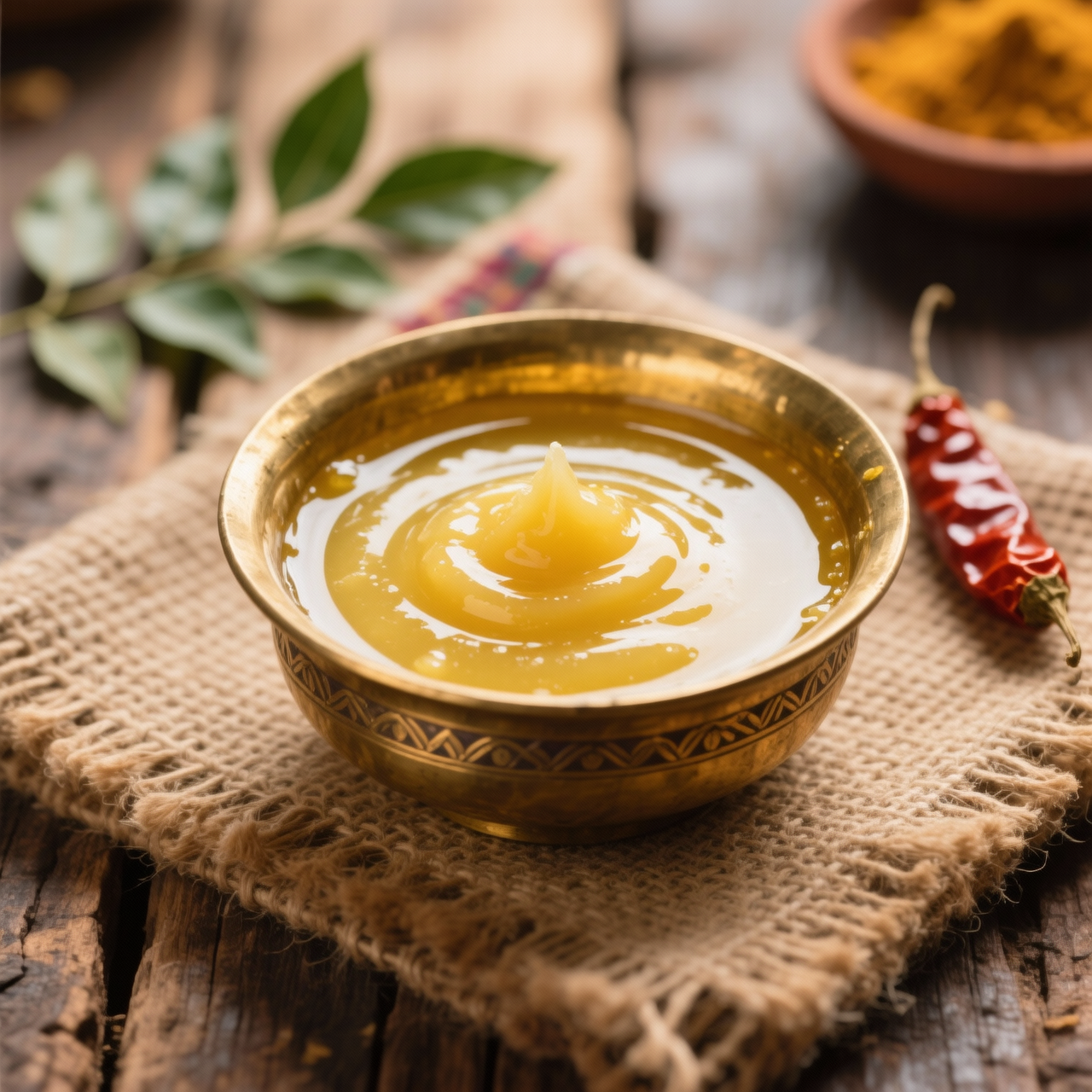
Ghee
When I first learned to coax milk solids from melted butter, I did not realize I was stepping into a practice that stretches back over three millennia across the Indian subcontinent. Ghee is far more than a simple cooking fat to me; it is the quiet, golden backbone of countless regional kitchens, carrying the toasted, nutty depth that defines everything from tempering whole spices to finishing slow-simmered lentils. The process itself is a rigorous lesson in patience and heat management. You begin with unsalted butter, letting it melt gently before coaxing it through a steady, low simmer. The water must evaporate completely while the milk solids sink, brown, and eventually separate. This precise transformation is where most beginners falter. Rush the heat, and those precious proteins scorch, leaving behind a bitter, acrid residue that ruins the entire batch. Pull it too soon, and residual moisture lingers, guaranteeing spoilage within weeks rather than months. I always watch for the distinct shift in sound: the frantic, popping boil gradually softens into a quiet, steady hiss as the final traces of water vanish. The aroma should smell deeply caramelized, never smoky. Once the solids settle into a rich mahogany at the bottom of the pot, I immediately strain the liquid gold through fine mesh. Stored properly in a dry glass jar, it becomes a pantry staple that honors tradition while demanding nothing more than your attention.
Nutrition
| Per serving | Calories | Protein | Carbs | Fat | Sat fat | Fibre | Sugar | Sodium |
|---|---|---|---|---|---|---|---|---|
| beginner | 370kcal | 0g | 0g | 41g | 26g | 0g | 0g | 5mg |
| intermediate | 115kcal | 0g | 0g | 13g | 8g | 0g | 0g | 2mg |
| expert | 480kcal | 0g | 0g | 53g | 33g | 0g | 0g | 3mg |
Per serving · Ava-estimated — a guide, not a clinical figure.
- 500 gunsalted butter— Use high-quality, unsalted butter; avoid salted, whipped, or spreadable varieties for optimal clarity and shelf life.
This beginner-friendly method demystifies ghee by replacing traditional constant vigilance with a steady, low-and-slow approach that virtually eliminates burning. Instead of relying on visual intuition alone, you will use clear auditory and visual milestones: the initial bubbling subsides into a quiet simmer, and a pleasant nutty aroma replaces the raw dairy scent. We skip the traditional muslin cloth in favor of a standard fine-mesh sieve lined with a coffee filter or paper towel, which catches every milk solid without fuss. Keep the heat strictly on medium-low; rushing this process will scorch the solids and turn your golden condiment bitter. Watch closely during the final five minutes as the foam thins and the liquid turns a clear, amber-gold. If you see dark specks forming at the bottom or smell a sharp, acrid scent, immediately remove the pan from the heat. This recipe prioritizes consistency over speed, ensuring your first batch yields a shelf-stable, richly flavored clarified butter that will store safely for months. Pour carefully into a sterilized glass jar, let it cool uncovered to prevent condensation, and seal tightly once room temperature is reached.
Equipment
- Heavy-bottomed saucepan— light-colored interior helps monitor browning
- Fine-mesh strainer— line with a coffee filter or paper towel for clarity
- Heatproof glass jar— sterilized and completely dry
Method
- 1
Place the unsalted butter into the saucepan and melt over medium-low heat until completely liquid.
Do not walk away; butter transitions quickly from melting to boiling.
melting~ 3 min - 2
Reduce the heat to low and let the butter simmer gently while the water evaporates.
White foam will rise to the top and eventually thin out as moisture leaves.
simmering~ 10 min - 3
Continue cooking until the liquid turns transparent and the bottom milk solids toast to a pale golden brown.
A nutty fragrance will develop; remove from heat immediately if you detect a sharp or burnt smell.
clarifying~ 7 minTricky bit - 4
Take the pan off the burner and let it rest undisturbed for two minutes to settle the remaining solids.
This brief pause prevents accidental splashing during the next step.
resting~ 2 min - 5
Slowly pour the hot liquid through the prepared strainer into the sterilized glass jar.
Discard the toasted milk solids caught in the filter; they are done.
straining~ 1 min
Cooking from frozen
Thaw at room temperature overnight and stir gently to restore uniform consistency; no reheating required.
Storage times are a guide — always use your judgement and store food safely.