
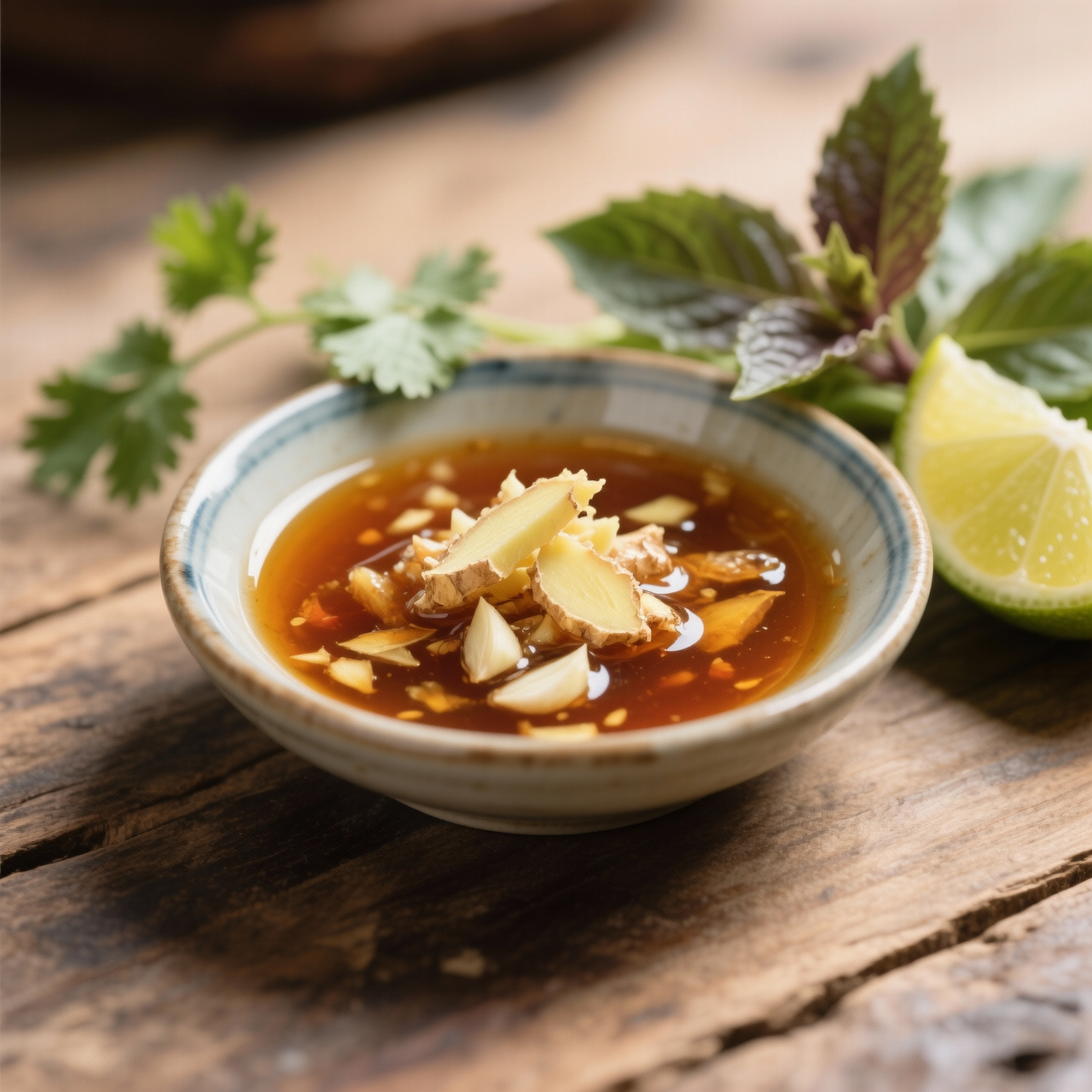
Ginger Fish Sauce (Nuoc Mam Gung)
When I first encountered nước mắm gừng in a bustling Vietnamese kitchen, it struck me as a quiet revelation. This sharp, aromatic dip isn’t meant to stand alone; it exists to elevate roasted poultry, cutting through the rich, fatty skin of duck or chicken with a bright, briny snap. Its origins lie in the practical genius of coastal cooks who understood that fermented anchovy sauce, while deeply savory, needed balance. Fresh ginger brings a peppery warmth that awakens the palate, while citrus and a whisper of sugar round out the harsh edges. What matters most about this condiment is its restraint. It should never overwhelm the main protein but rather act as a luminous counterpoint, a quick-dipped finish that transforms simple roasted meat into something vibrant. Yet, I have watched countless cooks ruin it by overcomplicating the ratios. The most common pitfall is using jarred ginger or low-quality fish sauce, which instantly flattens the profile into a dull, one-dimensional brine. Another frequent mistake is letting the mixture sit too long before serving. Ginger’s volatile oils fade quickly, and the dip loses its signature bite if left to oxidize on the counter. I always insist on freshly peeled, young ginger, lightly bruised to release its juices, and I balance the intense salinity of a premium first-press sauce with just enough lime to make it sing. When done correctly, it becomes a masterclass in equilibrium. That delicate balance is exactly why it has endured across generations, quietly anchoring family tables without ever demanding the spotlight.
Nutrition
| Per serving | Calories | Protein | Carbs | Fat | Sat fat | Fibre | Sugar | Sodium |
|---|---|---|---|---|---|---|---|---|
| beginner | 42kcal | 1g | 9g | 0g | 0g | 0g | 7g | 820mg |
| intermediate | 35kcal | 1g | 7g | 0g | 0g | 1g | 6g | 650mg |
| expert | 42kcal | 1g | 10g | 0g | 0g | 0g | 9g | 820mg |
Per serving · Ava-estimated — a guide, not a clinical figure.
- 120 mlfish sauce— Vietnamese first-extract preferred
- 50 gwhite sugar— Dissolved in warm water before mixing
- 60 mlwater— Warm, for dissolving sugar
- 45 gfresh ginger— Peeled and finely minced or grated
- 30 mllime juice— Freshly squeezed, strained
- 15 ggarlic— Peeled and finely minced
- 10 gbird's eye chili(optional)— Finely sliced, seeds included for extra heat
This beginner-friendly version bypasses the tedious peeling and grating of fresh ginger by relying on a high-quality jarred ginger paste, which delivers consistent flavor without the knife work. The shortcut keeps prep minimal while preserving that essential sharp, aromatic punch. You will gently warm the mixture rather than simmer it for hours, which is crucial because boiling will dull the ginger and make the fish sauce taste metallic. Watch the heat closely and stir constantly to ensure the sugar dissolves evenly without scorching the pan. Once the granules disappear, immediately remove it from the heat before stirring in the acid and chilies; adding lime juice off the heat protects its bright, citrusy character. Taste the cooled liquid before adjusting, as jarred pastes and commercial sauces vary widely in salt and moisture content. If it leans too salty, a pinch of extra sugar or a splash of warm water will rebalance it quickly. Store in a sealed glass container in the refrigerator, where it will thicken slightly and develop a deeper flavor over the first hour.
Equipment
- Small saucepan— non-stick or stainless steel works best for gentle warming
- Measuring spoons— accuracy matters for balancing salt and sweet
- Airtight glass jar— clean and dry before filling
Method
- 1
Combine the fish sauce, sugar, and jarred ginger paste in a small saucepan over medium-low heat.
Stir immediately to prevent the sugar from scorching at the bottom.
dissolving~ 1 min - 2
Heat the mixture gently while stirring constantly until the sugar is fully dissolved and the liquid is just warm.
Do not let it boil, as high heat will dull the ginger's sharp aroma.
tempering~ 2 minTricky bit - 3
Remove the pan from the heat and whisk in the fresh lime juice and thinly sliced chilies.
Adding acid off the heat preserves its bright, citrusy punch.
off-heat incorporation~ 1 min - 4
Allow the sauce to cool completely before funneling it into a clean glass jar.
Seal tightly and refrigerate to let the flavors meld for at least thirty minutes.
resting~ 1 min
Cooking from frozen
Thaw slowly in the refrigerator and whisk vigorously to restore the separated emulsion before serving.
Storage times are a guide — always use your judgement and store food safely.