
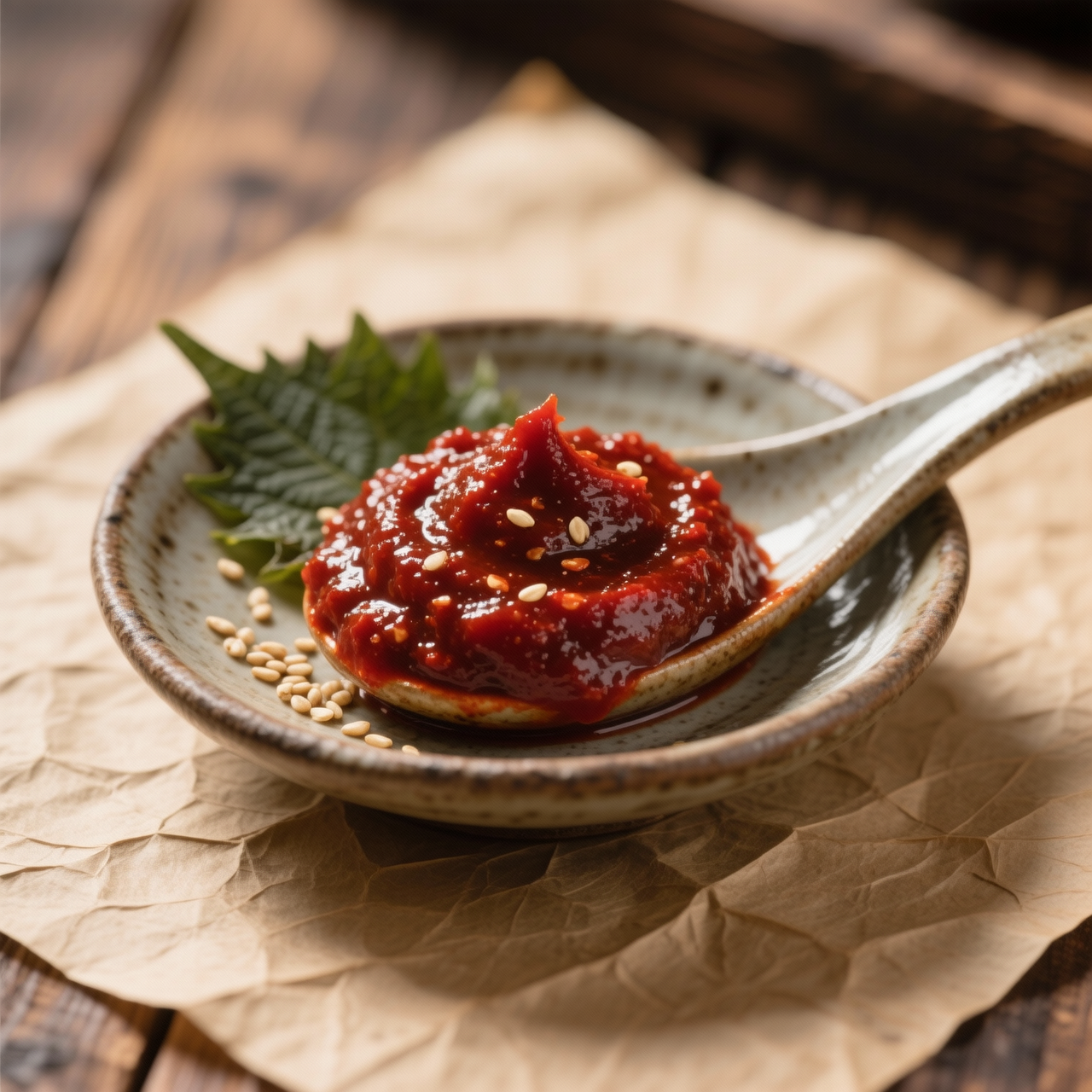
Gochujang (Fermented Chili Paste)
I still remember the first time I lifted the heavy ceramic lid of my grandmother’s jangdokdae, the damp, earthy air of the courtyard wrapping around me like a familiar blanket. That’s where I first met gochujang—not as a condiment in a plastic tub, but as a living, breathing paste slowly transforming under the Korean sun. At its heart, this fermented chili paste is a masterclass in patience and microbial alchemy, born from the Joseon Dynasty’s need to preserve harvests and elevate humble grains. It matters because it is the foundational umami backbone of Korean cooking, bridging the gap between heat and depth in a way that few ingredients can. Yet, modern home cooks often rush the process, treating fermentation as a weekend project rather than a seasonal rhythm. The most common pitfall I see is using the wrong koji or neglecting the moisture balance; too much water invites spoilage, while too little halts the enzymatic breakdown that creates those complex, sweet-savory notes. Another frequent mistake is sealing the crock too tightly during the active fermentation phase, trapping gases that can cause off-flavors or, worse, burst the lid. True gochujang demands a porous earthenware vessel, a careful layer of salt at the rim to deter wild contaminants, and the discipline to let it rest undisturbed for months. When you respect its timeline, the paste deepens into something profoundly resonant—rich, glossy, and alive. I’ve learned that making it at home isn’t just about replicating a flavor; it’s about participating in an ancient, slow-food dialogue. If you’re willing to wait, it will reward you with a jar that outlives the seasons and transforms every dish it touches.
Nutrition
| Per serving | Calories | Protein | Carbs | Fat | Sat fat | Fibre | Sugar | Sodium |
|---|---|---|---|---|---|---|---|---|
| beginner | 180kcal | 3g | 38g | 1g | 0g | 4g | 18g | 850mg |
| intermediate | 185kcal | 7g | 32g | 3g | 1g | 4g | 18g | 1600mg |
| expert | 45kcal | 2g | 7g | 1g | 0g | 1g | 4g | 450mg |
Per serving · Ava-estimated — a guide, not a clinical figure.
- 500 gKorean chili powder (gochugaru)— Use medium-fine grind for traditional texture and color
- 200 gGlutinous rice flour— Sifted to prevent lumps during porridge preparation
- 500 mlFiltered water— Used to cook the rice porridge base
- 200 gFermented soybean paste (doenjang)— Choose a traditional, aged variety with no added preservatives
- 60 gFine sea salt— Non-iodized to support healthy fermentation
- 150 gRice syrup— Provides fermentable sugars and balances heat
This beginner-friendly approach skips the traditional months-long fermentation and complex grain steaming, instead relying on pre-toasted glutinous rice flour and a quick warm-ferment method to develop deep, savory flavor in just a few days. By using high-quality store-bought gochugaru and a simple rice syrup sweetener, you eliminate the guesswork of balancing umami and heat while still capturing the soulful, funky essence of authentic gochujang. The key to success here is patience and consistency: mix your ingredients thoroughly in a sterilized glass jar, then keep it in a warm, dark spot. Each day, give it a vigorous stir with a clean spoon to introduce oxygen and prevent surface mold. Watch closely for a deep mahogany color to develop and a thick, glossy consistency that clings to the spoon. If you notice any white spots, simply skim them off immediately. Taste after three days; the paste should be sweet, spicy, and pleasantly tangy. Once it reaches your preferred flavor intensity, move it to the refrigerator to halt fermentation. This method guarantees a confident, foolproof first batch that serves as a reliable pantry staple for all your Korean cooking adventures.
Equipment
- Glass fermentation jar— 1-quart capacity with airtight lid
- Non-reactive mixing bowl— glass or stainless steel works best
- Digital kitchen scale— essential for accurate ratios
- Silicone spatula(optional)— for scraping every last drop
Method
- 1
Sterilize your glass jar and all mixing utensils thoroughly.
Run through dishwasher cycle or boil for ten minutes; dry completely to prevent unwanted bacteria.
sanitizing~ 2 min - 2
Combine glutinous rice flour, fine gochugaru, and sea salt in a large bowl.
Whisk until the mixture is uniformly colored and completely lump-free.
dry mixing~ 1 min - 3
Gradually pour in brown rice syrup and filtered water while whisking constantly.
Add liquids in thirds to easily control final paste thickness.
emulsifying~ 3 min - 4
Transfer the smooth mixture directly into your prepared jar and seal tightly.
Leave exactly one inch of headspace to safely accommodate fermentation gases.
packing~ 1 min - 5
Store the sealed jar in a warm, dark cupboard and stir vigorously once daily.
Scrape down the sides to introduce oxygen and prevent surface mold formation.
daily aeration~ 5 minTricky bit - 6
Move the finished paste to the refrigerator once it darkens and smells tangy.
Cold temperatures immediately halt fermentation and preserve flavor stability.
cold resting~ 1 min
Cooking from frozen
Thaw overnight in the refrigerator and stir vigorously to restore its original smooth consistency.
Storage times are a guide — always use your judgement and store food safely.