
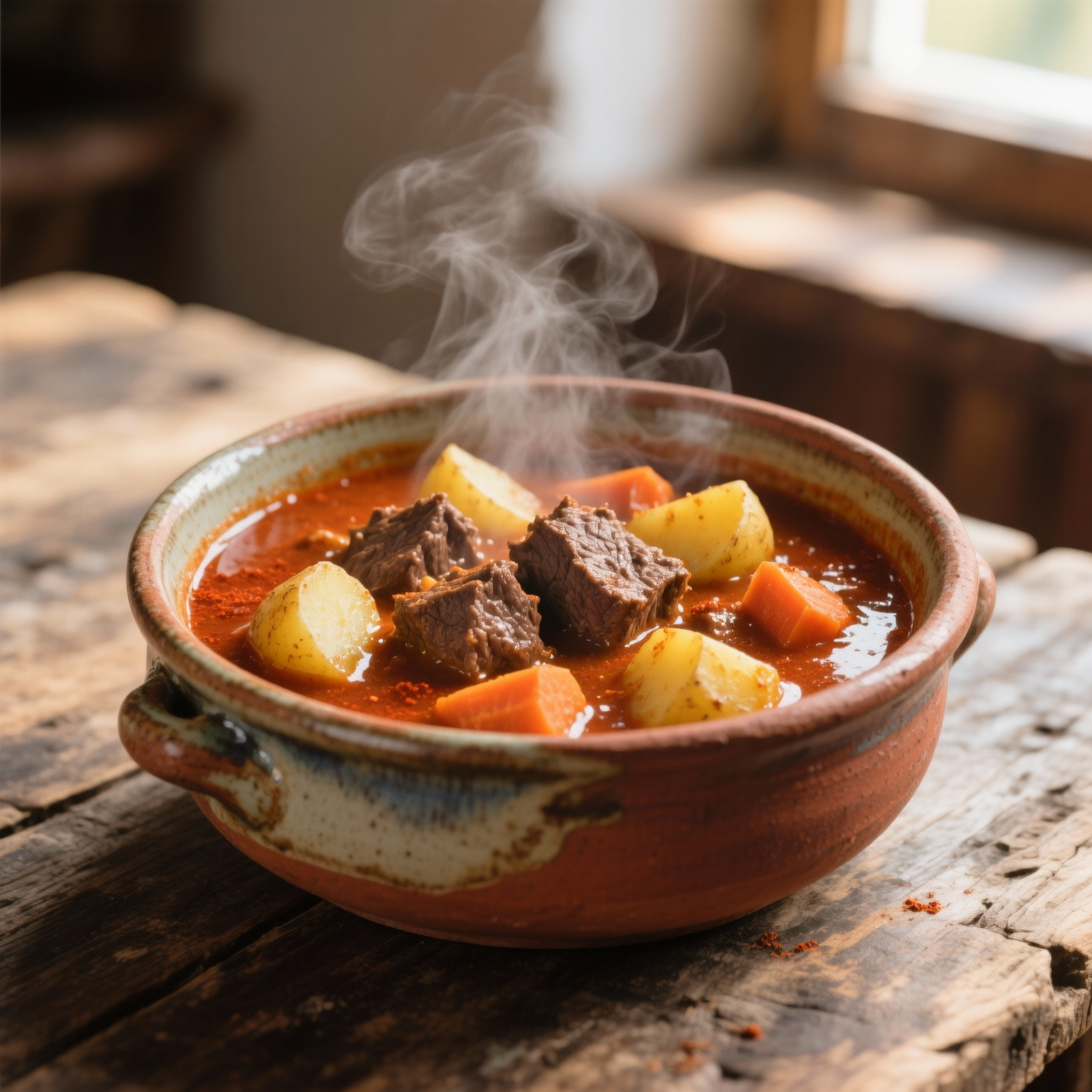
Goulash
When I first stood in a Budapest kitchen, watching paprika bloom in rendered beef fat, I understood that goulash is less a dish and more a testament to Hungarian endurance. Born on the vast Alföld plains, it began as a humble herders’ stew, slow-cooked in iron kettles over open fires, where tough cuts of beef transformed through patience and the quiet magic of sweet Hungarian paprika. To me, this recipe matters because it captures the soul of a culture that has always known how to coax profound comfort from scarcity. It’s a dish that demands respect for its roots, refusing to be rushed or diluted by shortcuts. Yet, I see it mishandled far too often. The most common pitfall is treating it like a thick, tomato-heavy American casserole rather than a brothy, deeply aromatic stew. Authentic goulash should never rely on flour for thickening, nor should it drown in canned tomatoes that mask the delicate sweetness of properly toasted paprika. Another frequent mistake is using lean, quick-cooking beef that turns to string under the long, gentle simmer required for true tenderness. I always insist on well-marbled chuck or shoulder, seared hard before surrendering to hours of low heat. The onions must melt completely into the broth, and the paprika must be added off direct flame to avoid bitterness. When you honor these rhythms, the pot yields a fragrant, soul-warming broth that tastes of open skies and centuries of tradition. It’s not just dinner; it’s a quiet lesson in patience, provenance, and the beauty of letting time do the heavy lifting.
Nutrition
| Per serving | Calories | Protein | Carbs | Fat | Sat fat | Fibre | Sugar | Sodium |
|---|---|---|---|---|---|---|---|---|
| beginner | 758kcal | 43g | 39g | 48g | 19g | 8g | 10g | 1500mg |
| intermediate | 758kcal | 43g | 39g | 48g | 19g | 8g | 10g | 1500mg |
| expert | 758kcal | 43g | 39g | 48g | 19g | 8g | 10g | 1500mg |
Per serving · Ava-estimated — a guide, not a clinical figure.
- 800 gbeef chuck— cut into 3cm cubes, well-marbled
- 4 mediumyellow onion— finely diced
- 3 tbspsweet paprika— Hungarian type
- 0.5 tsphot paprika— adjust to heat preference
- 3 wholegarlic clove— minced fresh
- 1 tspcaraway seed— whole
- 2 tbsptomato paste— double-concentrated
- 1.5 lbeef bone broth— preferably homemade
- 2 tbsplard— rendered
- 2 mediumrusset potato— peeled and cubed
- 2 mediumcarrot— sliced into rounds
- 1 largered bell pepper— seeded and chopped
- 1 tspsea salt— coarse
- 0.5 tspblack peppercorn— freshly cracked
This version is designed for your first confident attempt. We streamline the process by allowing you to use a high-quality jarred paprika spice blend and pre-diced vegetables if needed, which removes the intimidation of timing and measuring multiple spices. The goal here is to learn the foundational rhythm of blooming paprika in fat without burning it, then letting the broth carry everything together. Watch the heat closely during the initial spice addition; medium-low is your friend, and the pan should never smoke. If the mixture looks too dry, add a splash of water immediately to prevent bitterness. You will notice the beef softening quickly because the shorter cook time relies on tender chuck cuts and consistent simmering rather than slow breakdown. Stir gently to keep the potatoes intact, and taste before adding extra salt, as the broth already contains seasoning. By the time the vegetables yield to a fork, you will have a deeply comforting, paprika-forward pot that proves you can master Hungarian flavors without complex techniques. This is your safe entry point, built for reliability and immediate satisfaction.
Equipment
- heavy-bottomed pot— stainless steel or enameled
- wooden spoon— for gentle stirring
- measuring spoons— standard set
Method
- 1
Heat lard in a heavy-bottomed pot over medium heat until shimmering.
Oil should ripple but not smoke.
rendering~ 1 min - 2
Add diced onions and cook until soft and translucent.
Stir frequently to prevent sticking.
sweating~ 5 min - 3
Stir in paprika blend, garlic, and tomato paste for one minute.
Keep heat at medium-low to avoid burning.
blooming~ 1 minTricky bit - 4
Add beef cubes and sear lightly on all sides.
Do not overcrowd the pan.
searing~ 4 min - 5
Pour in broth and bring to a gentle simmer.
Cover partially with a lid.
simmering~ 30 min - 6
Add potatoes, carrots, and bell peppers, then cook until tender.
Pierce potatoes with a fork to test doneness.
braising~ 20 min