
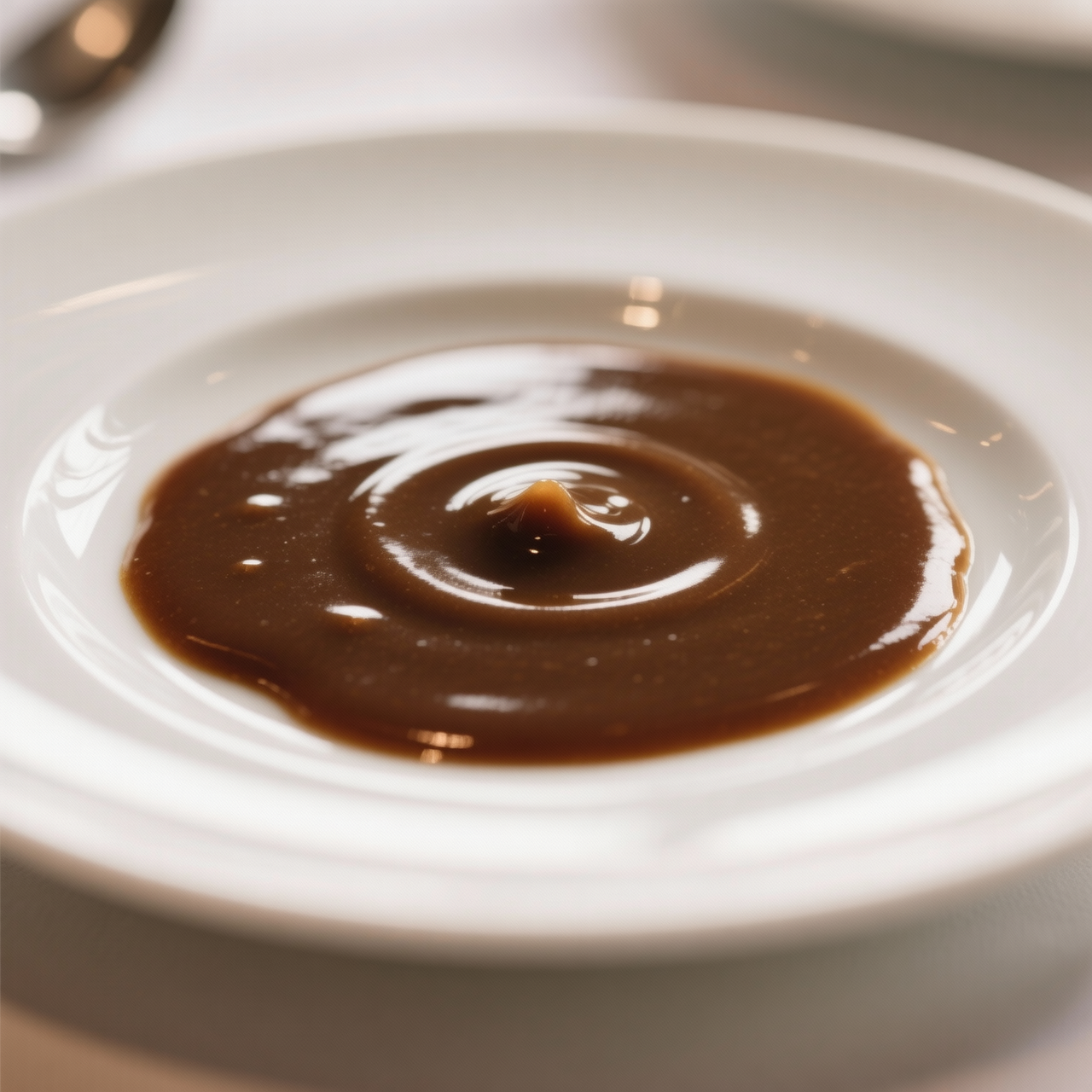
Gravy
As Ava, I look at gravy not just as a condiment, but as the soul of a meal. While its exact origins are tangled in the culinary histories of countless cultures—from the rich jus of French haute cuisine to the humble pan drippings of British Sunday roasts and American holiday tables—the core philosophy remains universal. Gravy is the beautiful alchemy of transforming the caramelized remnants of cooking into a luxurious, unifying sauce. I insist on using real, homemade or high-quality store-bought stock, completely bypassing those dusty bouillon granules that only yield a salty, one-dimensional paste. Since we are keeping this beef-free, a deeply roasted poultry or rich mushroom and vegetable stock provides the perfect umami foundation. The most common pitfall I see home cooks fall into is rushing the roux or failing to properly deglaze the pan. If you do not scrape up those fond bits, you lose the very essence of the dish. Another mistake is adding the stock too quickly, which leads to a lumpy, broken texture rather than a silky, glossy finish. Remember to whisk constantly and let it simmer gently to cook out the raw flour taste. Because a truly great gravy is a batch hero, I always make a large pot. It freezes beautifully in portioned containers, ensuring you have liquid gold ready to elevate weeknight mashed potatoes, biscuits, or roasted vegetables without starting from scratch. It is the ultimate culinary safety net, turning the ordinary into something deeply comforting and profoundly delicious.
Nutrition
| Per serving | Calories | Protein | Carbs | Fat | Sat fat | Fibre | Sugar | Sodium |
|---|---|---|---|---|---|---|---|---|
| beginner | 260kcal | 2g | 15g | 21g | 13g | 0g | 1g | 650mg |
| intermediate | 155kcal | 4g | 15g | 9g | 5g | 2g | 4g | 620mg |
| expert | 115kcal | 2g | 8g | 9g | 5g | 1g | 2g | 420mg |
Per serving · Ava-estimated — a guide, not a clinical figure.
- 60 gunsalted butter— softened
- 60 gall-purpose flour
- 1000 mlchicken stock— unsalted, real liquid stock without granules or bouillon
- 2 gblack pepper— freshly ground
- 5 gsalt— fine
This beginner-friendly version focuses on building your confidence with a classic pan gravy by using a high-quality jarred stock paste to simulate a rich, slow-simmered real stock without the hours of roasting bones. We strictly avoid dry granules, relying instead on a savory paste dissolved in hot water to create a deeply flavorful, authentic liquid base. The technique relies on a simple butter and flour roux, and we will carefully hand-hold you through the whisking process to completely prevent lumps. Watch the heat closely when adding the liquid; a gentle, steady simmer is all you need to properly thicken the gravy without breaking the emulsion or scorching the bottom. This straightforward approach guarantees a smooth, glossy finish every single time, making it a foolproof staple for your weeknight roasts or mashed potatoes. Because it is a batch hero, make a double batch and freeze the extras in silicone molds for instant future meal upgrades.
Equipment
- Heavy-bottomed saucepan— Stainless steel or non-stick both work well
- Whisk— A balloon whisk is best for preventing lumps
Method
- 1
Melt the butter in the saucepan over medium heat until fully liquid and bubbling.
Do not let the butter brown or burn.
melting~ 1 min - 2
Whisk the flour into the melted butter and cook until the mixture is bubbly and pale golden.
Cook for at least two minutes to remove the raw flour taste.
roux~ 2 min - 3
Slowly pour in the hot stock mixture while whisking constantly and vigorously.
Add the liquid in three separate additions to guarantee a completely lump-free texture.
whisking~ 2 minTricky bit - 4
Bring the gravy to a gentle simmer and cook until it thickens enough to coat the back of a spoon.
Keep the heat at medium-low to prevent scorching as it thickens.
simmering~ 5 min
Cooking from frozen
Thaw overnight in the fridge and reheat gently in a saucepan, whisking vigorously to re-emulsify.
Storage times are a guide — always use your judgement and store food safely.