
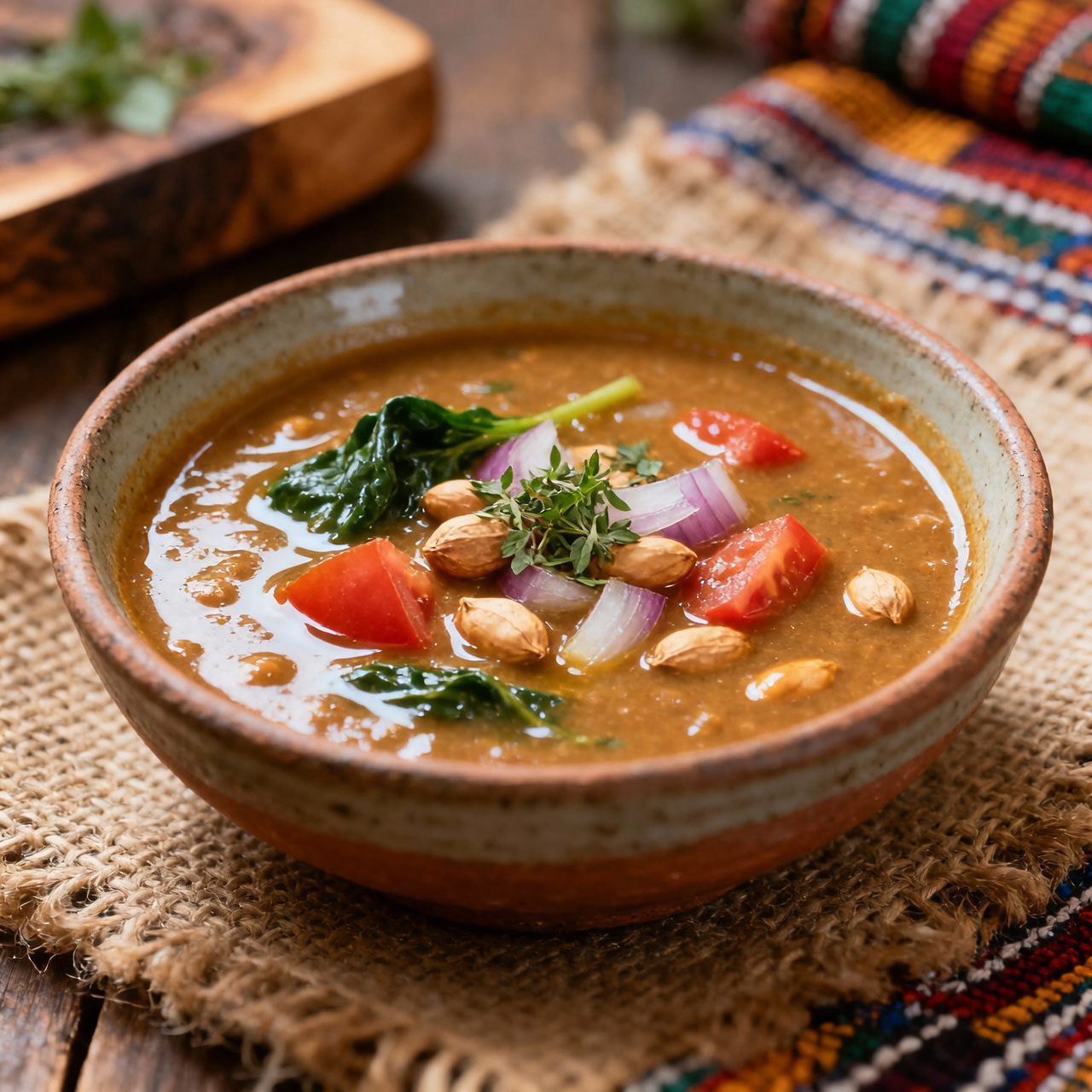
Groundnut (peanut) soup base
When I first learned to coax the deep, earthy richness out of roasted groundnuts, I quickly understood why this sauce forms the backbone of so many West African kitchens. Its roots stretch across the Sahel, but it truly crystallized in Senegal as the foundational paste for maafe, a dish born from the agricultural boom of peanuts in the nineteenth century. To me, mastering this base isn’t just about technique; it’s about honoring a culinary tradition that turns humble, affordable legumes into profound comfort food. It bridges generations, offering a velvety canvas for vegetables, greens, and spices without relying on heavy creams or animal fats. Yet, I’ve watched countless cooks stumble over the same pitfalls. The most common is rushing the roasting process, which leaves the peanuts raw and astringent, or worse, scorching them into bitterness. Another frequent misstep is failing to properly emulsify the paste with liquid too quickly, resulting in a greasy, separated sauce rather than a smooth, cohesive base. Patience is the true secret ingredient here. You must grind the roasted nuts slowly, allowing their natural oils to release and bind with the water or broth before introducing heat. I always remind myself that this base demands respect for its texture and temperature. When done correctly, it becomes a deeply aromatic, nutty foundation that transforms simple ingredients into something extraordinary. It’s a reminder that some of the world’s most enduring flavors emerge not from complexity, but from careful attention to a few essential elements.
Nutrition
| Per serving | Calories | Protein | Carbs | Fat | Sat fat | Fibre | Sugar | Sodium |
|---|---|---|---|---|---|---|---|---|
| beginner | 380kcal | 14g | 16g | 30g | 6g | 5g | 7g | 520mg |
| intermediate | 365kcal | 13g | 11g | 29g | 4g | 4g | 5g | 380mg |
| expert | 490kcal | 19g | 26g | 38g | 6g | 8g | 8g | 620mg |
Per serving · Ava-estimated — a guide, not a clinical figure.
- 300 graw peanut— Unsalted and skinless, to be dry-roasted until fragrant before grinding
- 500 mlwater— Warm water helps achieve a smooth emulsion
- 30 gtomato paste— Pure, unsweetened concentrate
- 150 gyellow onion— Peeled and finely diced or grated
- 15 gfresh ginger— Peeled and minced
- 10 ggarlic clove— Crushed or finely minced
- 30 mlvegetable oil— Neutral oil for sautéing aromatics
- 5 gfine sea salt— To be adjusted later when adding stock or vegetables
This beginner-friendly version streamlines the classic West African groundnut soup base by leveraging high-quality jarred roasted peanut paste, eliminating the labor-intensive roasting and grinding steps. Designed for your first confident attempt, it prioritizes approachable techniques and clear visual cues over traditional complexity. You will start by gently sweating onions and garlic until translucent, then bloom a small amount of tomato paste to build a rich, savory foundation. The key moment is incorporating the peanut paste: whisk it continuously into warm vegetable broth to prevent clumping, creating a silky, uniform emulsion without the need for heavy equipment. Keep the heat at a gentle simmer rather than a rolling boil to protect the natural oils and avoid scorching. Watch closely as the sauce thickens; it should coat the back of a spoon like a light custard. If it becomes too dense, simply stir in a splash of water or broth. This forgiving method guarantees a deeply nutty, aromatic base ready for vegetables, greens, or grains. Once mastered, you can easily adjust spice levels or swap in different broths. Store leftovers in airtight containers for quick weeknight meals, knowing the foundation is consistently balanced and reliably delicious.
Equipment
- Heavy-bottomed pot— A Dutch oven or medium saucepan works best
- Whisk— Essential for smooth emulsion
- Measuring cups and spoons— For consistent ratios
- Airtight storage containers(optional)— For freezing extra portions
Method
- 1
Heat the oil in a heavy-bottomed pot over medium heat and sauté the diced onion until soft and translucent.
Listen for a gentle sizzle, not a harsh crackle.
sweating~ 5 min - 2
Stir in the tomato paste and cook until it darkens slightly and releases its natural sugars.
Keep it moving to prevent burning.
blooming~ 2 min - 3
Gradually whisk the jarred peanut paste into the warm broth, ensuring it dissolves completely without forming lumps.
Add broth slowly if the mixture seizes.
emulsifying~ 3 minTricky bit - 4
Reduce the heat to low, add your chosen spices and salt, and let the mixture simmer uncovered until it thickens.
Target a heavy cream consistency.
reducing~ 15 min - 5
Taste and adjust the seasoning with a pinch of salt or a squeeze of lemon, then transfer to containers if not using immediately.
Acidity brightens the heavy peanut flavor.
balancing~ 2 min
Cooking from frozen
Thaw overnight in the refrigerator and gently reheat with a splash of water or vegetable broth, stirring constantly until smooth.
Storage times are a guide — always use your judgement and store food safely.