
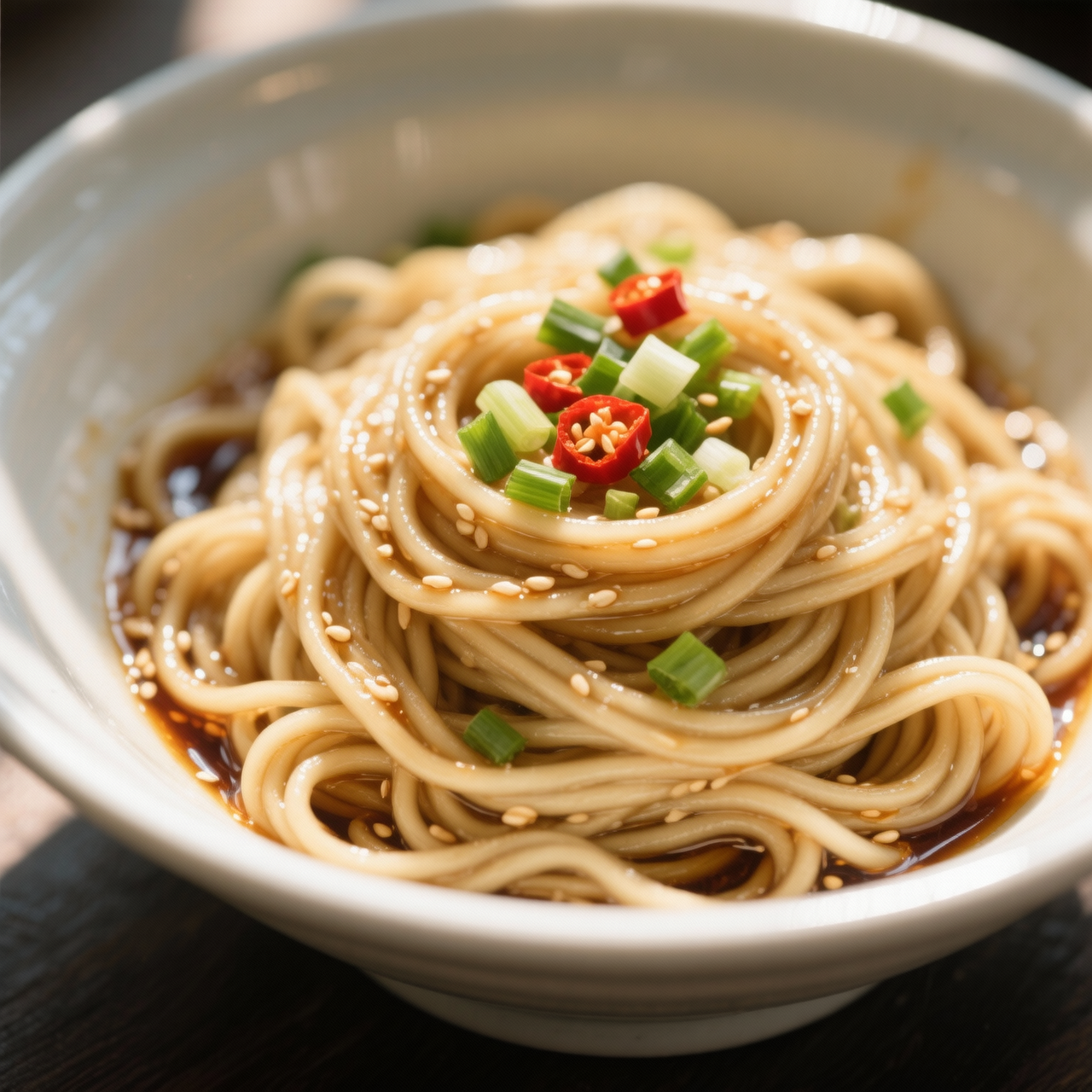
Hand-Pulled Noodles (La Mian)
I still remember the exact moment I decided to stop buying those glossy, shrink-wrapped blocks of instant noodles. They usually cost around two dollars a packet, but the trade-off is staggering: a chemical aftertaste, a texture that turns to mush the moment it meets boiling water, and a sodium load that leaves you feeling hollow rather than nourished. True hand-pulled noodles, or la mian, are an entirely different proposition. Born on the dusty streets of Lanzhou in northwestern China over a millennium ago, this craft transforms nothing more than flour, water, and salt into something profoundly alive. The magic lies in the resting and folding, where gluten strands align and multiply, allowing the dough to stretch into impossibly long ribbons without snapping. When you make them from scratch, you’re not just cooking; you’re participating in a quiet, rhythmic tradition that prioritizes patience over convenience. The most common pitfall for beginners is rushing the hydration and resting phases. If the dough feels tight or springs back aggressively, it hasn’t relaxed enough. You must give it time to surrender to gravity. Overworking the surface with too much dry flour during the pull will also ruin the elasticity, turning your noodles into brittle threads. Another frequent mistake is using water that’s too cold or too hot; lukewarm is the sweet spot for developing the right protein matrix. When you finally toss your freshly boiled strands into a simple broth, the difference is undeniable: chewy, resilient, and deeply satisfying in a way no factory-pressed block could ever mimic. It costs a fraction of the price of the dried stuff, and it feeds your hands and soul equally.
Nutrition
| Per serving | Calories | Protein | Carbs | Fat | Sat fat | Fibre | Sugar | Sodium |
|---|---|---|---|---|---|---|---|---|
| beginner | 450kcal | 14g | 82g | 5g | 1g | 3g | 0g | 420mg |
| intermediate | 410kcal | 12g | 75g | 6g | 1g | 3g | 1g | 480mg |
| expert | 405kcal | 12g | 76g | 3g | 0g | 3g | 0g | 460mg |
Per serving · Ava-estimated — a guide, not a clinical figure.
- 300 gbread flour— High-protein flour ensures sufficient gluten elasticity for pulling
- 150 mlwater— Room temperature, adjust slightly based on humidity and flour absorption
- 4 gsalt— Strengthens the gluten network and improves dough texture
- 2 gbaking soda— Dissolved in the water beforehand to provide alkaline texture similar to traditional kansui
- 20 mlvegetable oil— Neutral oil used for coating dough during resting to prevent drying
Store-bought dried noodle packets typically cost around one dollar per serving but rely heavily on refined wheat flour, artificial alkaline salts, and preservative coatings that leave them mushy and overly salty. This beginner-friendly from-scratch version strips away the industrial shortcuts while keeping the technique forgiving and rewarding. Instead of complex alkaline solutions or repeated stretching drills, we rely on a long, undisturbed rest and a simple fold-and-stretch method that guarantees the right gluten development every time. The dough is mixed, kneaded briefly, and divided into manageable portions that rest under oil to prevent drying. You will watch for a smooth, pliable surface that springs back slowly when pressed, which indicates the gluten is relaxed enough for pulling. When it is time to cook, the fresh strands hit boiling water for just a minute or two, yielding a satisfyingly chewy bite that commercial packets simply cannot replicate. Focus on gentle, steady tension rather than rapid pulling, and keep your workspace lightly oiled. With minimal equipment and straightforward timing, you will master a restaurant staple using only flour, water, and salt, completely bypassing the artificial aftertaste and nutritional compromises of supermarket alternatives.
Equipment
- Large mixing bowl— glass or stainless steel works best
- Heavy-bottomed pot— at least 4-quart capacity
- Rolling pin— standard wooden or silicone
- Bench scraper(optional)— helps divide dough cleanly
Method
- 1
Combine bread flour, fine sea salt, and lukewarm water in a large bowl until a shaggy mass forms.
Water should feel warm to the touch, not hot.
hydration~ 2 min - 2
Turn the dough onto a clean surface and knead firmly until it becomes smooth and uniform.
Push away with your heel, fold back, and rotate.
kneading~ 10 min - 3
Coat the dough ball lightly with neutral oil, wrap tightly in cling film, and let it rest at room temperature.
Resting relaxes gluten and makes pulling effortless.
resting~ 45 min - 4
Divide the rested dough into four equal portions and coat each piece thoroughly in oil.
Use your hands to ensure no dry patches remain.
portioning~ 2 min - 5
Flatten one portion with a rolling pin into a thick oval and let it sit undisturbed for five minutes.
This mini-rest prevents the dough from snapping back.
rolling~ 5 min - 6
Grasp the dough edges and gently stretch outward while tapping the center against the counter to lengthen the strands.
Use steady, even pressure rather than sudden yanks.
stretching~ 3 minTricky bit - 7
Fold the stretched dough in half and repeat the gentle stretching motion two more times to multiply the strands.
Each fold doubles the noodle count.
folding~ 2 min - 8
Drop the freshly pulled noodles directly into rapidly boiling water and cook until they rise to the surface.
Stir immediately to prevent sticking.
boiling~ 2 min - 9
Drain the cooked noodles immediately and rinse briefly under cool tap water to stop the cooking process.
Rinsing locks in the signature chew.
shocking~ 1 min
Cooking from frozen
Thaw overnight in the refrigerator, then plunge directly into boiling water for sixty seconds to revive the chew.
Storage times are a guide — always use your judgement and store food safely.