
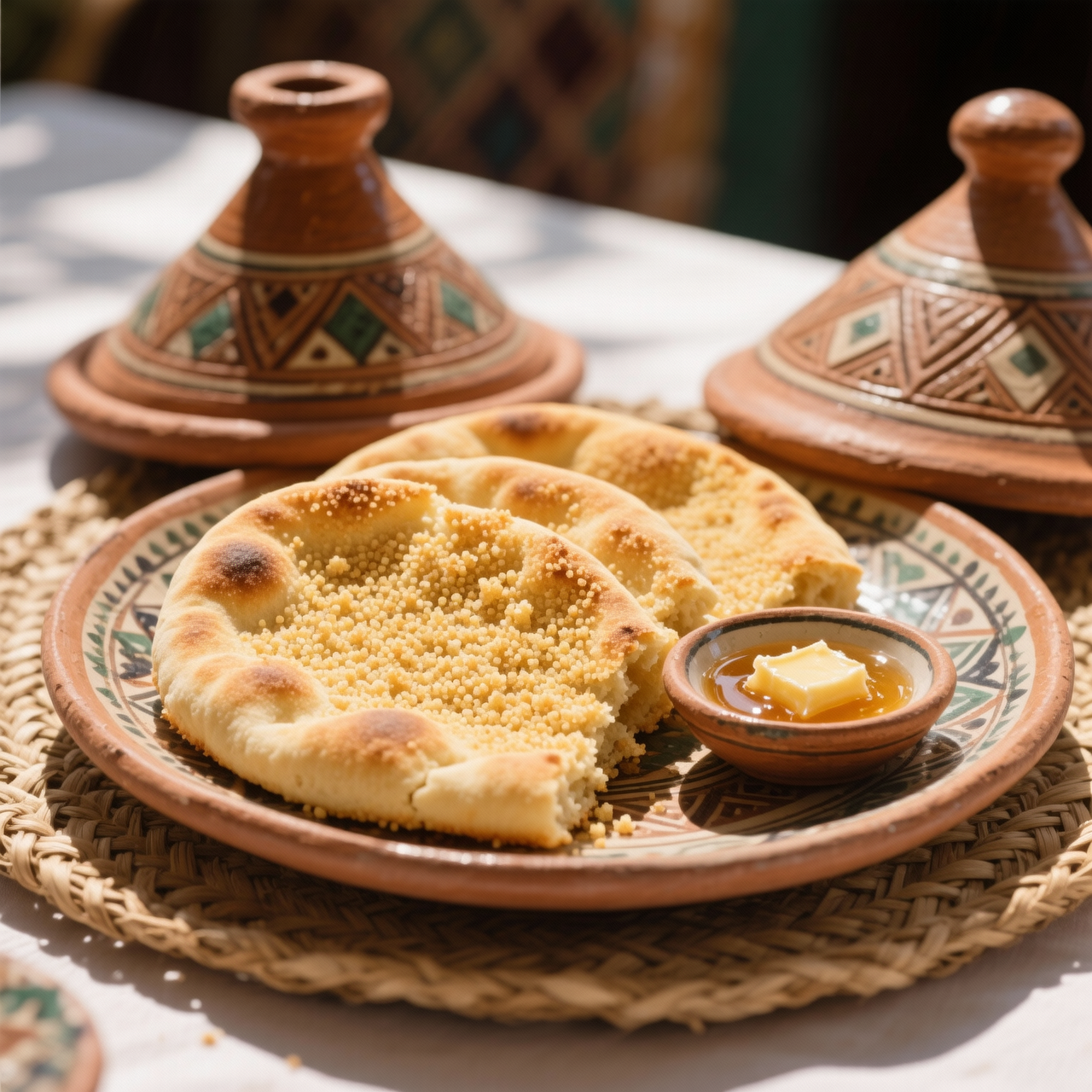
Harcha (semolina griddle bread)
I first fell in love with harcha in a bustling Marrakech medina stall, where thick, golden semolina cakes sizzled on cast iron, their crumbly exteriors giving way to a soft, buttery interior. Traditionally a Moroccan breakfast staple, this pan-fried bread bridges the gap between couscous and flatbread, relying on nothing more than coarse semolina, butter, milk, and a touch of leavening. Making it from scratch isn’t just about tradition; it’s a quiet rebellion against the supermarket aisle’s dry, preservative-laden semolina loaves that cost nearly twice as much as the raw ingredients yet deliver a cardboard texture and a chemical aftertaste. When you make harcha yourself, you control the crumb and the crust, avoiding the gums and stabilizers that turn what should be a tender, rustic cake into something that shatters like glass. The pitfalls are easy to fall into, though. Overworking the dough will toughen it, while under-hydrating the semolina guarantees a gritty bite. I’ve learned to let the mixture rest until the grains swell fully, and to cook it low and slow in a heavy skillet, flipping only when a deep, caramelized crust releases naturally. Rushing the pan-fry leaves you with raw centers and pale, steamed surfaces. Patience here is your only shortcut. Once you master that gentle heat and the precise ratio of fat to flour, you’ll never look at packaged breakfast breads the same way. It’s simple, honest food, and it rewards you with every bite.
Nutrition
| Per serving | Calories | Protein | Carbs | Fat | Sat fat | Fibre | Sugar | Sodium |
|---|---|---|---|---|---|---|---|---|
| beginner | 350kcal | 7g | 44g | 15g | 7g | 2g | 2g | 300mg |
| intermediate | 485kcal | 8g | 66g | 19g | 9g | 4g | 11g | 315mg |
| expert | 390kcal | 8g | 38g | 20g | 12g | 4g | 7g | 420mg |
Per serving · Ava-estimated — a guide, not a clinical figure.
- 300 gcoarse semolina— Medium-grain semolina can be substituted if needed
- 5 gbaking powder
- 3 gsalt
- 60 gunsalted butter— Melted and cooled slightly before mixing
- 150 mlwhole milk— Add gradually to achieve a damp, sand-like consistency
- 30 mlvegetable oil— For greasing the cooking surface
- 20 mlhoney(optional)— Traditional serving accompaniment
This beginner-friendly harcha skips traditional resting periods and complex dough handling, focusing instead on a quick, forgiving mix-and-fry method that still delivers the signature crisp crust and tender, crumbly interior. Unlike shop-bought flatbreads or frozen semolina breads, which typically run six to eight dollars a pack and rely on preservatives, refined wheat fillers, and artificial dough conditioners that mask the natural nutty flavor, this homemade version costs pennies per serving and takes under thirty minutes. You will simply combine fine semolina with butter and milk until the mixture resembles damp sand, press it into a thick round, and cook it gently over medium-low heat. Watch your stove temperature carefully; too hot and the outside scorches before the center sets, too low and it turns pale and dense. A heavy pan ensures even browning without hot spots. The dough should hold together when pressed but not feel sticky. Flip only when the bottom releases easily, and slice into warm wedges immediately. This streamlined approach guarantees a confident first attempt without sacrificing authenticity, proving that proper heat management and simple pantry staples are all you need to master a classic Moroccan breakfast staple.
Equipment
- Heavy-bottomed skillet— cast iron or non-stick works best for even heat
- Mixing bowl— medium size
- Flexible spatula— for flipping and pressing
Method
- 1
Whisk the fine semolina, baking powder, and salt together in a bowl.
Sifting prevents dry lumps.
whisking~ 1 min - 2
Rub the softened butter into the dry mixture with your fingertips until the texture resembles coarse breadcrumbs.
Work quickly so the butter does not melt into a paste.
rubbing in~ 1 min - 3
Pour in the milk and stir gently until the mixture forms a cohesive, slightly damp dough.
It should clump when squeezed but not stick to your palms.
binding~ 1 min - 4
Press the dough firmly into an even, three-quarter-inch thick round directly in the unheated skillet.
Use a flat spatula or the bottom of a measuring cup to smooth the surface.
shaping~ 1 min - 5
Cook over medium-low heat for eight to ten minutes until the bottom turns deep golden and releases from the pan.
Adjust heat down immediately if the edges brown too quickly.
pan-frying~ 9 minTricky bit - 6
Slide a wide spatula underneath, carefully flip the round, and cook the second side for another eight minutes.
Press gently to ensure even contact with the hot surface.
flipping~ 8 min - 7
Transfer the cooked harcha to a cutting board and immediately score it into triangular wedges before slicing.
Cutting while hot prevents crumbling and reveals the steamy interior.
scoring~ 1 min
Cooking from frozen
Thaw overnight, then crisp in a dry skillet over medium heat until warm.
Storage times are a guide — always use your judgement and store food safely.