
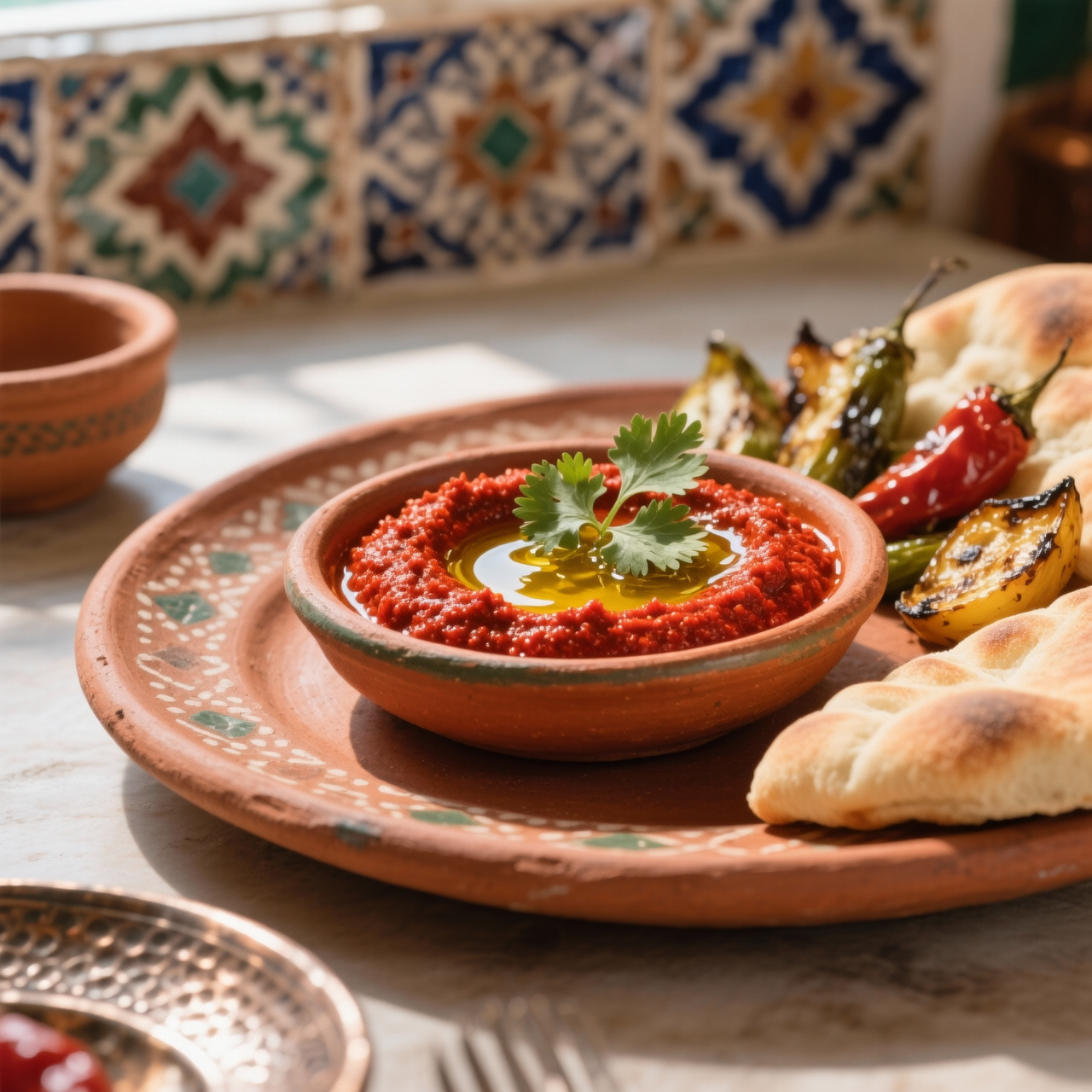
Harissa paste
I first fell for harissa in a sun-baked kitchen in Marrakech, where the air grew thick with the scent of dried chilies and toasted cumin. This isn’t just a spicy condiment; it’s a living archive of Moroccan trade routes, blending North African sun-ripened heat with the earthy warmth of caraway and the bright tang of preserved lemon. I make it because it transforms the mundane into the magnificent—a spoonful can wake up roasted vegetables, elevate a humble bean stew, or serve as a bold marinade for grilled meats. Yet, it’s deceptively simple to get wrong. The most common mistake I see is rushing the drying and toasting stage. If your chilies retain too much moisture, the paste turns sour and spoils quickly. Overheating the spices during grinding scorches their delicate oils, leaving behind a bitter, ash-like residue instead of a complex, smoky depth. Another frequent oversight is neglecting the final oil seal. Without a generous layer of neutral olive or sunflower oil pressed directly against the surface, oxygen creeps in and invites mold within days. I always take my time rehydrating the peppers in warm water, carefully stripping the seeds for a controlled heat level, and grinding everything slowly until it becomes a cohesive, glossy paste. When stored properly in sterilized jars with that protective oil barrier, it deepens in flavor over weeks, becoming a reliable pantry staple that bridges continents. Mastering harissa means respecting patience, temperature, and preservation. Get those right, and you’ll never buy the bottled stuff again.
Nutrition
| Per serving | Calories | Protein | Carbs | Fat | Sat fat | Fibre | Sugar | Sodium |
|---|---|---|---|---|---|---|---|---|
| beginner | 180kcal | 2g | 6g | 16g | 2g | 2g | 3g | 420mg |
| intermediate | 58kcal | 1g | 4g | 6g | 1g | 2g | 2g | 160mg |
| expert | 290kcal | 2g | 5g | 30g | 4g | 3g | 2g | 450mg |
Per serving · Ava-estimated — a guide, not a clinical figure.
- 100 gdried red chili— stems removed, seeds adjusted for heat preference
- 6 piecegarlic clove— peeled
- 15 gcoriander seed— toasted until fragrant
- 10 gcaraway seed— toasted
- 5 gcumin seed— toasted
- 12 gfine sea salt— adjust to taste
- 180 mlextra virgin olive oil— divided for blending and sealing jars
- 15 mllemon juice(optional)— freshly squeezed
This beginner-friendly approach skips the traditional sun-drying and open-flame roasting steps that can intimidate first-time cooks. Instead, we rely on high-quality jarred roasted red peppers and dried chilli flakes to build a reliable flavour base quickly, while still delivering that signature North African depth. You will blend everything in a standard food processor, focusing on technique rather than equipment mastery. The key is to pulse slowly while drizzling in olive oil to create a smooth, emulsified paste that coats a spoon evenly. Watch for the moment the mixture stops separating and starts clinging together; that is your cue to stop blending. Because fresh chilli oils can irritate skin and eyes, wear gloves or wash your hands thoroughly before touching your face, and run your extractor fan on high to keep the kitchen comfortable. Once blended, pack the harissa tightly into clean jars, leaving a thin headspace, and immediately cover the surface with a generous layer of extra-virgin olive oil. This oil seal acts as a natural barrier against oxidation, keeping your paste vibrant for weeks in the fridge. Perfect for stirring into stews, tossing with roasted vegetables, or spreading on sandwiches.
Equipment
- Food processor— standard size works best
- Small dry skillet— for quick spice toast
- Sterilised glass jars— with tight-fitting lids
Method
- 1
Heat a small dry skillet over medium-low heat and toast the cumin, coriander, and caraway seeds until fragrant.
Shake the pan constantly to prevent scorching.
toasting~ 2 min - 2
Transfer the warm spices to a spice grinder and pulse until coarsely ground.
A fine powder is not required here.
grinding~ 1 min - 3
Add the jarred roasted chillies, peeled garlic cloves, lemon juice, and ground spice mixture to the food processor bowl.
Scrape down the sides to ensure even distribution.
combining~ 1 min - 4
Pulse the mixture while slowly drizzling in the olive oil until a smooth, thick paste forms.
Stop blending as soon as the texture coats the back of a spoon.
emulsifying~ 2 minTricky bit - 5
Pack the finished paste into clean jars, smooth the top, and pour enough extra olive oil over the surface to completely cover it.
Replenish the oil layer after each use to maintain freshness.
sealing~ 3 minTricky bit
Cooking from frozen
Thaw in the fridge overnight and whisk vigorously to restore the glossy emulsion.
Storage times are a guide — always use your judgement and store food safely.