
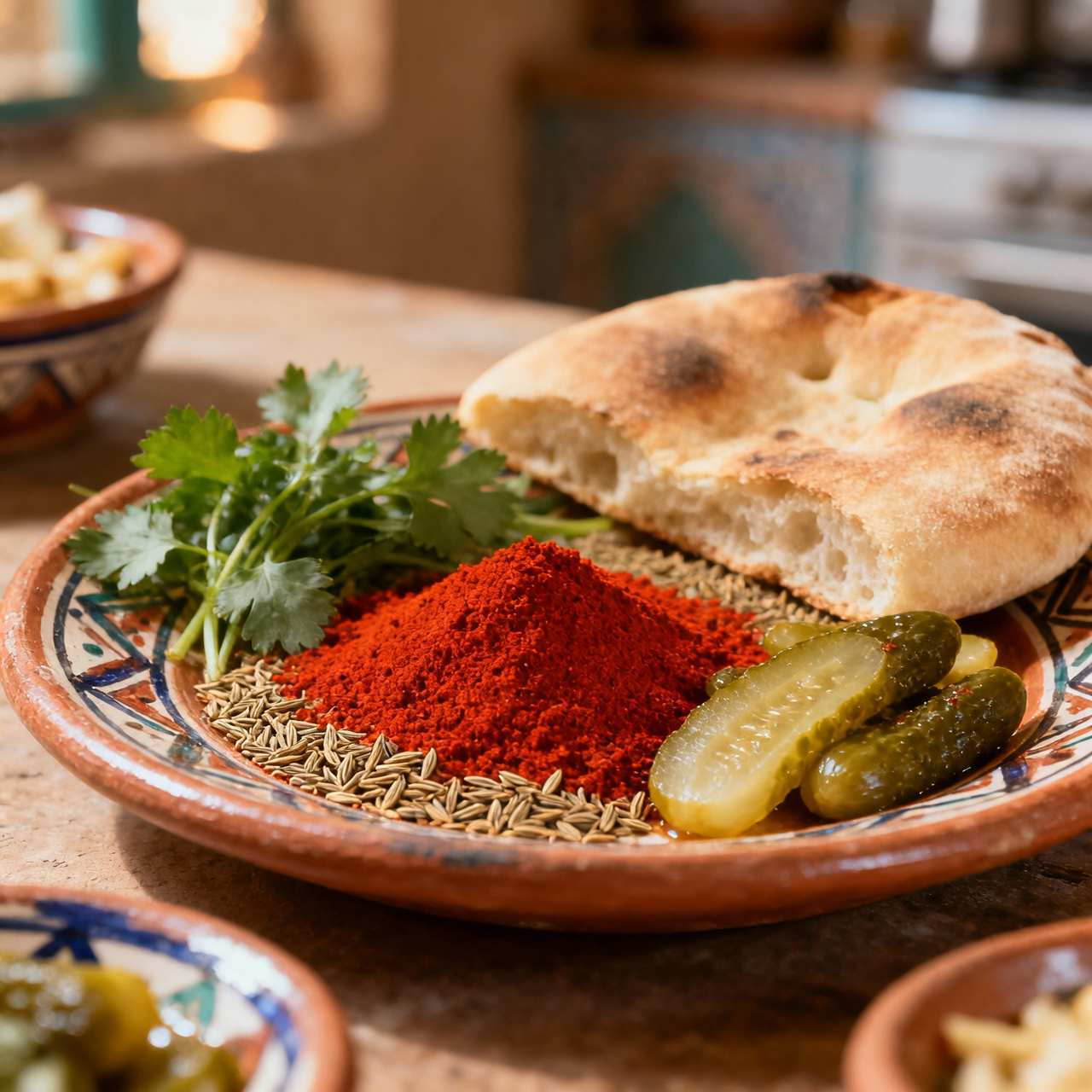
Hilba seasoning (fenugreek-paprika)
When I first encountered hilba in a bustling Cairo kitchen, I was struck by how something so humble could anchor an entire dish. Fenugreek and paprika might sound like an odd pairing on paper, but in Egyptian cooking, this combination forms the backbone of countless savory crusts, rubs, and marinades. I love hilba because it bridges earth and fire; the toasted bitterness of fenugreek grounds the bright, sweet heat of paprika, creating a complex layer that clings beautifully to vegetables, legumes, or plant-based proteins. Getting it right, however, requires patience. The biggest mistake I see is rushing the toast. If you grind raw fenugreek seeds straight into the mix, the seasoning will taste harsh and medicinal, completely overshadowing the delicate paprika notes. Always dry-toast the seeds until they turn amber and release their nutty aroma, then let them cool completely before grinding. Another common pitfall is using stale paprika. Paprika loses its vibrancy quickly, so I always source freshly milled, high-quality peppers and store the finished blend away from direct light. This seasoning matters to me because it is a testament to how Egyptian cooks transform pantry staples into something deeply aromatic and restorative. When you make a large batch and press it into a crust, you are not just seasoning food; you are preserving a technique that has traveled through generations of home kitchens. Treat it with respect, store it properly, and it will reward you with a flavor profile that feels both ancient and entirely alive.
Nutrition
| Per serving | Calories | Protein | Carbs | Fat | Sat fat | Fibre | Sugar | Sodium |
|---|---|---|---|---|---|---|---|---|
| beginner | 85kcal | 2g | 5g | 6g | 1g | 3g | 1g | 150mg |
| intermediate | 68kcal | 2g | 5g | 4g | 1g | 3g | 1g | 290mg |
| expert | 95kcal | 2g | 5g | 8g | 1g | 3g | 1g | 140mg |
Per serving · Ava-estimated — a guide, not a clinical figure.
- 50 gfenugreek seed— Lightly toasted to reduce natural bitterness
- 80 gpaprika— Sweet or smoked variety
- 30 gcoriander seed— Whole or pre-ground
- 20 gcumin seed— Whole or pre-ground
- 10 ggarlic powder— Finely ground
- 5 gblack pepper— Freshly cracked preferred
- 5 gsea salt— Fine grain
This beginner-friendly approach to traditional Egyptian hilba prioritizes convenience and confidence, swapping the usual labor-intensive seed grinding for high-quality pre-ground fenugreek and smoked paprika. Because fenugreek turns sharply bitter if scorched, we keep the heat strictly low and watch closely as the spices gently bloom in warm oil, a crucial step that unlocks their earthy, maple-like aroma without the guesswork. You will use a simple jarred garlic paste to skip the tedious mincing, and a splash of bottled lemon juice to brighten the thick, rustic crust that forms. The goal here is a forgiving, foolproof technique that yields a deeply fragrant condiment in under thirty minutes. Keep your spatula moving, trust your nose over the clock, and remember that the paste will thicken as it cools. Once cooled, simply spoon it into clean glass jars for quick weeknight seasoning, where it will keep safely in the refrigerator for up to two weeks.
Equipment
- Heavy-bottomed skillet— non-stick or stainless steel works well
- Small mixing bowl— for dry spice prep
- Glass storage jars— airtight lids required
Method
- 1
Combine the pre-ground fenugreek, paprika, cumin, and coriander in a small mixing bowl until evenly distributed.
Sift clumps with a fork to prevent uneven toasting.
dry mixing~ 1 min - 2
Warm the olive oil in the skillet over low heat and immediately stir in the dry spice blend.
Keep the flame at the lowest setting to avoid burning the fenugreek.
blooming~ 2 minTricky bit - 3
Stir in the jarred garlic paste, lemon juice, and a splash of water until the mixture thickens into a cohesive paste.
Scrape the pan edges constantly to prevent sticking.
emulsifying~ 2 min - 4
Remove the pan from the heat and let the seasoning cool completely before transferring it to storage jars.
The paste will continue to firm up as it reaches room temperature.
cooling~ 5 min
Cooking from frozen
Thaw completely in the refrigerator overnight, then bring to room temperature and stir vigorously before applying to your dish.
Storage times are a guide — always use your judgement and store food safely.