
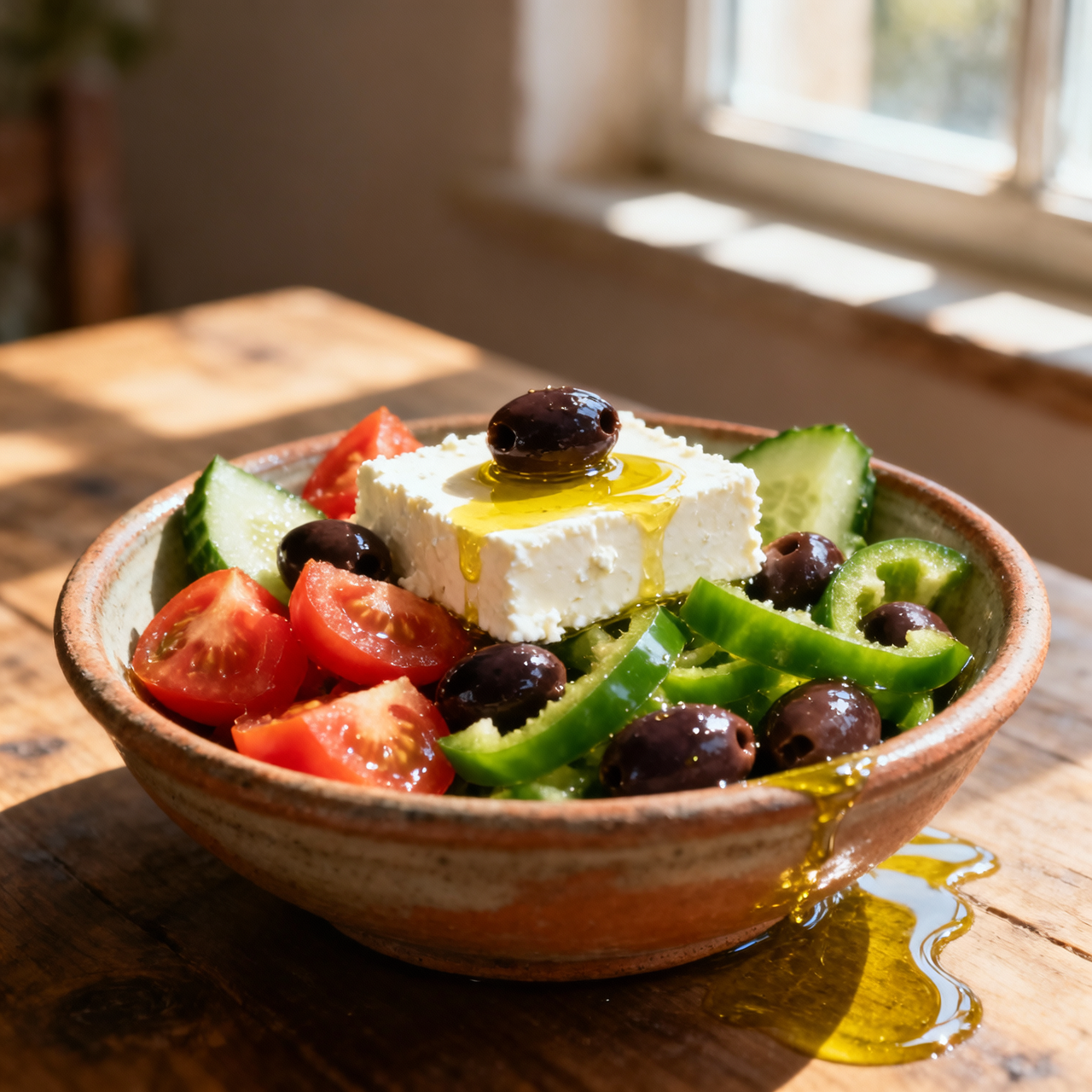
Horiatiki Salata
When I first learned to assemble a true Horiatiki Salata, I quickly realized it wasn't just a salad at all, but a quiet manifesto of Greek culinary philosophy. Born from the sun-drenched villages of the Mediterranean, its name translates literally to village salad, a humble dish crafted by farmers and fishermen who needed something restorative after long hours in the fields or on the boats. To me, that heritage is precisely why it matters. It doesn't rely on technique or expensive ingredients; it demands respect for what the land provides. I've watched countless well-meaning cooks ruin this simplicity by overcomplicating it. The most common pitfall is treating the tomatoes like mere decoration instead of the foundation. They must be ripe, deeply fragrant, and cut into generous wedges that release their juices into the bowl. Another frequent mistake is shredding lettuce or adding mayonnaise-based dressings, which instantly strips the dish of its identity. Authentic Horiatiki never contains leafy greens. The briny punch of Kalamata olives, the sharp bite of raw red onion, and the creamy block of feta resting proudly on top, never crumbled, are non-negotiable. I always finish it with a heavy pour of unfiltered extra virgin olive oil and a generous pinch of dried oregano, letting the ingredients speak for themselves rather than forcing them into submission. When you honor its rustic roots, you don't just eat a starter; you taste the rhythm of a Greek summer.
Nutrition
| Per serving | Calories | Protein | Carbs | Fat | Sat fat | Fibre | Sugar | Sodium |
|---|---|---|---|---|---|---|---|---|
| beginner | 300kcal | 8g | 14g | 26g | 8g | 4g | 8g | 885mg |
| intermediate | 300kcal | 8g | 14g | 26g | 8g | 4g | 8g | 885mg |
| expert | 300kcal | 8g | 14g | 26g | 8g | 4g | 8g | 885mg |
Per serving · Ava-estimated — a guide, not a clinical figure.
- 600 gripe tomato— firm but yielding
- 150 genglish cucumber— seedless variety preferred
- 80 gred onion— thinly sliced
- 100 ggreen bell pepper— crisp and sweet
- 60 gkalamata olive— pitted
- 150 gfeta cheese block— sheep's milk, PDO certified
- 60 gextra virgin olive oil— high-quality, first cold-press
- 15 gred wine vinegar— aged, unfiltered
- 5 gdried oregano— whole leaf
- 3 gsea salt flake— fine
- 2 gblack peppercorn— freshly cracked
This version prioritizes accessibility and confidence over tradition, making it ideal for your first attempt. Instead of relying on premium aged ingredients, you will use a high-quality jarred red wine vinaigrette and pre-crushed oregano to eliminate guesswork in seasoning ratios. The technique focuses on safe knife skills and consistent chunk sizing, ensuring every bite delivers the right balance of crunch and juice. Watch closely for the dressing stage: pour it over the vegetables first, toss gently, and let them rest for exactly ten minutes before adding the feta and olives. This prevents the cheese from absorbing excess moisture and becoming soggy. I recommend using pre-sliced red onion to avoid eye irritation, and keeping the bell pepper seeds intact is perfectly acceptable at this level. The goal is not perfection but familiarity with the flavor architecture. You will learn how salt and acid interact with raw vegetables without the pressure of grinding spices or sourcing PDO-certified dairy. Trust the process, measure your oil carefully, and resist the urge to overmix. By the time you finish, you will understand why this dish has sustained generations of home cooks.
Equipment
- large mixing bowl— glass or stainless steel preferred
- chef's knife— sharp blade for clean cuts
- cutting board— stable and non-slip
Method
- 1
Wash all produce thoroughly and pat completely dry.
Water dilutes flavor.
rinsing~ 2 min - 2
Cut tomatoes, cucumber, and bell pepper into uniform two-inch chunks.
Keep sizes consistent.
dicing~ 5 minTricky bit - 3
Combine vegetables in a large bowl and toss with pre-mixed vinaigrette.
Coat evenly but do not crush.
tossing~ 2 min - 4
Let the mixture rest on the counter for ten minutes.
Vegetables will release juices.
macerating~ 10 min - 5
Place the feta block on top, scatter olives, and sprinkle with jarred oregano.
Do not mix after adding cheese.
plating~ 1 min