
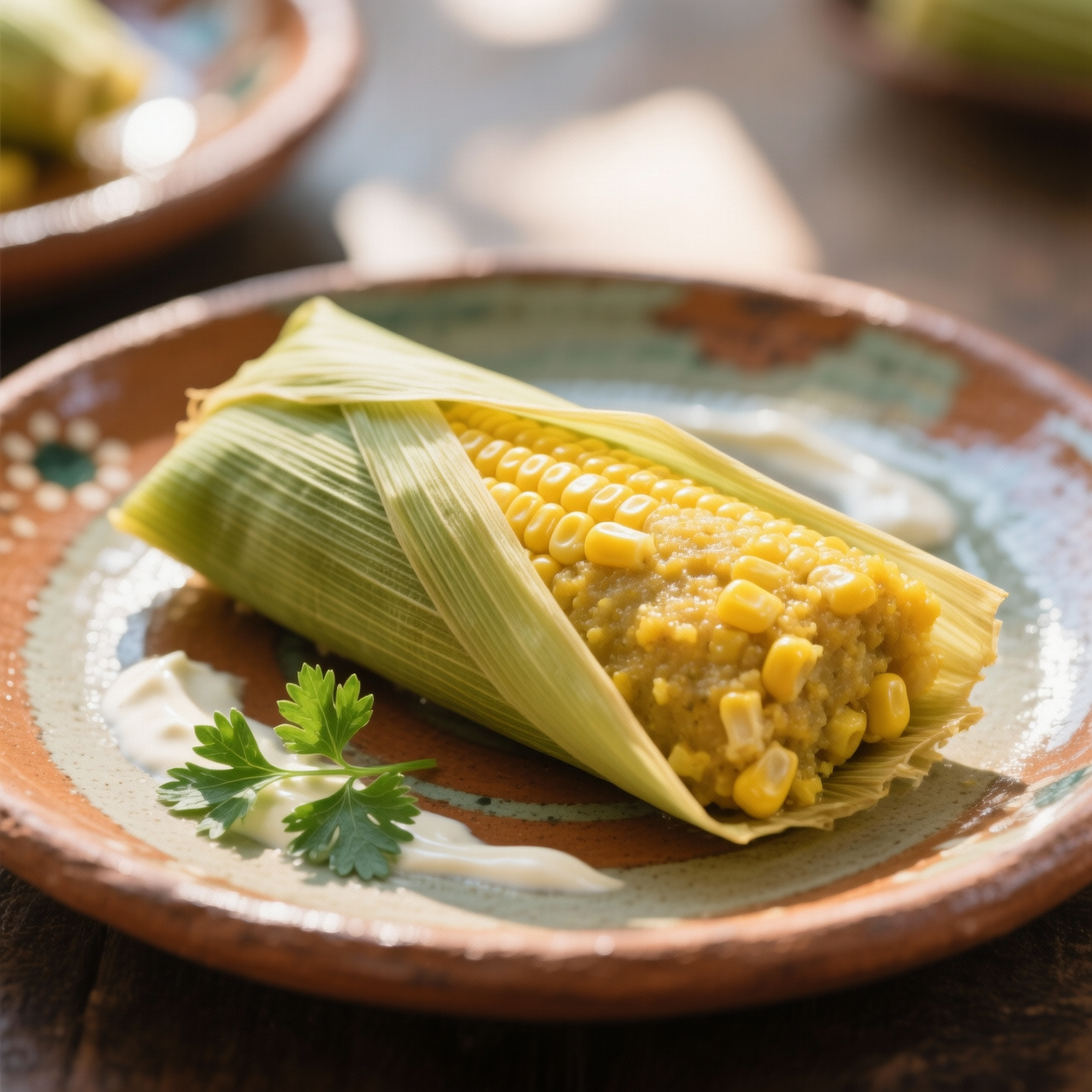
Humita en chala
When I think of the Argentine summer harvest, my mind immediately goes to humita en chala. This beautiful, humble dish has deep indigenous roots stretching back through the Andes, originally utilizing every part of the fresh corn plant. Wrapping a vibrant, freshly grated corn mixture in its own protective husks and steaming it is a culinary ritual that connects us directly to the earth. The magic lies entirely in using fresh, sweet corn on the cob rather than taking the easy route. Let’s be honest about the shop-bought alternatives: a tin of creamed corn or a pack of frozen, mass-produced humitas might cost you around five or six dollars, but they are a profound disappointment. Those processed versions rely on heavy starches, excessive sodium, and preservatives to mimic the creamy texture, resulting in a mushy, homogenized paste that completely lacks the bright, popping sweetness of real corn. By grating fresh cobs yourself, you achieve a naturally creamy, sweet, and texturally complex filling that no factory could ever replicate. The most common pitfall I see is making the filling too wet, which turns the parcels into a soggy mess, or rushing the steaming process, leaving the corn starchy and undercooked. You must grate the corn, let it drain slightly if needed, and steam it gently for at least an hour until the husks easily peel away. It requires a bit of patience and messy hands, but the reward of biting into a fragrant, naturally sweet parcel of pure summer is an absolute triumph of from-scratch cooking.
Nutrition
| Per serving | Calories | Protein | Carbs | Fat | Sat fat | Fibre | Sugar | Sodium |
|---|---|---|---|---|---|---|---|---|
| beginner | 330kcal | 13g | 39g | 14g | 7g | 4g | 6g | 320mg |
| intermediate | 285kcal | 11g | 38g | 12g | 7g | 4g | 6g | 420mg |
| expert | 260kcal | 7g | 42g | 10g | 5g | 5g | 11g | 350mg |
Per serving · Ava-estimated — a guide, not a clinical figure.
- 12 earfresh corn ear— husks carefully removed and reserved for wrapping
- 1 unityellow onion— finely chopped
- 1 unitred bell pepper— finely chopped
- 2 unitgarlic clove— minced
- 15 gfresh basil leaf— chopped
- 50 gunsalted butter
- 10 gsalt
- 2 gblack pepper— freshly ground
- 100 mlwhole milk(optional)— to adjust filling consistency
This beginner approach to humita en chala simplifies the traditional technique without relying on any processed shortcuts. While an expert might grate the corn on a specialized board or pass it through a food mill, we use a simple knife-and-spoon method to scrape the fresh kernels and milky starch directly from the cob. The shop-bought alternative—usually canned creamed corn or frozen, pre-made packets—costs around $4 to $6 and is fundamentally flawed. Those commercial versions are heavily loaded with sodium, preservatives, and stabilizers, resulting in a dull, mushy, and starchy texture that completely lacks the bright, sweet, and vibrant flavor of fresh summer corn. By taking the extra twenty minutes to shuck and slice fresh corn, you achieve a vastly superior, sweet, and creamy filling wrapped in its natural, fragrant husk. This forgiving method ensures your first attempt at this classic Argentine side dish is a confident success, yielding tender, aromatic parcels that freeze beautifully for future meals.
Equipment
- Heavy-bottomed pan— For sautéing the onion base
- Large stockpot— Must be wide enough to lay parcels flat or tall enough to stand them up
- Sharp chef's knife— Essential for cleanly slicing kernels off the cob
Method
- 1
Shuck the fresh corn, carefully peeling back the outer green husks and setting them aside intact for wrapping later.
Wipe the saved husks clean with a damp cloth; do not wash them or they will tear.
prepping~ 5 min - 2
Stand each ear of corn upright on a cutting board and slice the kernels off, then scrape the bare cobs with the back of the knife blade to capture the creamy starch.
The scraped starch is crucial for binding the filling without needing flour or eggs.
scraping~ 10 minTricky bit - 3
Sauté finely diced onion in butter over medium heat until soft and translucent.
Keep the heat moderate so the onions sweat rather than brown.
sweating~ 5 min - 4
Remove the pan from the heat and stir in the fresh corn mixture, torn basil leaves, salt, and pepper until thoroughly combined.
Off-heat mixing preserves the fresh, bright flavor of the basil.
folding~ 2 min - 5
Lay two overlapping corn husks flat, place a generous spoonful of the filling in the center, and fold the sides and ends to create a tight, neat parcel.
Fold the bottom up first, then the sides, and tie with a thin strip of husk if needed.
wrapping~ 10 minTricky bit - 6
Bring a large pot of water to a gentle boil, submerge the parcels completely, and cook until the husks pull away easily and the filling is set.
Place a heat-proof plate on top of the parcels in the water to keep them submerged.
simmering~ 30 min
Cooking from frozen
Thaw in the fridge overnight and reheat in a steamer for 15 minutes until piping hot.
Storage times are a guide — always use your judgement and store food safely.