
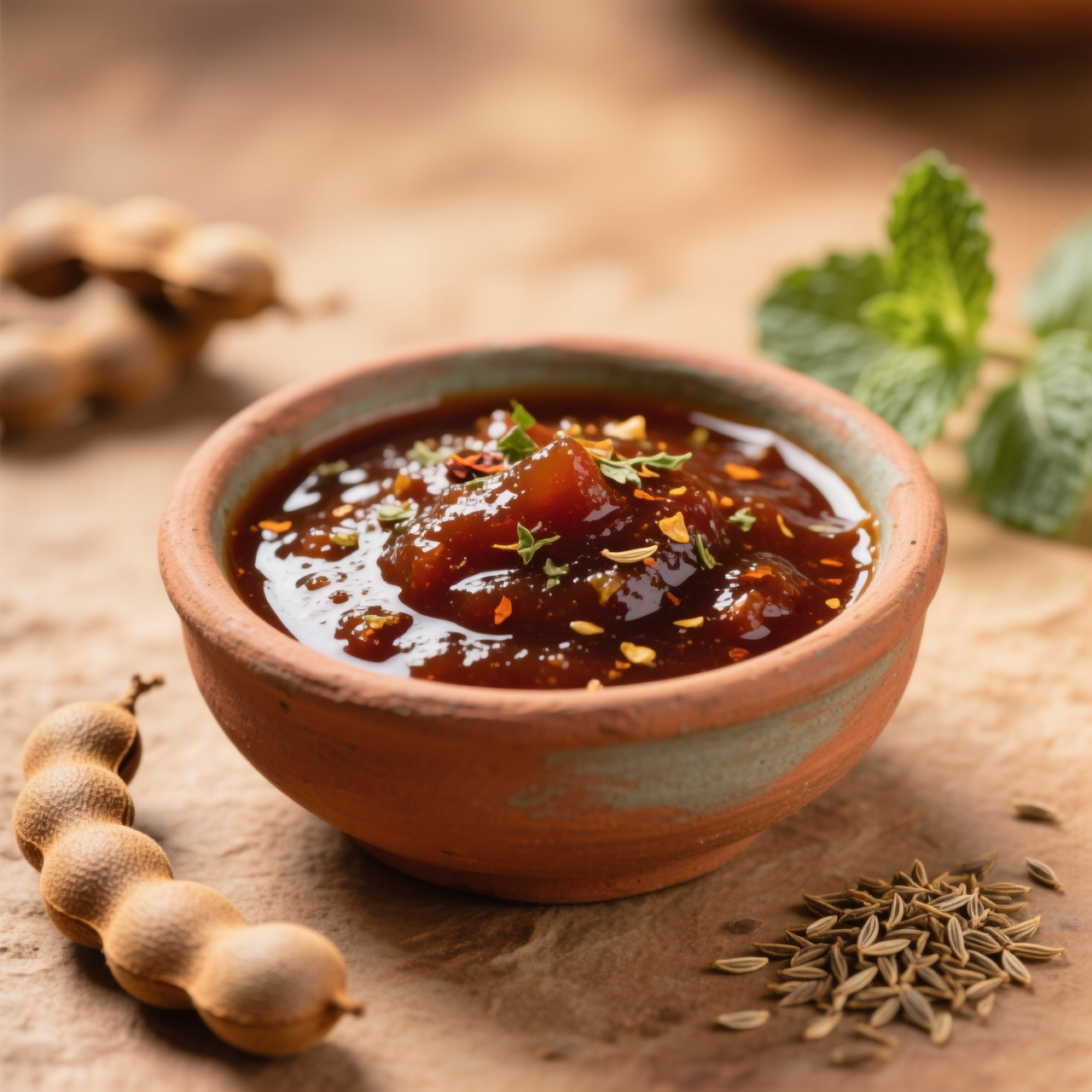
Imli Chutney
When I first encountered imli chutney at a bustling Lahore street cart, I didn’t realize I was tasting centuries of culinary alchemy. Tamarind, or imli, traveled to the subcontinent long ago, but it was here in Pakistan that it found its most beloved expression: a glossy, sweet-sour reduction that acts as the quiet anchor to every chaat platter. I’ve spent years perfecting this sauce because it isn’t just a condiment; it’s the balancing act that turns sharp spices and heavy fried dough into something harmonious. The magic lies in coaxing the tamarind’s natural tartness into a slow, syrupy embrace with jaggery or brown sugar, letting the flavors marry without rushing the heat. Yet, this simplicity is exactly where most home cooks stumble. I’ve seen too many batches ruined by boiling the mixture too vigorously, which scorches the sugars and leaves a bitter aftertaste that clings to the palate. Others skip the essential step of properly soaking and straining the pulp, resulting in a gritty texture that ruins the mouthfeel. Some even add water at the end instead of simmering it down to a proper glaze consistency, which makes the chutney slide right off samosas instead of clinging to them. To me, imli chutney is a lesson in patience and restraint. It demands gentle heat, careful tasting, and a willingness to adjust the sweet-to-sour ratio until it sings. When done right, it doesn’t just complement the dish—it becomes the memory of the meal itself.
Nutrition
| Per serving | Calories | Protein | Carbs | Fat | Sat fat | Fibre | Sugar | Sodium |
|---|---|---|---|---|---|---|---|---|
| beginner | 35kcal | 0g | 9g | 0g | 0g | 1g | 7g | 15mg |
| intermediate | 108kcal | 1g | 27g | 2g | 0g | 2g | 21g | 185mg |
| expert | 85kcal | 1g | 20g | 0g | 0g | 3g | 16g | 180mg |
Per serving · Ava-estimated — a guide, not a clinical figure.
- 150 gtamarind pulp— seedless block preferred, soak in warm water if hard
- 120 gjaggery— grated or finely chopped to dissolve quickly
- 500 mlwater— adjust final amount based on desired pouring consistency
- 8 gcumin seed— dry roast until fragrant before grinding
- 5 gred chili powder— Kashmiri variety recommended for vibrant color and mild heat
- 4 gblack salt— provides the signature tangy chaat flavor
- 3 gdry ginger powder— adds warming spice and balances sweetness
- 2 gsalt(optional)— add only if jaggery is not sweet enough
- 3 gfennel seed(optional)— lightly toasted and ground for aromatic depth
This beginner-friendly approach skips the traditional soaking and straining of raw tamarind blocks, opting instead for readily available tamarind concentrate or paste. By starting with a pre-processed base, you eliminate the most labor-intensive step while preserving that essential sweet-sour tang required for authentic chaat. Focus heavily on balancing the acidity with your chosen sweetener, whether you prefer brown sugar, jaggery, or honey. The goal is a glossy, pourable syrup that coats the back of a spoon without being overly thick or watery. Keep the heat strictly on medium-low during the simmer to prevent scorching the sugars, which can quickly turn bitter. Stir frequently with a silicone spatula or wooden spoon, and trust your palate over rigid measurements. If the sauce tastes too sharp, add a splash of warm water or a pinch more sugar. Conversely, a dash of roasted cumin or a pinch of black salt will instantly elevate the flavor profile if it feels too one-dimensional. Once cooled completely in the refrigerator, the chutney will naturally thicken to a perfect drizzling consistency. Store it in a clean glass jar for up to two weeks, ready to instantly upgrade samosas, pakoras, or street-style chaat bowls.
Equipment
- Heavy-bottomed pan— Non-stick works best to prevent sugar scorching
- Silicone spatula— For scraping edges and stirring evenly
Method
- 1
Whisk together the tamarind concentrate, water, and sweetener in a heavy-bottomed pan until fully dissolved.
Lumps are fine initially; gentle heat will help them melt.
dissolving~ 2 min - 2
Stir in the roasted cumin powder, ginger powder, red chili powder, and black salt.
Bloom the spices briefly before adding any additional liquids.
blooming~ 1 min - 3
Place the pan over medium-low heat and bring the mixture to a gentle simmer, stirring constantly.
Watch for thick bubbles; do not let it boil vigorously.
simmering~ 10 minTricky bit - 4
Remove from heat and transfer to a clean glass jar, letting it cool completely before sealing.
Sauce will thicken significantly as it chills.
cooling~ 15 min
Cooking from frozen
Thaw overnight in the refrigerator and whisk vigorously until smooth; no reheating required.
Storage times are a guide — always use your judgement and store food safely.