
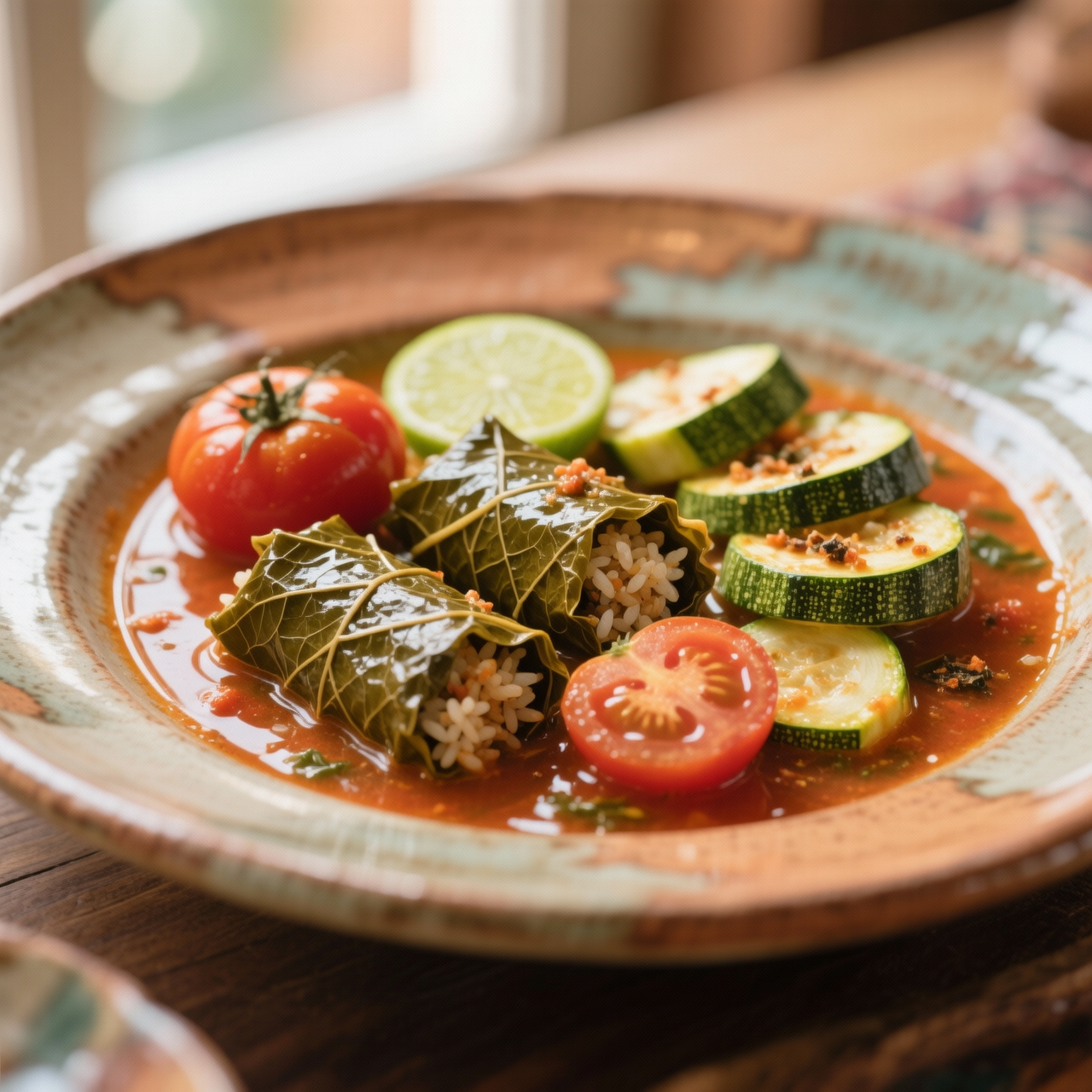
Iraqi Dolma
When I first learned to roll Iraqi dolma, I quickly understood why this dish is considered the quiet heartbeat of Mesopotamian hospitality. Born along the fertile riverbanks where rice, grape leaves, and tender meats have sustained generations for millennia, dolma is less a mere recipe and more a ritual of patience and togetherness. In Iraqi homes, the preparation is rarely a solitary act; it is a gathering where hands move in synchronized rhythm, folding, tucking, and layering vegetables and leaves until the pot becomes a mosaic of the season’s bounty. What makes this dish so profoundly meaningful to me is how it transforms humble ingredients into something deeply communal and celebratory. Yet, I have watched countless cooks stumble over the same quiet pitfalls that can unravel an otherwise perfect pot. The most common mistake is overstuffing the leaves and vegetables; rice expands as it cooks, and a tightly packed dolma will burst, clouding the broth and leaving you with a mushy, disjointed mess. Another frequent oversight is neglecting the resting period. Iraqi dolma relies on a slow, gentle simmer followed by a crucial cooling phase where the flavors marry and the rice settles into its final tender state. Rushing this step strips the dish of its signature depth. I’ve learned to treat the rolling process as meditation, to season the filling with measured restraint, and to trust the low heat. When done right, the result is a harmonious balance of bright acidity from dried limes, the earthy sweetness of slow-cooked vegetables, and the comforting weight of rice that holds everything together.
Nutrition
| Per serving | Calories | Protein | Carbs | Fat | Sat fat | Fibre | Sugar | Sodium |
|---|---|---|---|---|---|---|---|---|
| beginner | 730kcal | 27g | 74g | 36g | 11g | 6g | 10g | 1450mg |
| intermediate | 730kcal | 27g | 74g | 36g | 11g | 6g | 10g | 1450mg |
| expert | 730kcal | 27g | 74g | 36g | 11g | 6g | 10g | 1450mg |
Per serving · Ava-estimated — a guide, not a clinical figure.
- 200 ggrape leaf— fresh or jarred, rinsed
- 400 glamb shoulder— minced to medium coarseness
- 300 gmedium grain rice— rinsed until water runs clear
- 500 gtomato— hollowed, flesh reserved
- 400 gzucchini— cored, skins intact
- 60 gtomato paste— concentrated, unsweetened
- 3 pcsdried black lime— pierced or halved
- 60 mlolive oil— extra virgin
- 150 gyellow onion— finely diced
- 10 gground cumin— freshly ground preferred
- 5 gground turmeric— bright yellow variety
- 1 pcscinnamon stick— whole bark
- 15 gsalt— fine sea salt
- 1000 mlwater— filtered, room temperature
This pathway is designed for your first confident encounter with the pot. We lean on reliable shortcuts like pre-rinsed grape leaves and a ready-made tomato base to keep the workflow smooth and predictable. The goal is to build muscle memory without getting lost in the details of spice toasting or broth balancing. Pay close attention to how much filling you pack into each vegetable; a gentle, airy hand prevents bursting during the simmer. Keep your heat strictly at a low bubble once the liquid reaches a boil, and resist the urge to lift the lid frequently. The most crucial moment comes after you turn off the flame. Let the covered pot sit undisturbed for a full fifteen minutes. This resting period allows the rice to finish absorbing the surrounding liquid and the vegetables to firm up slightly, making your plating clean and your flavors cohesive. Trust the process, follow the timing, and you will be rewarded with a deeply comforting plate that proves technique matters more than perfection.
Equipment
- Dutch oven— heavy-bottomed, tight-fitting lid
- mixing bowl— large capacity
- wooden spoon— sturdy for stirring
- measuring cups— standard set
- kitchen shears(optional)— for trimming tough leaf stems
Method
- 1
Rinse the grape leaves thoroughly under cold water and set them aside to drain completely.
Remove excess salt from jarred leaves.
rinsing~ 2 min - 2
Combine the minced lamb, rice, chopped onion, cumin, and turmeric in a large mixing bowl until evenly distributed.
Do not overwork the meat.
folding~ 3 min - 3
Place a single layer of grape leaves at the bottom of the heavy-bottomed pan, followed by the hollowed tomatoes and zucchini.
Arrange tightly to prevent shifting.
layering~ 4 min - 4
Whisk the tomato paste, water, olive oil, and salt in a separate container until smooth, then pour the mixture evenly over the arranged vegetables.
Ensure no dry paste pockets remain.
emulsifying~ 2 min - 5
Bring the liquid to a gentle simmer, cover tightly, reduce heat to low, and cook without lifting the lid until the rice is tender.
Steam should escape slowly around the lid.
simmering~ 60 minTricky bit - 6
Remove from heat and let the covered pot rest on a warm burner before carefully transferring to a serving platter.
Resting sets the structure.
resting~ 15 min