
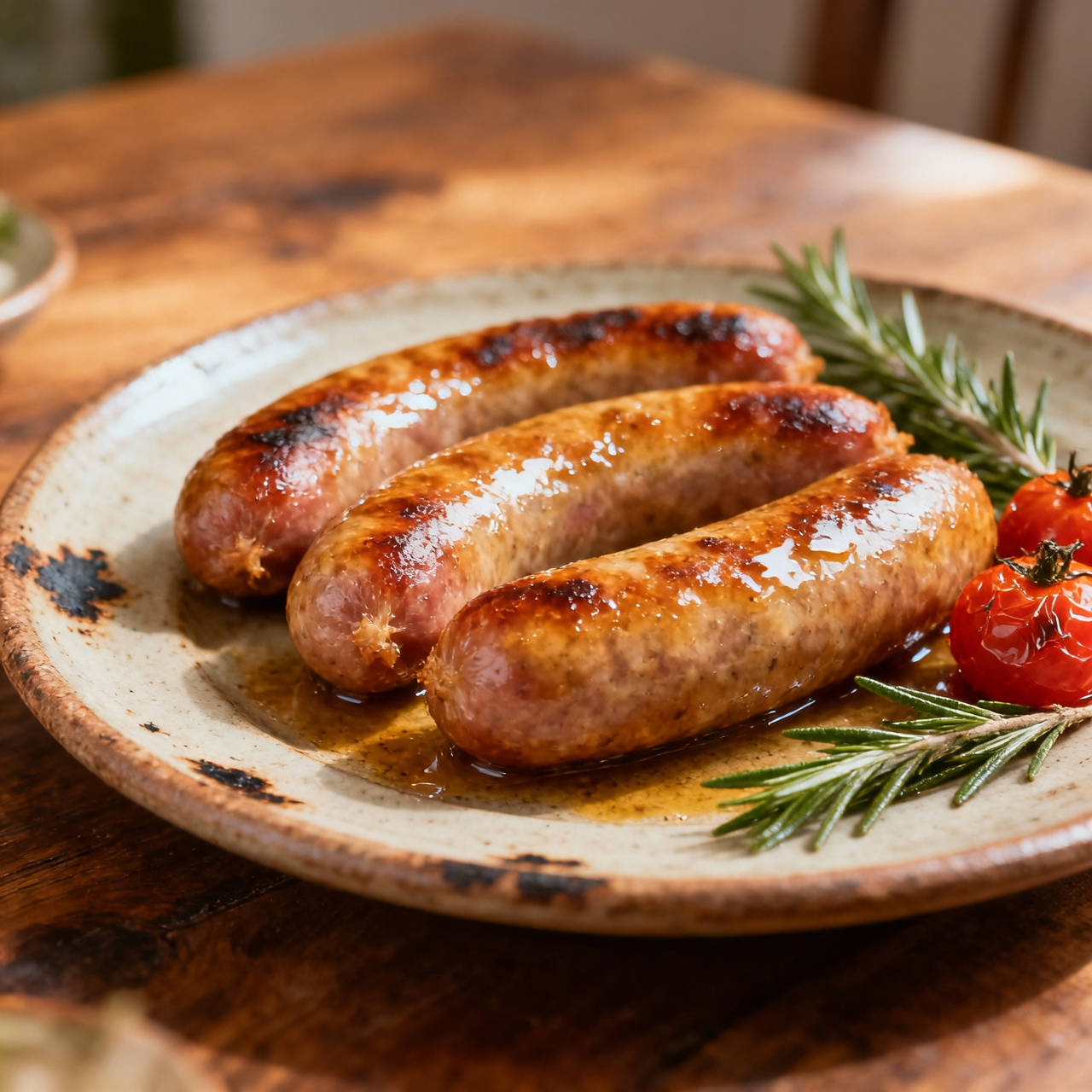
Italian pork sausages (salsiccia)
I still remember the first time I tasted a truly handmade salsiccia from a small-town butcher in Emilia-Romagna. It was a revelation. The meat wasn’t just a uniform pink paste; it had texture, a bright hit of fennel, and a rich, clean pork flavor that completely ruined me for supermarket tubes. That’s exactly why I make this from scratch. Store-bought links usually run around six to eight dollars a pound, and what you’re actually paying for is a heavy dose of fillers, excessive sodium, and mystery casings that snap like rubber instead of yielding to a gentle bite. Real Italian sausage relies on just four pillars: fresh pork shoulder, a precise twenty-to-thirty percent fat ratio, good sea salt, and a careful hand with wine and black pepper. The origin of this craft stretches back through centuries of rural preservation, where nothing was wasted and every region stamped its own spice profile onto the meat. What matters most today is reclaiming that integrity in your own kitchen. The biggest mistake home cooks make is treating the meat like a blender project. You must keep everything ice-cold and mix only until the proteins just begin to bind, otherwise you’ll end up with a dense, mealy texture rather than a tender, juicy link. Another common trap is rushing the rest. Let the seasoned meat sleep in the fridge for at least twenty-four hours before casing it; that patience allows the flavors to marry and the proteins to hydrate properly. When you take the time to hand-fill, twist, and chill these properly, you’re not just making dinner—you’re building a batch hero that will outshine any processed alternative.
Nutrition
| Per serving | Calories | Protein | Carbs | Fat | Sat fat | Fibre | Sugar | Sodium |
|---|---|---|---|---|---|---|---|---|
| beginner | 495kcal | 26g | 2g | 41g | 14g | 1g | 0g | 650mg |
| intermediate | 385kcal | 28g | 1g | 29g | 10g | 0g | 0g | 580mg |
| expert | 390kcal | 23g | 1g | 33g | 12g | 0g | 0g | 720mg |
Per serving · Ava-estimated — a guide, not a clinical figure.
- 1000 gpork shoulder— Cut into 1-inch cubes and thoroughly chilled
- 300 gpork fatback— Cold and diced small
- 20 gfine sea salt
- 5 gblack pepper— Freshly cracked
- 8 gfennel seed— Lightly toasted and coarsely crushed
- 3 clovegarlic— Finely minced
- 3 mhog casing— Natural, rinsed and soaked in warm water
- 60 mlred wine(optional)— Dry variety, kept cold
Store-bought Italian salsiccia often costs upwards of $10 per pound and relies on cheap fillers, excessive preservatives, and inconsistent spice blends that mask lower-quality meat. This beginner-friendly from-scratch method strips away the intimidation of commercial meat grinding and casing stuffing while delivering a noticeably superior result. You will skip the heavy machinery by hand-mincing well-marbled pork shoulder and blending it thoroughly with a sharp chef’s knife, which keeps the fat cold and prevents a mushy, emulsified texture. Natural hog casings are pre-soaked for convenience, but you can simply form rustic, free-form patties if handling casings feels overwhelming on your first try. Watch your meat temperature closely; if the mixture feels greasy or warm to the touch, pause and chill it in the fridge for ten minutes before continuing to ensure a proper snap when cooked. The seasoning relies entirely on pantry staples: toasted fennel seeds, crushed garlic, red pepper flakes, and a splash of dry white wine. This approach yields juicy, deeply aromatic links that freeze beautifully, giving you a reliable homemade staple without the additives, hidden sugars, or rubbery casings found in supermarket tubes.
Equipment
- Heavy-bottomed skillet— cast iron or stainless steel for even browning
- Large mixing bowl— chill the bowl beforehand to keep meat cool
- Chef's knife— keep the edge sharp for clean mincing
Method
- 1
Toast whole fennel seeds and crushed red pepper flakes in a dry skillet until fragrant, then transfer to a heatproof bowl to cool.
Shake the pan constantly to prevent scorching.
dry toasting~ 1 min - 2
Finely mince chilled pork shoulder and pork back fat with a sharp knife until the mixture resembles coarse ground meat.
Work quickly and keep the meat cold to maintain distinct fat pockets.
hand mincing~ 5 minTricky bit - 3
Combine the minced meat, crushed garlic, cooled spices, fine sea salt, black pepper, and white wine in a large bowl, mixing vigorously with clean hands until sticky.
The mixture should feel tacky and cohesive, signaling proper protein extraction.
primary bind~ 3 min - 4
Cover the bowl tightly and refrigerate the meat mixture for at least twenty minutes.
This resting period firms the fat and relaxes the proteins for cleaner forming.
resting~ 20 min - 5
Divide the chilled meat into equal portions and roll them into thick links or press into uniform patties.
Weigh each portion to guarantee consistent cooking and freezing.
portioning~ 4 min - 6
Pan-fry the sausages over medium-low heat, turning frequently until deeply browned and cooked through.
Low heat prevents casings from splitting and ensures gentle fat rendering.
pan frying~ 10 min
Cooking from frozen
Thaw overnight in the refrigerator, then pan-sear or bake until piping hot.
Storage times are a guide — always use your judgement and store food safely.