
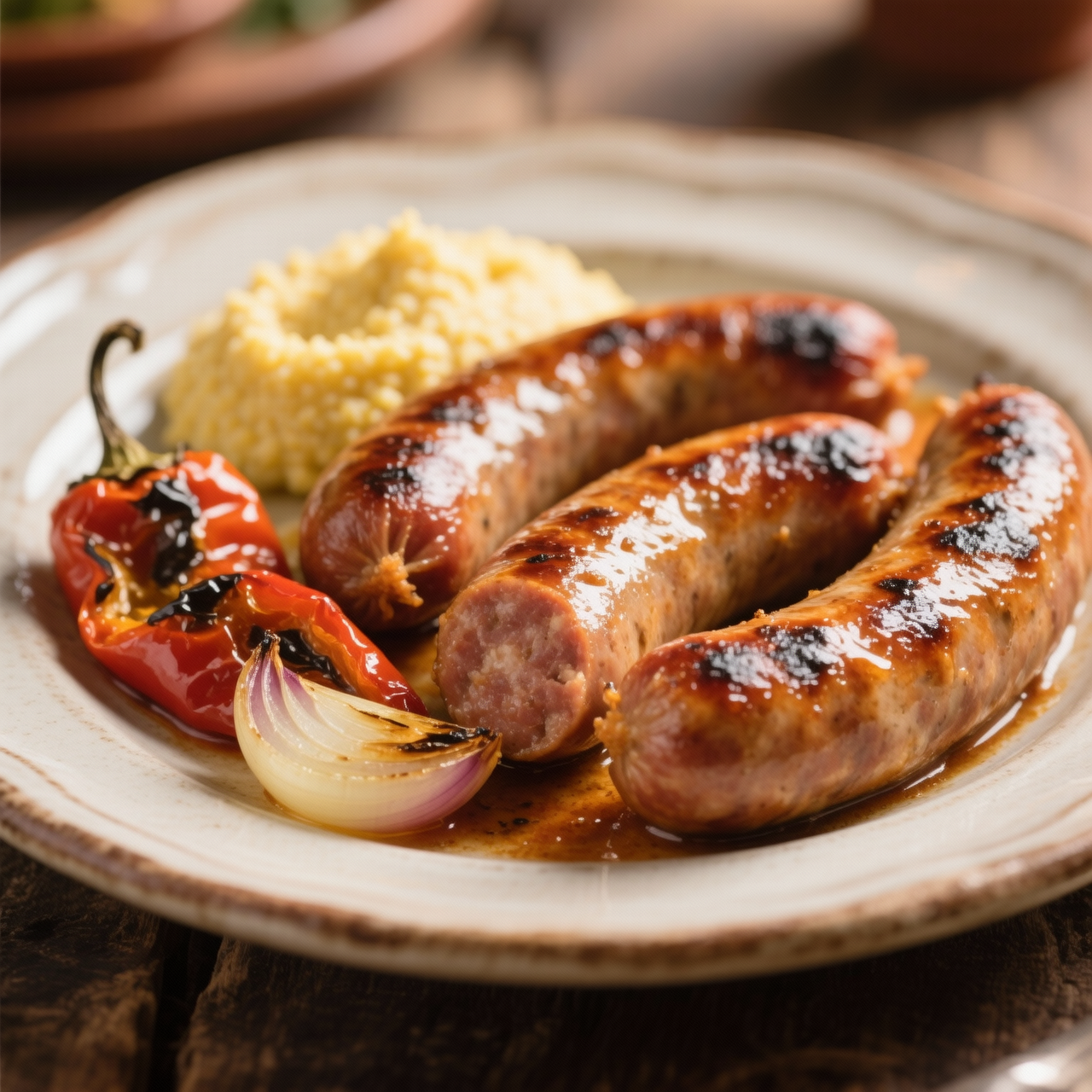
Italian sausages
I’ve always believed that a proper Italian sausage is one of the most quietly transformative things you can keep in your freezer. Before I started grinding my own, I’d happily toss those neon-pink supermarket packs into the pan, never stopping to wonder why they always tasted faintly of preservatives and cheap filler. You’re paying nearly six pounds for a tray that’s mostly breadcrumbs, water, and sodium tripolyphosphate, with a meat-to-spice ratio so skewed that the fennel seed is practically decorative. Making these from scratch flips that dynamic entirely. We start with pork shoulder, trim the fat to a perfect twenty percent, and let the real magic happen: toasted fennel seeds cracked by hand, a whisper of crushed chilli for warmth, and just enough garlic and wine to bind without masking the meat. The origin traces back to the rural butcheries of central and southern Italy, where preserving seasonal pork meant mastering the balance of salt, spice, and time. When you skip the industrial casings and pre-ground pastes, you gain control over texture, flavour depth, and shelf life. The most common pitfall? Overworking the mince until it becomes dense and rubbery, or skipping the overnight rest in the fridge that lets the salt and spices properly marry with the proteins. I always keep a batch ready in the freezer because when you need a quick, deeply savoury dinner, thawing a few of these feels like unlocking a pantry secret. They sear beautifully, hold their shape without splitting, and deliver a clean, herbal punch that no factory line could ever replicate. It’s slower upfront, but the payoff in flavour and honesty is immediate.
Nutrition
| Per serving | Calories | Protein | Carbs | Fat | Sat fat | Fibre | Sugar | Sodium |
|---|---|---|---|---|---|---|---|---|
| beginner | 440kcal | 28g | 3g | 34g | 12g | 1g | 1g | 710mg |
| intermediate | 385kcal | 26g | 1g | 29g | 9g | 0g | 0g | 650mg |
| expert | 485kcal | 29g | 2g | 39g | 13g | 1g | 1g | 820mg |
Per serving · Ava-estimated — a guide, not a clinical figure.
- 800 gPork shoulder— Boneless and skinless, kept very cold before grinding
- 200 gPork fatback— Firm and chilled to maintain a proper 20% fat ratio
- 15 gFennel seed— Lightly toasted and coarsely crushed to release essential oils
- 5 gRed chilli flake— Adjust quantity based on desired heat level
- 18 gSea salt— Fine grain for even seasoning distribution
- 3 gBlack pepper— Freshly cracked just before mixing
- 10 gGarlic clove— Finely minced or grated into a smooth paste
- 15 mlRed wine vinegar(optional)— Adds brightness and helps preserve the frozen batch
Store-bought Italian sausages often cost a premium while hiding behind heavy fillers, excess sodium, and preservatives that dull the natural pork flavour. Making them at home is surprisingly straightforward, even for a first-timer, and yields a noticeably cleaner, meatier bite. This beginner-friendly approach skips the intimidating meat grinder entirely. Instead, we rely on finely chopping high-quality pork shoulder by hand or pulsing it briefly in a food processor, which gives you perfect control over the texture without turning it into mush. The key difference here is patience with the seasoning blend: toasting whole fennel seeds and crushing them fresh unlocks a fragrant, anise-like sweetness that pre-ground mixes completely lack. Watch closely when combining the meat and spices—keep everything ice-cold so the fat doesn’t soften, which ensures the sausages stay juicy rather than dry. Once mixed, simply hand-roll them into uniform logs. Because there are no complex casings or fermentation steps, you can confidently batch these up, freeze them raw on a tray, and pan-fry or bake them straight from frozen for quick weeknight meals. The result is a deeply savoury, aromatic staple that outperforms the supermarket version every time.
Equipment
- Food processor or sharp chef's knife— Keep blades sharp to avoid tearing the meat
- Heavy-bottomed skillet— Cast iron or stainless steel works best
- Large mixing bowl— Chill beforehand to maintain meat temperature
Method
- 1
Chill diced pork shoulder and a large mixing bowl in the refrigerator for 30 minutes.
Cold fat prevents a greasy texture during mixing.
chilling~ 30 min - 2
Toast whole fennel seeds and red chilli flakes in a dry pan until fragrant, then crush them finely.
Use a mortar or rolling pin to release essential oils.
toasting~ 2 min - 3
Pulse the chilled pork in a food processor until it forms coarse crumbs, then transfer to the mixing bowl.
Avoid over-processing into a smooth paste.
pulsing~ 1 minTricky bit - 4
Fold in the crushed spices, minced garlic, salt, and a splash of ice-cold water until evenly combined.
Mix gently with your hands to preserve the coarse texture.
folding~ 2 min - 5
Divide the mixture and roll it into 12 uniform logs about 4 inches long.
Pack them firmly so they hold their shape during cooking.
shaping~ 5 min - 6
Sear the sausages in a lightly oiled skillet over medium heat, turning occasionally until browned and cooked through.
Internal temperature should reach 71°C (160°F).
pan-searing~ 20 min
Cooking from frozen
Thaw overnight in the fridge, then reheat gently in a covered skillet with a splash of water until warmed through.
Storage times are a guide — always use your judgement and store food safely.