
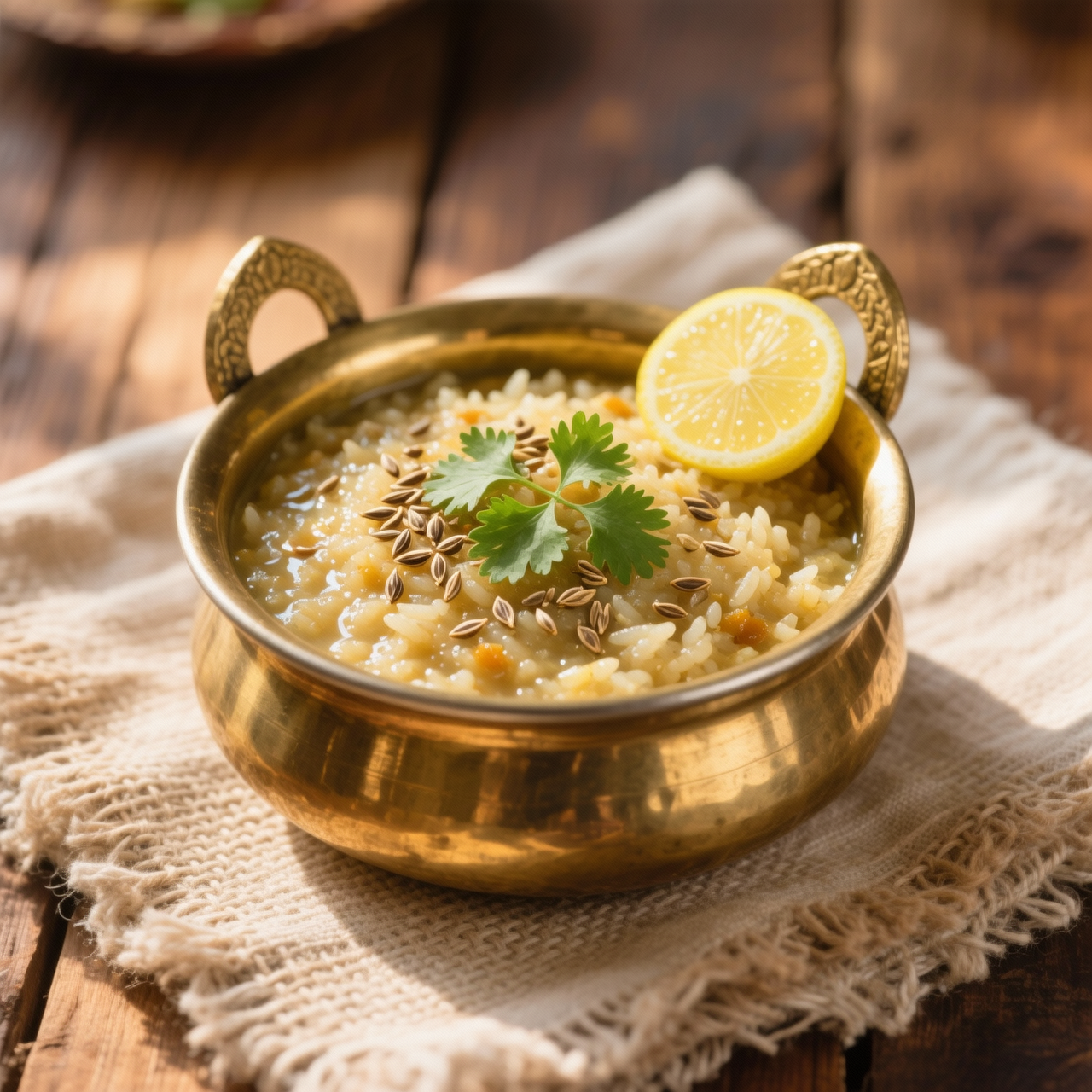
Jain Khichdi
When I first learned to make Jain khichdi, I quickly realized that its apparent simplicity is both its greatest strength and its most deceptive challenge. Rooted deeply in the ancient Jain principle of ahimsa, this unassuming one-pot meal deliberately excludes root vegetables, onions, and garlic, honoring a spiritual conviction that uprooting plants disrupts delicate ecosystems and harms unseen life. What remains is a profoundly soothing alchemy of aged basmati rice, split yellow moong dal, and a restrained palette of spices like cumin, asafoetida, and fresh ginger. To me, this dish matters because it demonstrates how mindful restriction can spark culinary creativity rather than deprivation. It stands as a quiet, edible meditation on harmony, reminding us that nourishment does not require excess. Yet, I have watched countless well-intentioned cooks falter at the stove. The most frequent pitfall lies in neglecting the tempering process or using too little fat, which leaves the grains flat and uninspired. Another common mistake is skipping the thorough rinsing of lentils or rushing the simmer, which yields a heavy, gluey porridge instead of the delicate, distinct grains that define a proper khichdi. Overcomplicating the spice profile is equally destructive; Jain cuisine thrives on gentle warmth rather than aggressive heat. When I cook it, I honor the slow, unhurried rhythm of traditional Gujarati kitchens, letting the rice and dal breathe together until they reach a tender, cohesive balance. This is not merely sustenance; it is a daily practice of reverence, patience, and quiet grace that grounds me.
Nutrition
| Per serving | Calories | Protein | Carbs | Fat | Sat fat | Fibre | Sugar | Sodium |
|---|---|---|---|---|---|---|---|---|
| beginner | 415kcal | 16g | 63g | 12g | 2g | 10g | 2g | 795mg |
| intermediate | 415kcal | 16g | 63g | 12g | 2g | 10g | 2g | 795mg |
| expert | 415kcal | 16g | 63g | 12g | 2g | 10g | 2g | 795mg |
Per serving · Ava-estimated — a guide, not a clinical figure.
- 200 gsplit yellow moong dal— skinless, thoroughly rinsed
- 150 gaged basmati rice— washed until water runs clear
- 45 mlcold-pressed sesame oil— neutral or light flavor preferred
- 10 gcumin seed— whole, preferably toasted
- 2 gasafoetida powder— pure, not blended with wheat flour
- 15 gfresh green chili— slit lengthwise, seeds retained for heat
- 20 gfresh ginger— finely grated
- 3 gground turmeric— high-curcumin variety
- 1200 mlfiltered water
- 8 gfine sea salt— adjust to taste
- 20 gfresh cilantro leaf— stems removed, roughly torn
- 30 mlfresh lemon juice— strained
This path builds confidence through structured pacing and forgiving heat management. You will rely on measured ratios and a simplified tempering method that removes guesswork around oil temperature and bloom timing. Watch closely for the moment the oil shimmers before adding your spices; this prevents burning and ensures the aromatics infuse properly. Stir gently and only when necessary, as aggressive mixing will break down the dal into a gluey paste. I have designed this approach to eliminate the anxiety of traditional tempering by introducing a controlled simmer phase that guarantees even cooking. Keep your heat at medium-low once the water boils, and resist the urge to lift the lid frequently. Steam is your ally, not an enemy. By following the exact timing windows, you will achieve a cohesive, comforting texture on your first attempt without needing years of practice. This version prioritizes consistency over complexity, giving you a reliable foundation that you can gradually refine as your palate and confidence grow.
Equipment
- Heavy-bottomed pot— non-stick is acceptable for beginners
- Fine-mesh strainer— for rinsing grains thoroughly
- Wooden spoon— heat-safe and non-scratching
Method
- 1
Rinse the split yellow moong dal and aged basmati rice under cold running water until the runoff clears completely.
Repeat three to four times to remove excess surface starch.
rinsing~ 2 min - 2
Heat the cold-pressed sesame oil in the heavy-bottomed pot over medium heat until it shimmers.
Oil should coat the pan evenly but never smoke.
heating~ 2 minTricky bit - 3
Add the cumin seed, asafoetida powder, and ground turmeric to the hot oil, stirring constantly until fragrant.
Work quickly to prevent the spices from burning.
blooming~ 1 minTricky bit - 4
Pour in the filtered water and bring the mixture to a rolling boil.
Listen for the rapid, consistent bubbling sound.
boiling~ 5 min - 5
Reduce the heat to low, cover partially, and simmer gently until the grains break down and the liquid absorbs.
Leave a small gap for steam to escape.
simmering~ 20 min - 6
Fold in the fresh green chili, fresh ginger, fine sea salt, and fresh lemon juice off the heat.
Acid should be added after cooking to preserve brightness.
folding~ 1 min - 7
Garnish with torn fresh cilantro leaf and serve immediately.
Serve while hot to maintain optimal texture.
garnishing~ 1 min