
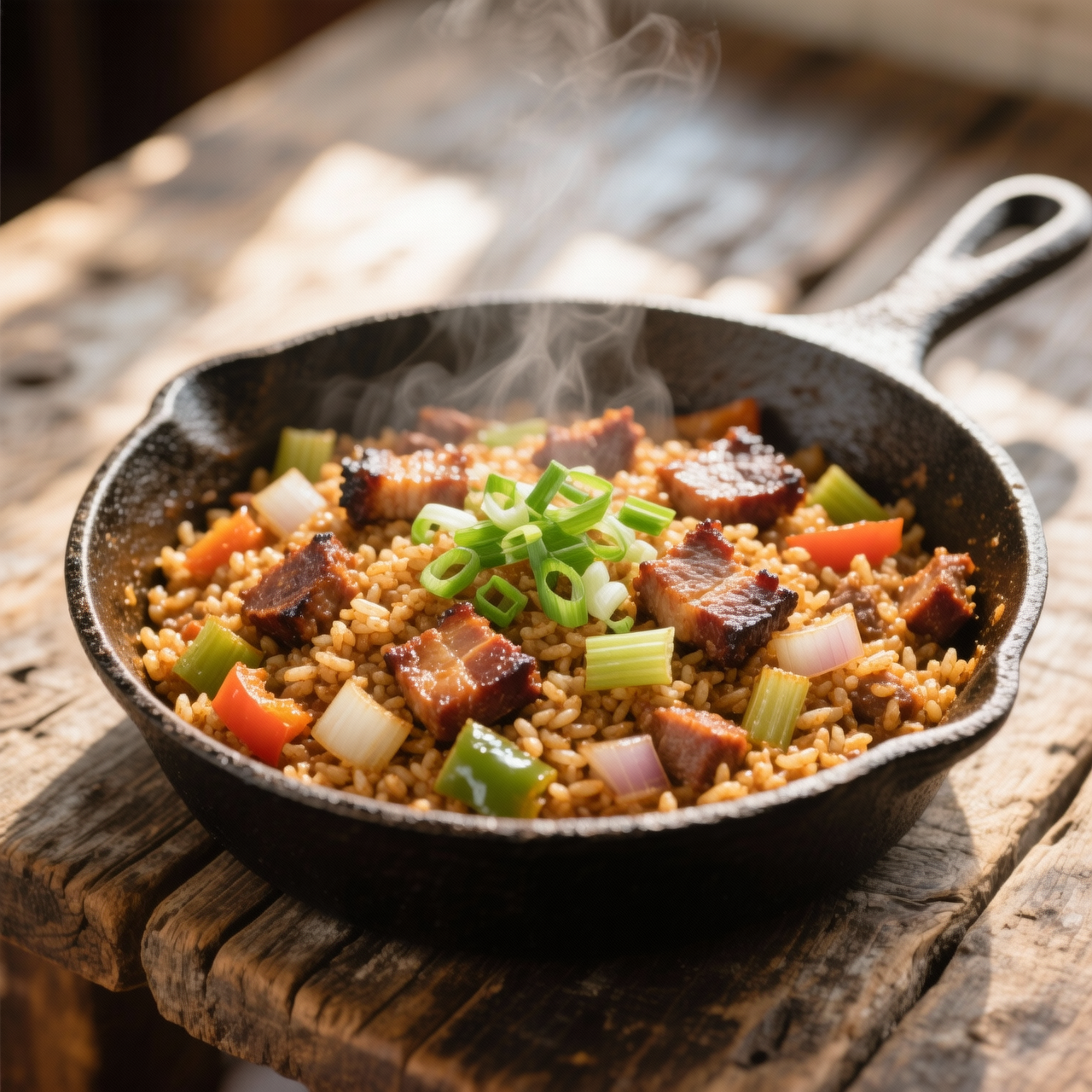
Jambalaya
I still remember the first time I watched my grandmother coax a proper jambalaya from a heavy cast-iron pot, her wooden spoon moving in slow, deliberate circles as if she were conducting a symphony of smoke and spice. This dish was never born in a single kitchen; it emerged from the cultural crossroads of Louisiana, where Spanish paella met French technique, Indigenous ingredients, and the resourceful improvisation of both Cajun bayou cooks and Creole city dwellers. What makes jambalaya so vital isn’t just its bold, layered flavor, but the way it transforms humble, pantry-bound staples into something deeply communal. I’ve seen it anchor family reunions, feed neighbors after storms, and bridge generations across a shared table. Yet, it’s also a recipe that punishes haste and arrogance. The most common mistake I witness is treating the rice like an afterthought rather than the structural heart of the dish. People rush the browning stage, skip the crucial fond-scraping step, or drown the pot in liquid, ending up with a mushy, indistinguishable mess instead of distinct, flavorful grains. Another frequent misstep is crowding the pork and sausage in the pan, which steams the meat instead of properly searing it, robbing the dish of that essential caramelized depth. True jambalaya demands patience: toast your spices until they wake up, brown your pork until it resists, let the rice absorb rather than boil, and never stir it once it’s simmering. When you respect the process, you don’t just cook a meal—you honor a living history.
Nutrition
| Per serving | Calories | Protein | Carbs | Fat | Sat fat | Fibre | Sugar | Sodium |
|---|---|---|---|---|---|---|---|---|
| beginner | 860kcal | 29g | 93g | 41g | 11g | 4g | 5g | 2220mg |
| intermediate | 860kcal | 29g | 93g | 41g | 11g | 4g | 5g | 2220mg |
| expert | 860kcal | 29g | 93g | 41g | 11g | 4g | 5g | 2220mg |
Per serving · Ava-estimated — a guide, not a clinical figure.
- 300 gpork shoulder— cut into 1-inch cubes, trimmed of excess fat
- 200 gandouille sausage— sliced into half-moons
- 400 glong-grain white rice— rinsed and drained thoroughly
- 200 gyellow onion— finely diced
- 150 ggreen bell pepper— seeds removed, finely diced
- 100 gcelery stalk— finely diced
- 15 ggarlic clove— minced
- 800 mlchicken stock— low sodium, preferably homemade
- 30 gtomato paste— double concentrate preferred
- 2 gdried thyme
- 1 gcayenne pepper
- 5 gsmoked paprika
- 2 piecebay leaf
- 45 mlvegetable oil
- 12 gkosher salt
- 2 gblack pepper— freshly cracked
- 30 ggreen onion— thinly sliced
This version prioritizes reliability and speed by leaning on a high-quality jarred Cajun seasoning paste and pre-measured spice blend. The focus shifts from building foundational aromatics to managing moisture and heat. You will brown the meats quickly, then stir in the prepared paste, which already contains emulsified fats and stabilized spices. Watch the rice carefully during the simmer phase; pre-pastes often contain thickeners that can trap steam and cause scorching. Keep the lid vented slightly and resist the urge to lift it prematurely. The goal here is a forgiving, consistently textured result that teaches you the essential rhythm of absorption cooking without demanding constant vigilance. Pay attention to the final resting period, which is your safety net for achieving fluffy, separated grains. If the bottom feels hot to the touch, immediately remove it from the burner. This approach guarantees a confident first attempt, delivering the bold, smoky profile you crave while eliminating the guesswork of spice balancing.
Equipment
- Heavy-bottomed pot— non-stick is fine here
- Wooden spoon— for gentle folding
Method
- 1
Heat vegetable oil in a large heavy pot over medium-high heat.
Oil should shimmer but not smoke.
sautéing~ 1 min - 2
Brown pork shoulder and sausage in batches until deeply colored.
Avoid crowding to ensure proper Maillard reaction.
searing~ 5 minTricky bit - 3
Add diced onion, bell pepper, celery, and garlic to the pot.
Stir constantly until vegetables soften slightly.
sweating~ 3 min - 4
Stir the jarred Cajun paste into the hot vegetable mixture.
Cook until the oil begins to separate slightly.
tempering~ 2 min - 5
Pour in chicken stock, rinsed rice, tomato paste, and dried spices.
Scrape all browned bits from the bottom.
deglazing~ 2 min - 6
Reduce heat to the lowest setting, cover tightly, and simmer undisturbed.
Do not lift the lid during this phase.
steaming~ 20 minTricky bit - 7
Remove pot from heat and let it rest fully covered.
Residual heat will finish cooking the starch.
carryover cooking~ 10 min - 8
Fluff the rice gently with a fork and fold in green onions.
Serve immediately while hot.
folding~ 1 min