
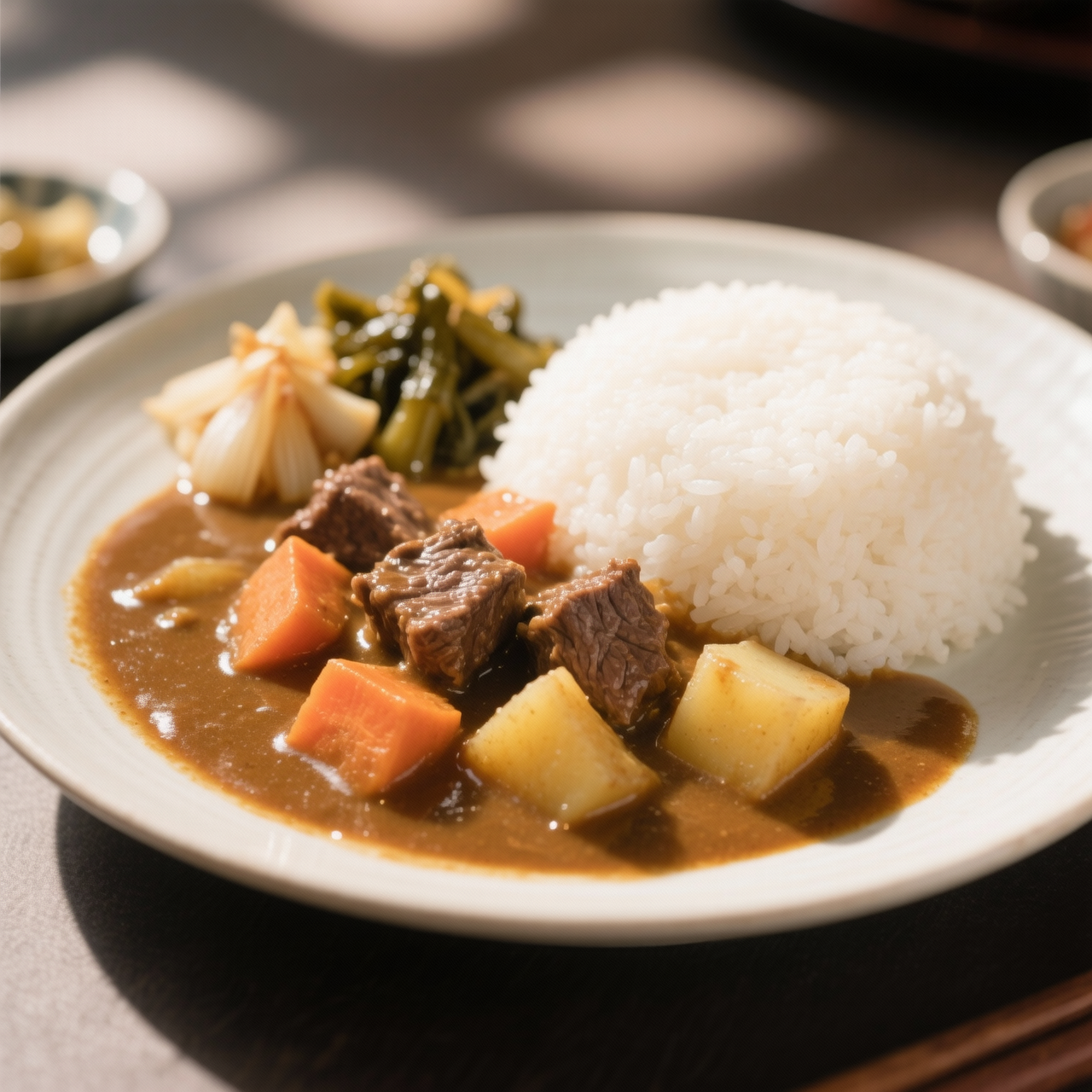
Japanese Curry Roux
When I first started experimenting with Japanese curry, I quickly realized the boxed roux blocks were a double-edged sword. They offered undeniable convenience, yet their reliance on hydrogenated fats, excessive sodium, and hidden animal products felt completely misaligned with the clean, deeply comforting meals I wanted to cook at home. That frustration birthed my quest to engineer a vegan roux from scratch. Historically, Japanese curry is a fascinating culinary import, adapted by British naval officers in the Meiji era and later refined into a uniquely Japanese staple that prioritizes a velvety, slow-simmered sweetness over aggressive heat. Making your own roux matters because it hands you absolute control over the flavor architecture. You can toast whole spices, bloom them in neutral oil, and build a rich umami foundation using toasted flour, vegetable stock powder, and a touch of fruit puree without compromising the dish signature silkiness. The most common pitfall I see home cooks fall into is rushing the roux stage or scorching the flour. You must cook the fat and flour mixture patiently until it reaches a deep, nutty mahogany, constantly stirring to prevent bitter hot spots. Another frequent mistake is adding cold liquid to a hot roux, which instantly seizes into unworkable lumps. Always temper your vegetable broth or use a gradual whisking technique to coax out that glossy, cohesive emulsion. Once you master this foundational block, you unlock a versatile pantry hero. You can slice it, grate it, or freeze it in precise portions, guaranteeing that weeknight dinners always deliver that nostalgic, restaurant-quality warmth without ever reaching for a processed wrapper again.
Nutrition
| Per serving | Calories | Protein | Carbs | Fat | Sat fat | Fibre | Sugar | Sodium |
|---|---|---|---|---|---|---|---|---|
| beginner | 245kcal | 4g | 26g | 14g | 3g | 3g | 4g | 580mg |
| intermediate | 195kcal | 4g | 26g | 9g | 3g | 2g | 5g | 340mg |
| expert | 260kcal | 4g | 28g | 15g | 5g | 3g | 11g | 590mg |
Per serving · Ava-estimated — a guide, not a clinical figure.
- 100 gneutral oil— Use a high-smoke-point variety like rice bran or sunflower
- 100 gall-purpose flour— Sift before measuring for consistent roux texture
- 50 gcurry powder— Japanese-style blend preferred, but any standard blend works
- 20 gturmeric powder— Adds the characteristic golden color
- 15 gcumin powder— Freshly ground yields the best aroma
- 15 gcoriander powder— Complements the cumin with citrusy warmth
- 10 ggaram masala— Stir in at the end of cooking the spice base to preserve volatile oils
- 30 mlsoy sauce— Use tamari for a gluten-free variation if needed
- 15 gvegetable bouillon powder— Ensure it contains no animal-derived ingredients
- 20 gbrown sugar— Provides depth and balances the spice heat
- 5 gfine sea salt— Adjust to taste based on bouillon powder saltiness
- 40 gapple puree(optional)— Unsweetened, strained for smooth roux consistency
This beginner-friendly approach skips the intimidating spice-blending process and relies on trusted jarred curry paste as your flavor anchor, paired with a simple homemade vegan roux to replace store-bought blocks. By starting with a pre-mixed base, you eliminate guesswork while still gaining full control over texture and dietary compliance. Watch your heat carefully during the roux stage; keep the stove on medium-low and stir constantly to prevent the flour from scorching or clumping. The goal is a smooth, glossy paste that thickens steadily as it cooks, not a dark, bitter crust. Once your roux reaches a light golden hue and coats the back of a spoon, remove it from the heat to prevent carryover cooking. Portion the finished paste into a silicone ice cube tray or small freezer-safe containers, then freeze until solid. These ready-made blocks will keep for up to three months, giving you a reliable shortcut for weeknight meals without the preservatives or hidden animal fats found in commercial boxes. With this method, your first attempt will yield consistent, comforting results while building foundational confidence in sauce-making.
Equipment
- Heavy-bottomed pan— non-stick is fine here
- Silicone spatula— heat-resistant for scraping corners
- Silicone ice cube tray(optional)— for freezing individual blocks
Method
- 1
Heat two tablespoons of neutral oil in a heavy-bottomed pan over medium-low heat.
Oil should shimmer but never smoke.
sweating~ 2 min - 2
Whisk in one cup of all-purpose flour until the mixture resembles wet sand.
Break up every clump before it sets.
roux~ 3 min - 3
Cook the roux while stirring constantly until it achieves a pale golden color.
Lower the heat immediately if edges darken.
toasting~ 5 minTricky bit - 4
Fold in half a cup of jarred vegan curry paste and stir until fully combined.
Let the paste bloom for one minute to unlock its aromatics.
blooming~ 1 min - 5
Slowly drizzle in one cup of warm vegetable broth while whisking vigorously to prevent lumps.
Add liquid in three stages to guarantee no lumps form.
tempering~ 3 min - 6
Transfer the cooled mixture into a freezer-safe tray and portion into twelve equal blocks.
Pack tightly to prevent freezer burn.
portioning~ 5 min
Cooking from frozen
Thaw overnight in the refrigerator or grate frozen directly into warm broth for seamless melting.
Storage times are a guide — always use your judgement and store food safely.