
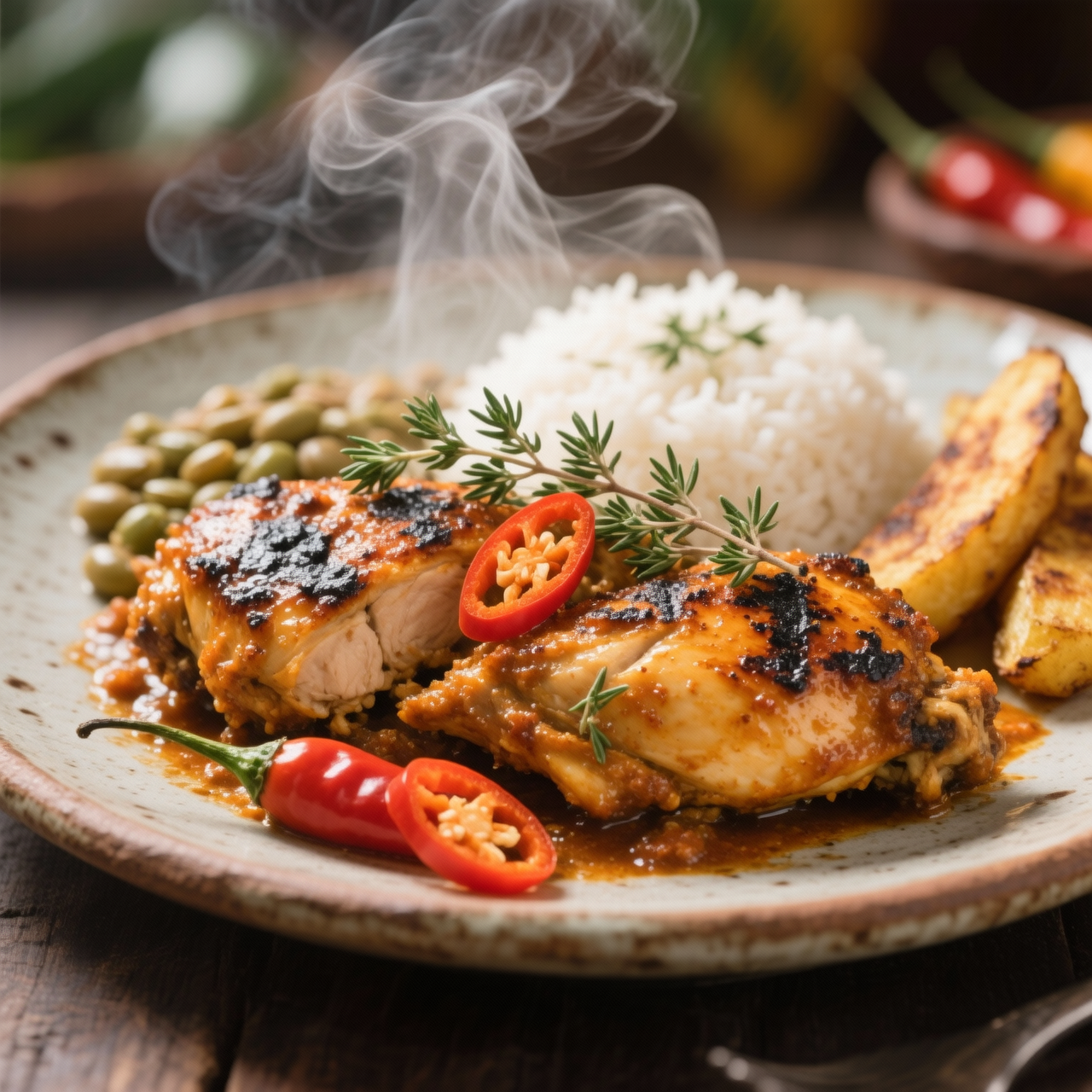
Jerk chicken
Jerk chicken is the fiery, aromatic soul of Jamaican cuisine, born from the Maroons who escaped slavery and blended their techniques with those of the enslaved Africans and indigenous Taíno people. To me, making it from scratch isn't just about flavor; it's about honoring a profound culinary heritage. The common pitfall I see everywhere is reaching for those sad, overpriced jars of neon-orange jerk paste or dry rubs. A shop-bought jar costs around five or six pounds and tastes like a dusty, one-dimensional imitation, loaded with preservatives, excess salt, and artificial smoke flavoring that completely masks the nuanced heat of real Scotch bonnet peppers and the warm, woody aroma of freshly grated pimento. When you make your own marinade, you control the fire. You get the authentic, pungent bite of fresh allspice berries, the sharp bite of scallions, and the deep, complex heat of real Scotch bonnets. The secret lies in the marinade penetrating the meat—score the chicken deeply and let it sit for at least twelve hours, ideally overnight. Don't rush the grill, either; traditional jerk relies on pimento wood for a specific smokiness, but a charcoal grill with a few soaked wood chips will get you close. Avoid the temptation to blast it on high heat, which will just burn the sugars in the marinade before the chicken cooks through. Low and slow with indirect heat is the key to that perfect, sticky, charred exterior and juicy interior. It takes a little more effort than twisting the cap off a jar, but the vibrant, authentic payoff is entirely worth it, bringing a true taste of the Caribbean to your table.
Nutrition
| Per serving | Calories | Protein | Carbs | Fat | Sat fat | Fibre | Sugar | Sodium |
|---|---|---|---|---|---|---|---|---|
| beginner | 380kcal | 28g | 6g | 26g | 7g | 1g | 2g | 650mg |
| intermediate | 480kcal | 34g | 5g | 35g | 9g | 2g | 2g | 650mg |
| expert | 550kcal | 38g | 12g | 38g | 10g | 2g | 8g | 950mg |
Per serving · Ava-estimated — a guide, not a clinical figure.
- 1000 gchicken thigh— bone-in, skin-on
- 3 piecescotch bonnet pepper— stemmed
- 6 piecescallion— roughly chopped
- 4 tspfresh thyme— leaves only
- 1 tbspallspice berry
- 4 piecegarlic clove— peeled
- 20 gfresh ginger— peeled and roughly chopped
- 60 mlsoy sauce
- 30 gbrown sugar
- 1 piecelime— juiced
- 1 tspsalt
- 1 tspblack pepper— freshly ground
- 0.5 tspground nutmeg
- 0.25 tspground cinnamon
- 30 mlvegetable oil
Shop-bought jerk rubs cost around £3 to £4 for a tiny jar and rely heavily on salt, MSG, and artificial flavorings to mimic the dish, resulting in a one-dimensional, overly salty heat that lacks the bright, aromatic depth of fresh ingredients. This beginner-friendly from-scratch version skips the processed shortcuts entirely, using a simple food processor or blender to pulse together fresh scotch bonnets, allspice, and aromatics into a vibrant, authentic marinade. The technique is simplified for a confident first attempt: we use a forgiving blend of accessible spices and fresh herbs, avoiding the traditional overnight scorching grills in favor of a reliable oven-bake with a quick char under the broiler. Watch the scotch bonnets—handle them with gloves to avoid burning your skin, and remember that the seeds hold the most heat, so adjust them to your spice tolerance. The goal is a sticky, caramelized crust and juicy meat, proving that real jerk chicken is surprisingly easy to make at home without relying on processed cheats.
Equipment
- Food processor or blender— A small bullet blender works perfectly for the marinade.
- Rimmed baking sheet— Line with foil for easy cleanup.
- Wire cooling rack— Fits inside the baking sheet to elevate the chicken.
Method
- 1
Add the scotch bonnets, spring onions, garlic, ginger, thyme, allspice, cinnamon, nutmeg, soy sauce, vinegar, olive oil, salt, and pepper to the food processor.
Wear gloves when handling scotch bonnets to avoid skin irritation.
blending~ 2 min - 2
Pulse the mixture until it forms a coarse, vibrant green and brown paste.
Stop before it becomes a completely smooth puree; a little texture is fine.
pulsing~ 1 min - 3
Place the chicken thighs in a large bowl and pour the jerk marinade over them, massaging it thoroughly into the meat and under the skin.
Ensure every piece is evenly coated for maximum flavor penetration.
marinating~ 5 min - 4
Preheat the oven to 200C (400F) and arrange the marinated chicken thighs skin-side up on the wire rack set over the baking sheet.
Leaving space between the thighs allows hot air to circulate and crisp the skin.
arranging~ 2 min - 5
Bake the chicken for 25 minutes until the internal temperature reaches 74C (165F) and the juices run clear.
Thighs are forgiving, but avoid overcooking to keep them juicy.
baking~ 25 min - 6
Switch the oven to the broil (grill) setting and cook for an additional 3 to 5 minutes until the skin is deeply caramelized and slightly charred.
Watch closely during this step, as the sugars in the marinade can burn quickly.
broiling~ 4 minTricky bit
Cooking from frozen
Thaw overnight in the fridge and reheat gently in the oven or air fryer to restore the crispy skin.
Storage times are a guide — always use your judgement and store food safely.