
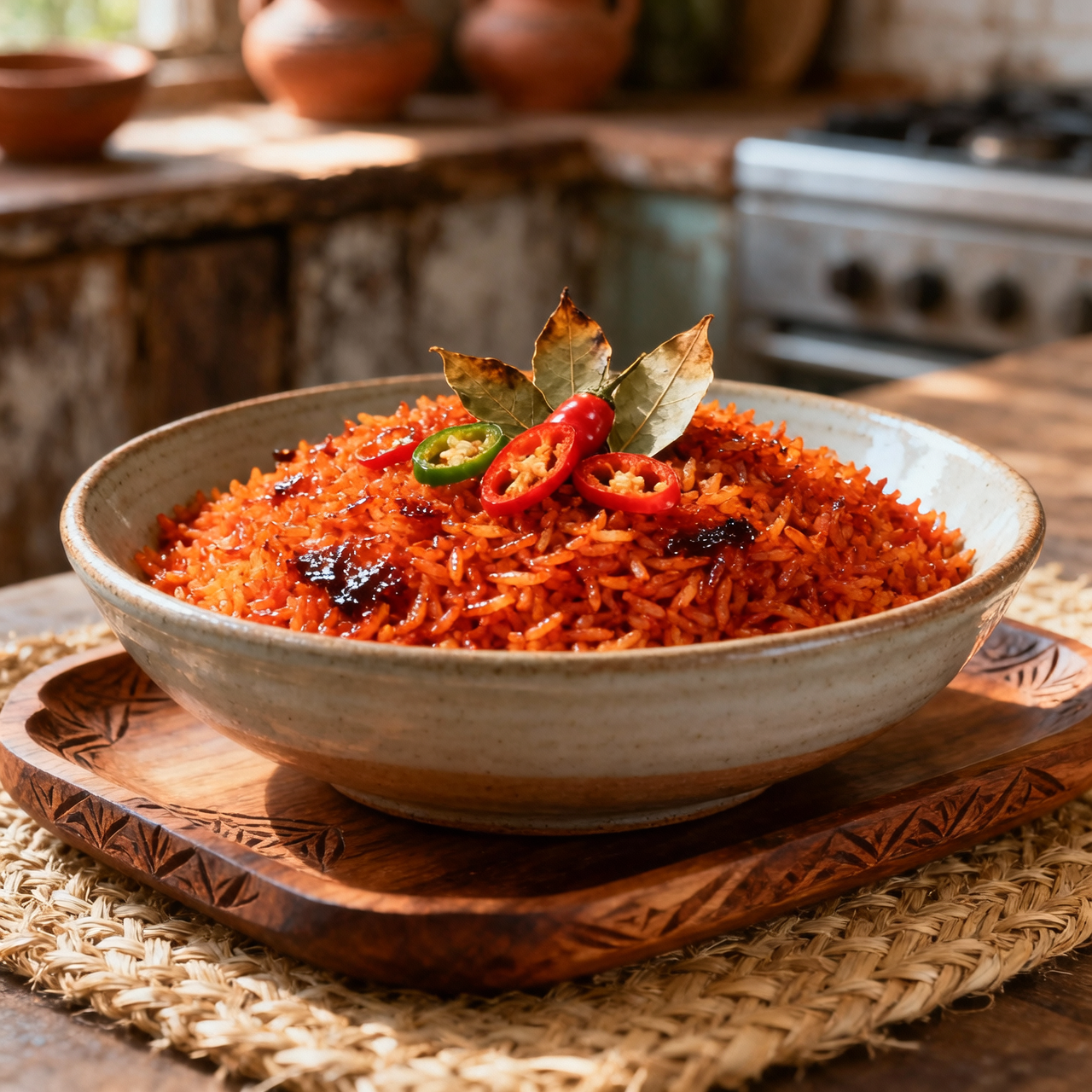
Jollof Rice
When I first learned to coax the perfect pot of Jollof rice, I quickly understood why it transcends mere sustenance to become a cultural heartbeat across West Africa. Born from the Wolof people of the Senegambia region centuries ago, this vibrant dish traveled along ancient trade routes, adapting to local pantries while retaining its soulful, tomato-forward foundation. To me, cooking Jollof is an act of preservation. It carries the echoes of bustling market stalls, Sunday family gatherings, and the gentle, rhythmic stirring of wooden spoons against heavy cast iron. Yet, the journey to a flawless pot is deceptively demanding. The most pervasive pitfall I witness is impatience with the pepper and tomato base. That initial blend must be reduced slowly, patiently, until the water evaporates and the rich, red oils finally break through to the surface. Rushing this stage leaves behind a sharp, metallic acidity that the rice will dutifully absorb and amplify. Equally critical is the handling of the grains themselves. I always emphasize rinsing until the water runs completely clear, removing the excess starch that otherwise turns the dish into a heavy, clumpy mass. Once the grains meet the simmering sauce, they demand gentle agitation and a fiercely controlled flame. The magic happens in those final, quiet minutes when the heat drops and the lid stays firmly in place, allowing that legendary, caramelized bottom layer to form without burning. When I finally lift the cover and release that intoxicating cloud of smoked paprika, thyme, and toasted tomato, I know I have not just cooked a meal. I have honored a lineage of care, precision, and shared joy.
Nutrition
| Per serving | Calories | Protein | Carbs | Fat | Sat fat | Fibre | Sugar | Sodium |
|---|---|---|---|---|---|---|---|---|
| beginner | 625kcal | 12g | 101g | 20g | 2g | 7g | 11g | 1450mg |
| intermediate | 625kcal | 12g | 101g | 20g | 2g | 7g | 11g | 1450mg |
| expert | 625kcal | 12g | 101g | 20g | 2g | 7g | 11g | 1450mg |
Per serving · Ava-estimated — a guide, not a clinical figure.
- 400 gLong-grain parboiled rice— rinsed and soaked 30 minutes prior
- 500 gRipe Roma tomato— cored and roughly chopped
- 200 gRed bell pepper— deseeded and chopped
- 15 gScotch bonnet pepper— whole or halved depending on heat preference
- 300 gYellow onion— divided for base and garnish
- 60 gTomato paste— concentrated, double-fried for depth
- 80 mlNeutral vegetable oil— sunflower or canola preferred
- 900 mlChicken or vegetable broth— warm, not boiling
- 15 gGarlic clove— peeled and crushed
- 10 gFresh ginger root— peeled and grated
- 5 gCurry powder— West African blend preferred
- 2 gDried thyme— fresh, not dried
- 2 pcsBay leaf
- 10 gFine sea salt
This version prioritizes confidence and reliability by streamlining the traditional workflow into a single-pot, low-maintenance process. You will rely on a standard blender to create the foundational tomato-pepper purée, bypassing the need for precise knife work or multi-stage sautéing. The key difference here is the forgiving heat profile and simplified moisture ratio, which removes the guesswork from rice absorption. What to watch for is the initial reduction phase; even with shortcuts, rushing the sauce will leave a raw, metallic aftertaste that no amount of seasoning can mask. Allow the blended base to cook down patiently until the oil visibly separates and pools around the edges of your pot. When adding the rice, ensure your grains are thoroughly drained to prevent diluting your carefully balanced sauce. Keep the lid tightly sealed during the final simmer and resist the urge to stir, as agitation releases excess starch and guarantees a gummy texture. If your rice still feels slightly firm after the timer ends, simply add two tablespoons of hot water, re-cover, and let residual steam finish the job.
Equipment
- Blender— standard countertop model
- Heavy-bottomed pot with tight lid— non-stick is acceptable here
- Fine mesh strainer— for draining soaked rice
- Wooden spoon— heat-resistant
Method
- 1
Blend tomatoes, bell peppers, scotch bonnets, and half the onions until completely smooth.
Work in batches if your blender struggles.
blending~ 2 min - 2
Heat oil in the pot over medium heat, then add tomato paste and stir constantly until it darkens slightly.
Keep moving to prevent scorching.
frying~ 3 minTricky bit - 3
Pour the blended vegetable mixture into the pot and simmer until thickened and oil rises to the surface.
Listen for a change in pitch from splattering to quiet bubbling.
reduction~ 15 min - 4
Stir in the remaining diced onions, garlic, ginger, curry powder, thyme, bay leaves, and salt.
Cook for one minute to awaken the spices.
aromatics~ 1 min - 5
Rinse the soaked rice thoroughly, drain well, and fold it into the seasoned sauce base.
Ensure every grain is coated before proceeding.
coating~ 1 min - 6
Pour the warm broth over the rice, cover tightly, and reduce heat to the lowest setting.
Do not lift the lid once simmering begins.
simmering~ 20 minTricky bit - 7
Turn off heat after liquid is absorbed and let the pot rest undisturbed before fluffing.
Steam continues cooking the rice off-heat.
resting~ 10 min