
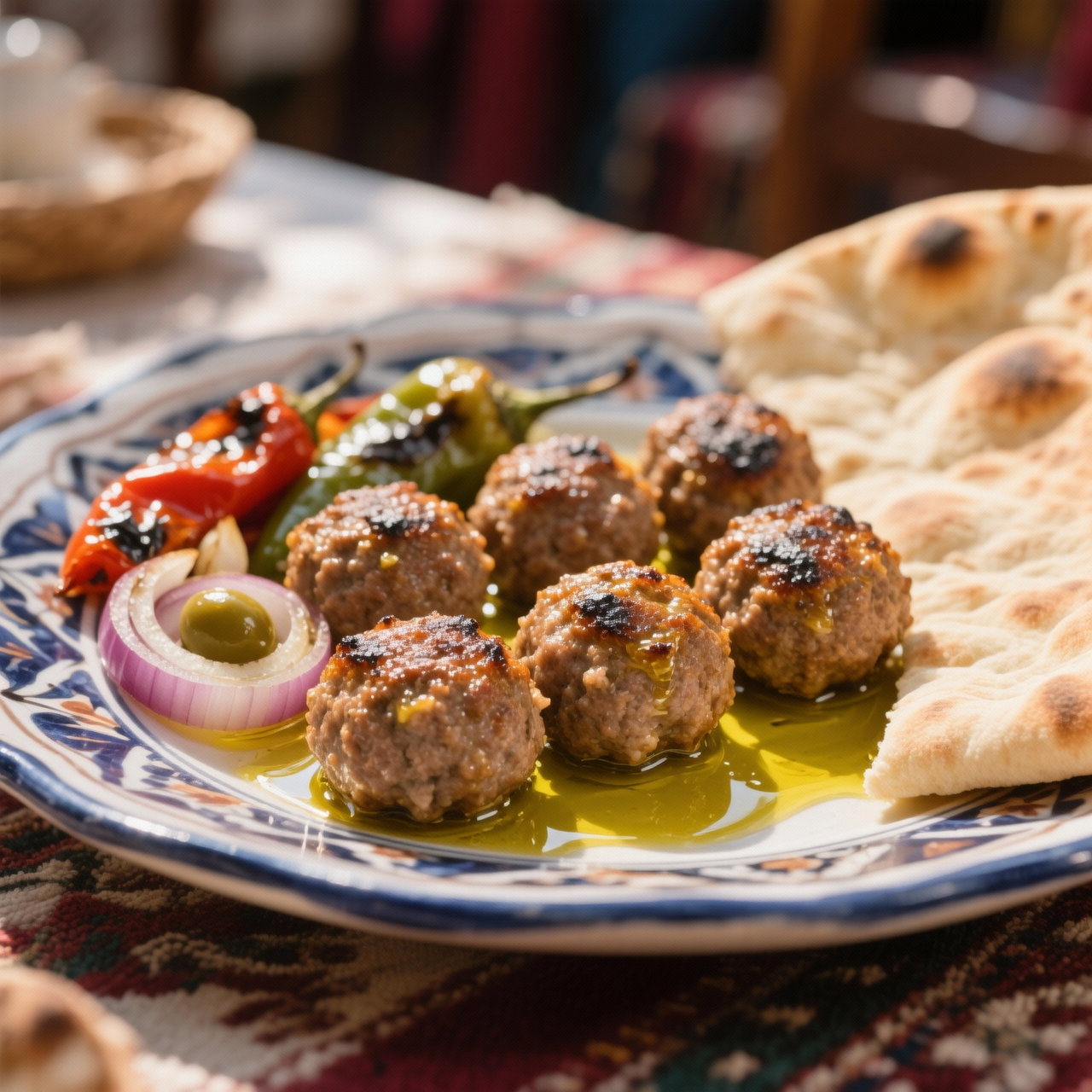
Köfte (Turkish meatballs)
I’ve always believed that köfte is where Turkish home cooking truly reveals its soul. Long before fast-food chains flooded city centres with their plastic-wrapped, factory-stamped alternatives, families across Anatolia were kneading hand-minced beef with stale bread, fresh parsley, and toasted spices. You can buy a box of mass-produced Turkish meatballs at the supermarket for around three pounds, but they’re invariably spongy, drowning in artificial binders, and stripped of the cumin and sumac that give the real thing its earthy warmth. Making them from scratch isn’t just a rebellion against the assembly line; it’s a return to a rhythm that’s meant to be tactile. The dough-like meat should rest, allowing the gluten in the bread and the salt to bind everything naturally without the need for egg or powdered shortcuts. The most common mistake I see is overworking the mixture until it turns dense, or skipping the resting period entirely, which leaves the patties crumbling on the grill. Another trap is using lean mince; a little fat is non-negotiable for that characteristic juiciness. When you shape these by hand and let them sleep in the fridge before cooking, the flavours marry and the texture becomes impossibly tender. They freeze beautifully in their raw state, which means you can always keep a batch ready for a quick weeknight meal without sacrificing the integrity of a dish that’s been perfected over generations. It’s honest food, built on patience and simple, recognisable ingredients, and once you taste it, you’ll never go back to the tin.
Nutrition
| Per serving | Calories | Protein | Carbs | Fat | Sat fat | Fibre | Sugar | Sodium |
|---|---|---|---|---|---|---|---|---|
| beginner | 345kcal | 26g | 4g | 23g | 8g | 1g | 1g | 580mg |
| intermediate | 485kcal | 38g | 6g | 33g | 13g | 2g | 3g | 710mg |
| expert | 385kcal | 34g | 3g | 23g | 7g | 1g | 1g | 560mg |
Per serving · Ava-estimated — a guide, not a clinical figure.
- 500 gground beef— preferably 15-20% fat content for optimal juiciness
- 150 gonion— finely grated and excess moisture thoroughly squeezed out
- 60 gstale bread— crusts removed, soaked in cold water and squeezed completely dry
- 1 largeegg— lightly beaten before adding
- 2 clovegarlic— finely minced or pressed into a paste
- 20 gflat-leaf parsley— finely chopped, leaves only
- 8 gsalt— fine sea salt or kosher salt
- 3 gground cumin— freshly toasted and ground if possible
- 2 gsweet paprika— high-quality Hungarian or Turkish variety preferred
- 2 gblack pepper— freshly cracked coarse grind
This beginner version strips away intimidating techniques while keeping every ingredient real and recognizable. Unlike supermarket tubes of pre-mixed köfte, which rely on cheap fillers, excess sodium, and stabilizers for a rubbery texture that costs nearly as much as premium ground beef, this recipe delivers authentic Turkish flavor in half the time. You will grate the onion directly into the bowl and gently combine everything by hand, skipping complex resting or double-kneading steps. Watch the pan temperature closely; medium heat ensures a crisp exterior without burning the spices before the interior cooks through. The key to tender meatballs here is resisting the urge to overwork the beef. Mix only until the spices and aromatics are evenly distributed. Once shaped, the patties can go straight to the pan, or you can line a baking sheet with parchment, stack them with wax paper, and freeze for up to three months. This forgiving approach guarantees juicy, well-seasoned results on your first try, proving that skipping processed shortcuts does not mean sacrificing convenience.
Equipment
- Large mixing bowl— glass or stainless steel prevents odor retention
- Box grater— medium holes work best for onions
- Heavy skillet— cast iron or thick non-stick
Method
- 1
Grate one small yellow onion and squeeze it tightly in a clean kitchen towel to remove excess liquid.
Dry onion prevents mushy patties and keeps the meat binding properly.
wringing~ 2 min - 2
Place ground beef, grated onion, minced garlic, finely chopped parsley, ground cumin, sweet paprika, salt, and black pepper into the mixing bowl.
Measure all dry spices before adding them to ensure even distribution.
mise en place~ 3 min - 3
Gently fold and press the mixture with your hands until the spices are fully incorporated and the meat feels slightly tacky.
Stop mixing as soon as it holds together; overworking makes the meatballs tough.
hand folding~ 4 minTricky bit - 4
Divide the mixture into twelve equal portions and press each into a three-quarter inch thick oval patty.
Lightly oil your palms to keep the raw meat from sticking while shaping.
portioning~ 5 min - 5
Heat olive oil in a heavy skillet over medium heat and cook the patties for four minutes per side until deeply browned.
Listen for a steady sizzle; if it spatters aggressively, reduce the heat slightly.
pan-searing~ 8 minTricky bit
Cooking from frozen
Thaw raw patties in the fridge overnight, then grill or pan-fry directly; they cook evenly without drying out.
Storage times are a guide — always use your judgement and store food safely.