
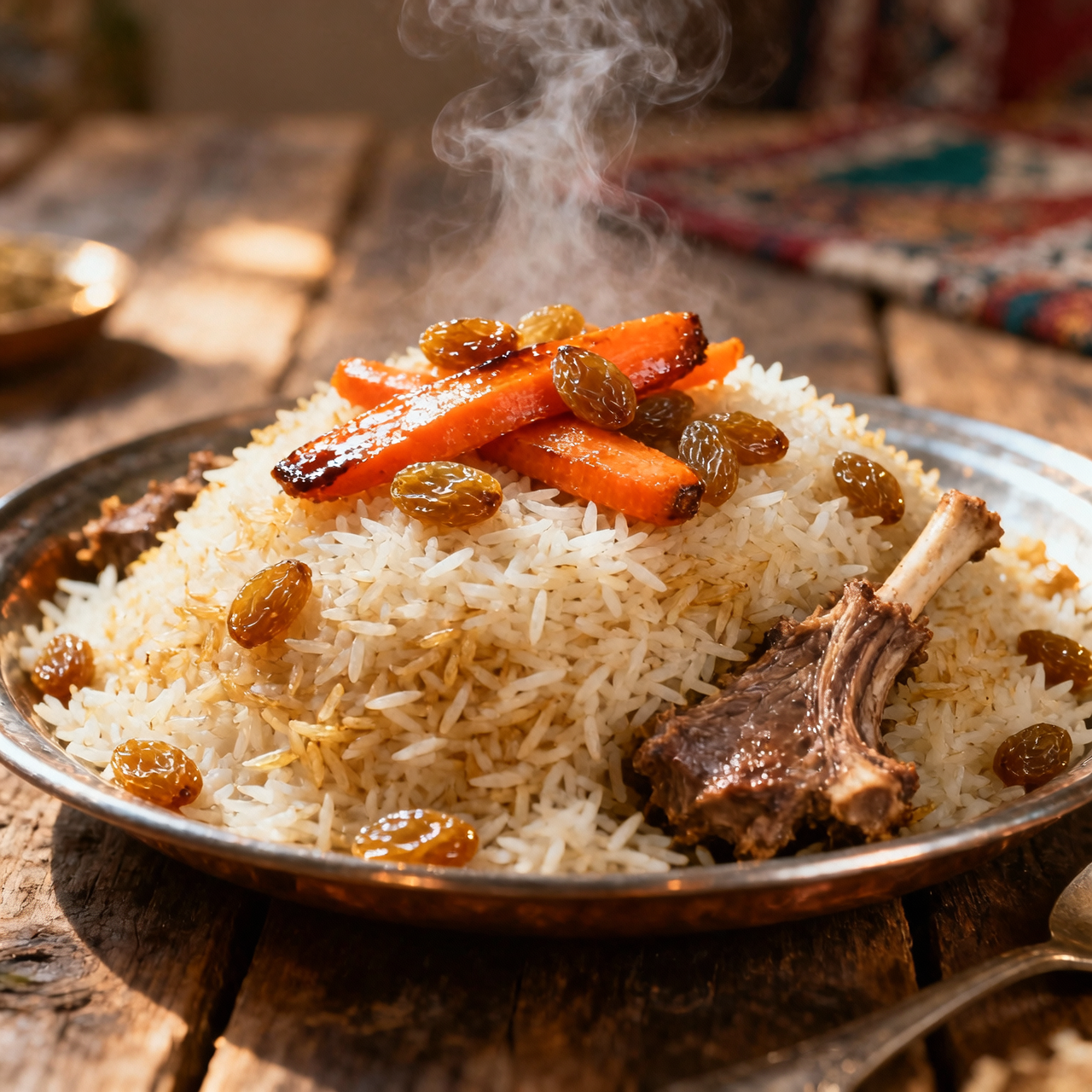
Kabuli Pulao
When I first encountered Kabuli Pulao, it wasn’t just a dish; it was a quiet testament to the Silk Road’s lingering whispers in Afghan kitchens. I’ve always been drawn to how this rice preparation bridges geography and history, carrying saffron threads, caramelized carrots, and plump raisins across generations. Originating in the bustling bazaars of Kabul, it evolved as a celebratory centerpiece, traditionally served at weddings, Nowruz gatherings, and diplomatic tables where hospitality isn’t just expected—it’s sacred. To me, cooking it matters because it demands patience and respect for balance. You cannot rush the slow caramelization of the carrots, nor can you neglect the precise water-to-rice ratio that transforms basmati into separate, fragrant pearls rather than a gummy mass. The most common pitfall I’ve seen home cooks stumble into is overcomplicating the spice profile. Some drown it in cinnamon or cardamom, forgetting that the dish’s soul lies in the subtle interplay of toasted cumin, black pepper, and the natural sweetness of the fruit. Another frequent misstep is skipping the resting phase after steaming; without that crucial ten minutes under a heavy lid, the moisture redistributes unevenly, ruining the delicate texture. When I prepare it, I treat the rice like a living thing, listening for the gentle hiss as it cooks and trusting the process. It’s a reminder that true comfort food rarely shouts. It simmers, waits, and eventually reveals itself in layers of gold, amber, and spice.
Nutrition
| Per serving | Calories | Protein | Carbs | Fat | Sat fat | Fibre | Sugar | Sodium |
|---|---|---|---|---|---|---|---|---|
| beginner | 1150kcal | 32g | 122g | 54g | 13g | 7g | 32g | 1800mg |
| intermediate | 1150kcal | 32g | 122g | 54g | 13g | 7g | 32g | 1800mg |
| expert | 1150kcal | 32g | 122g | 54g | 13g | 7g | 32g | 1800mg |
Per serving · Ava-estimated — a guide, not a clinical figure.
- 400 gbasmati rice— long-grain, preferably aged
- 600 glamb shoulder— boneless, trimmed of excess fat
- 300 gyellow onion— finely diced
- 400 gcarrot— julienne cut
- 100 ggolden raisin— plump, not dried out
- 15 gcumin seed— whole
- 8 ggreen cardamom pod— lightly crushed
- 5 gcinnamon stick— broken into pieces
- 50 ggranulated sugar— white or light brown
- 120 mlneutral oil— high smoke point
- 20 gkosher salt— coarse grain
- 1500 mlwater— for cooking and soaking
This version is designed to remove the intimidation factor while preserving the dish’s signature flavor profile. Instead of toasting and grinding whole spices, you’ll rely on a high-quality jarred Afghan spice paste that captures the essential cardamom-cumin-cinnamon balance in a single step. The meat is cut smaller and browned quickly, skipping the traditional slow braise in favor of a faster simmer that still yields tender results. The carrot and raisin topping is prepared using a simple stovetop glaze rather than the traditional slow-caramelization in meat broth, saving time without sacrificing sweetness. Watch closely during the final rice steaming; the beginner method uses a standard lid, so maintaining a low, consistent heat is crucial to prevent burning. I’ve structured the steps to guide you through washing, parboiling, and layering the rice so you build muscle memory for the absorption method. Don’t worry if your grains aren’t perfectly separated on the first try. The goal here is confidence and a recognizable, comforting plate of food. Once you master the timing and heat control in this streamlined approach, you’ll have the foundation to tackle the next level.
Equipment
- Heavy-bottomed pot— standard non-stick works fine
- Fine-mesh strainer— for rinsing rice
- Wooden spoon— heat-resistant handle
Method
- 1
Rinse basmati rice until water runs clear, then soak in cold water for 15 minutes.
Do not skip rinsing, it removes surface starch.
soaking~ 15 min - 2
Brown diced lamb shoulder in neutral oil over medium-high heat until all sides are seared.
Work in batches to avoid steaming.
searing~ 8 min - 3
Stir in jarred spice paste and water, then bring to a simmer and cover.
Simmer gently to tenderize meat quickly.
braising~ 30 minTricky bit - 4
Parboil soaked rice in salted water until grains are just tender at the edges.
Taste a grain; it should offer slight resistance.
parboiling~ 6 minTricky bit - 5
Drain rice and layer it over the cooked meat mixture in the same pot.
Do not press or compact the grains.
layering~ 2 min - 6
Cover tightly and steam over the lowest possible heat until rice is fluffy and dry.
Resist lifting the lid to check.
steaming~ 25 minTricky bit - 7
Sauté carrots and raisins with sugar until glossy, then spoon over rice before serving.
Cook until sugar fully dissolves and coats the fruit.
glazing~ 7 min