
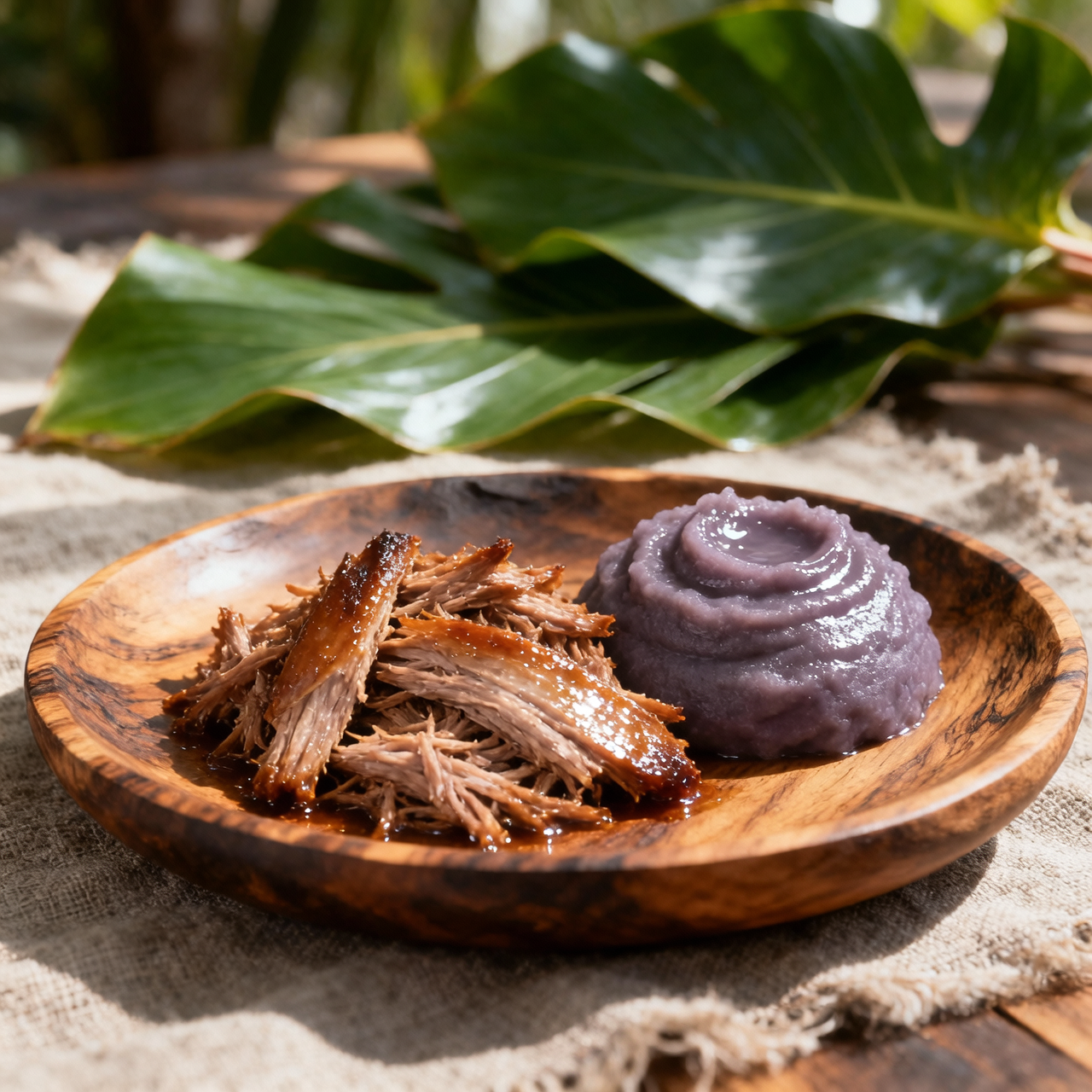
Kalua Pig with Poi
When I first learned to prepare Kalua pig, I realized it wasn’t merely a cooking method but a living dialogue with centuries of Hawaiian heritage. The traditional imu, an underground earth oven lined with hot volcanic stones, banana leaves, and ti leaves, transforms a whole hog into something profoundly tender and deeply smoky. This dish matters because it anchors Hawaiian gatherings, from humble family luaus to grand community celebrations, embodying the spirit of aloha and shared labor. Every layer of leaves, every slow hour of roasting, honors a lineage that understood patience as a form of reverence. Yet, I’ve watched too many home cooks rush the process, trading the earth’s gentle heat for a modern oven or a pressure cooker, which strips away the essential woodsmoke and leaves the meat dry and one-dimensional. Another frequent misstep is neglecting the salt balance; traditional sea salt isn’t just seasoning, it’s a preservative and flavor catalyst that penetrates the muscle fibers over hours. When it comes to poi, many treat it as an afterthought, overworking it into a gummy paste or under-hydrating it until it’s chalky, forgetting that its subtle sourness is meant to cut through the rich, unctuous pork. True kalua cooking demands surrender to time, respect for the ingredients, and an understanding that you’re not just feeding guests—you’re continuing a cultural rhythm. When done right, the pig yields effortlessly, the poi breathes, and the table becomes a place of memory.
Nutrition
| Per serving | Calories | Protein | Carbs | Fat | Sat fat | Fibre | Sugar | Sodium |
|---|---|---|---|---|---|---|---|---|
| beginner | 1020kcal | 78g | 64g | 54g | 19g | 10g | 2g | 1180mg |
| intermediate | 1020kcal | 78g | 64g | 54g | 19g | 10g | 2g | 1180mg |
| expert | 1020kcal | 78g | 64g | 54g | 19g | 10g | 2g | 1180mg |
Per serving · Ava-estimated — a guide, not a clinical figure.
- 1800 gPork shoulder— boneless, well-marbled
- 30 gHawaiian red salt— alaea or coarse sea salt
- 300 gTi leaf— fresh or thawed from frozen
- 1000 gTaro root— peeled and quartered
- 1500 mlWater— filtered
This version prioritizes accessibility and guaranteed results without sacrificing the core flavor profile. Instead of building a traditional earth oven or managing a precise low-and-slow braise, you will use a slow cooker to replicate the imu’s moist, gentle heat environment. The jarred Hawaiian rub acts as your shortcut, delivering the essential salt and smoke notes in a single step. Your primary focus should be on proper layering and moisture retention. Tightly wrap the pork in the provided leaves before placing it in the pot to trap steam, which naturally tenderizes the meat fibers. Do not open the lid during the long cook cycle, as releasing that trapped steam will interrupt the breakdown of collagen and leave the pork tough. When shredding, use two forks to gently pull the meat apart along the grain, preserving the rendered fat that keeps each bite succulent. The poi component is simplified to a straightforward boil-and-mash process, ensuring you achieve a smooth, paste-like consistency without needing specialized fermentation knowledge. Watch for dryness in the final shred; if the meat looks lean, fold back in the accumulated cooking juices. This path removes the guesswork and delivers a deeply comforting, authentic-tasting plate on your very first attempt.
Equipment
- Slow cooker— 6-quart capacity recommended
- Mixing bowl— medium size
- Dinner forks— two for pulling
Method
- 1
Rub the jarred seasoning evenly over the pork shoulder.
Press gently to adhere.
seasoning~ 2 min - 2
Wrap the seasoned pork tightly in the fresh leaves.
Secure with kitchen twine.
wrapping~ 3 min - 3
Place the wrapped pork into the slow cooker and cover.
Do not add extra water.
braising~ 240 min - 4
Shred the cooked meat using two forks.
Retain all pan juices.
pulling~ 5 min - 5
Boil the peeled taro until fork-tender, then mash with water.
Add water gradually.
mashing~ 20 min