
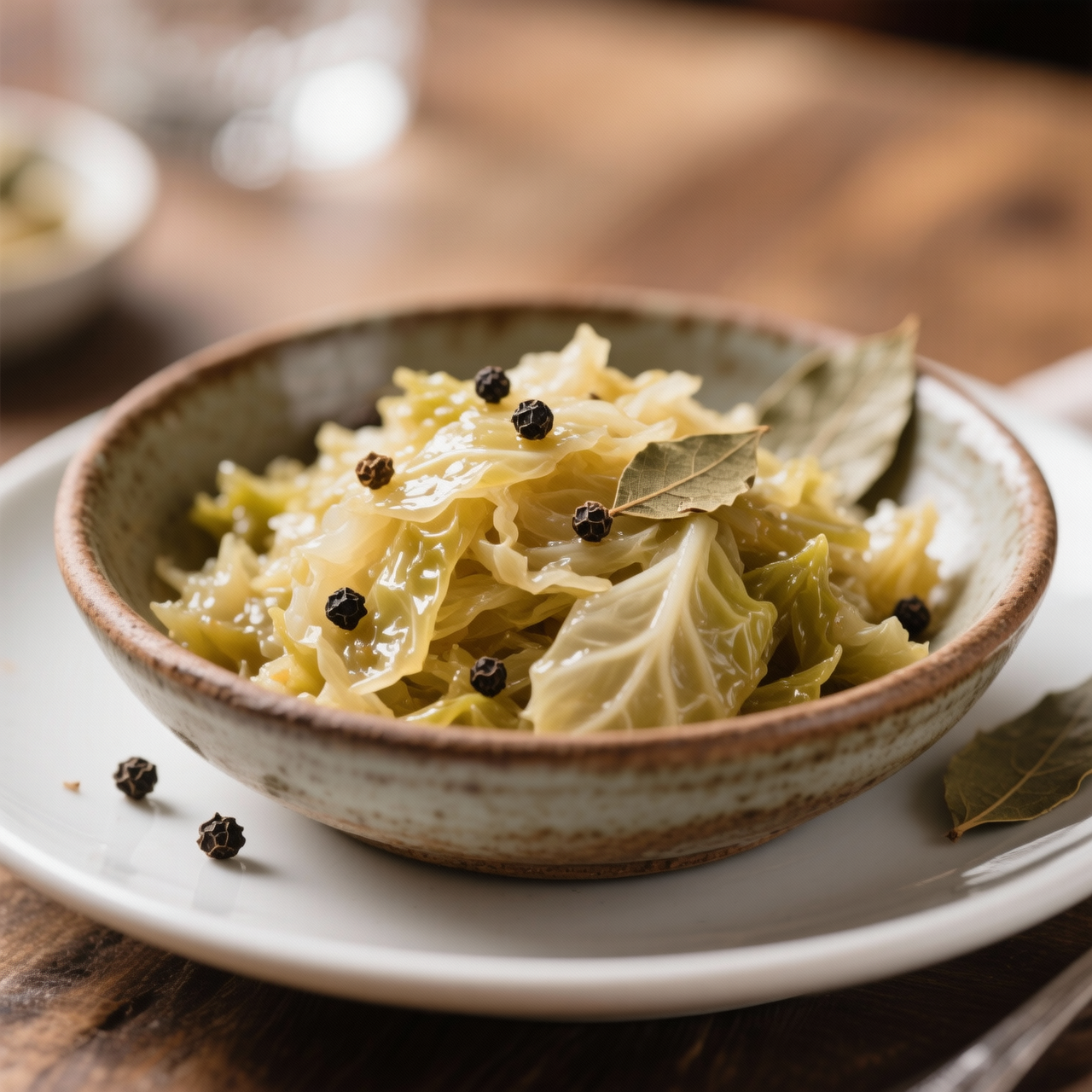
Kapusta kiszona (sauerkraut)
When I think of Polish culinary heritage, kapusta kiszona immediately comes to mind as the ultimate testament to patience and preservation. Long before refrigeration, our ancestors relied on this lacto-fermentation miracle to survive harsh winters, transforming humble cabbage into a tangy, probiotic powerhouse. It is far more than just a condiment; it is the soul of dishes like bigos and pierogi, providing that essential acidic backbone that cuts through rich fats. Making it at home connects you to centuries of tradition, but it requires respecting the process. The most common pitfall I see is rushing the fermentation or using iodized salt, which can inhibit the beneficial bacteria. You must use pure, non-iodized sea salt or kosher salt, massaging it thoroughly into the cabbage until it releases enough of its own brine to submerge completely. Another frequent mistake is exposing the cabbage to air, which invites mold. I always recommend using a fermentation weight and an airlock lid if you have one, ensuring an anaerobic environment. The temperature of your kitchen also plays a crucial role; too warm and it ferments too quickly and turns mushy, too cold and it stalls entirely. Aim for a steady room temperature, around 65 to 70 degrees Fahrenheit, and let time do the heavy lifting. After a few weeks, you will be rewarded with a complex, deeply sour crunch that no store-bought jar could ever replicate. It is a labor of love that truly defines the spirit of Polish cooking.
Nutrition
| Per serving | Calories | Protein | Carbs | Fat | Sat fat | Fibre | Sugar | Sodium |
|---|---|---|---|---|---|---|---|---|
| beginner | 8kcal | 1g | 2g | 0g | 0g | 1g | 1g | 350mg |
| intermediate | 25kcal | 1g | 5g | 0g | 0g | 2g | 3g | 750mg |
| expert | 25kcal | 1g | 6g | 0g | 0g | 3g | 3g | 1800mg |
Per serving · Ava-estimated — a guide, not a clinical figure.
- 2000 gcabbage— white or green, outer leaves removed and reserved, core cut out
- 40 gsalt— non-iodized, such as kosher, sea salt, or pickling salt
- 10 gcaraway seed(optional)— optional but traditional for flavor
This beginner-friendly approach to kapusta kiszona removes the intimidation of traditional fermentation by using a few clever shortcuts while still delivering that signature tangy crunch. Instead of relying solely on wild ambient yeasts, we introduce a starter equivalent: a few tablespoons of raw, unpasteurized jarred sauerkraut brine. This inoculates your fresh cabbage with a robust, proven colony of lactobacillus, virtually guaranteeing a successful ferment and protecting against bad bacteria. We also shortcut the tedious hand-shredding by pulsing the cabbage in a food processor, saving your arms and ensuring uniform pieces that ferment evenly. The most critical technique to watch for is achieving full submersion; every piece of cabbage must stay below the brine line to prevent mold. Don't worry if it doesn't look like enough liquid at first—the salt will draw out more moisture as it rests. Keep the jar out of direct sunlight, burp it daily if using a standard lid, and taste it after one week. Once it reaches your desired sourness, move it to the cold fridge to slow the fermentation, where this batch hero will happily keep for months.
Equipment
- Food processor(optional)— Fitted with shredding disk for quick prep; a sharp knife works if preferred
- Large mixing bowl— Glass or stainless steel; avoid reactive metals like aluminum
- 1-quart wide-mouth mason jar— Or a dedicated ceramic fermentation crock
- Glass fermentation weights— Keeps cabbage submerged; a small ziplock bag filled with water works too
Method
- 1
Core and shred one medium green cabbage into thin, uniform strips using a food processor or sharp knife.
Aim for consistency so it ferments evenly and crisps up nicely.
shredding~ 5 min - 2
Weigh the shredded cabbage and calculate 2% of that weight in fine sea salt, then toss together in a large bowl.
2% salt by weight is the golden ratio for safe, crisp sauerkraut.
bakers_percentage~ 3 min - 3
Vigorously massage and squeeze the salted cabbage with clean hands for 5 to 10 minutes until a substantial amount of liquid brine pools at the bottom.
The cabbage should look translucent and feel slick.
massaging~ 7 minTricky bit - 4
Stir in three tablespoons of raw, unpasteurized jarred sauerkraut brine to act as your fermentation starter.
This liquid starter ensures a fast, dominant lactobacillus colony.
inoculating~ 1 min - 5
Tightly pack the cabbage and all released juices into a clean mason jar, pressing down firmly to eliminate air pockets.
Leave at least two inches of headspace at the top for expansion.
packing~ 5 minTricky bit - 6
Place a glass weight on top to ensure all solids are completely submerged beneath the brine, then seal with an airlock or standard lid.
If using a standard lid, burp it daily to release built-up carbon dioxide.
submerging~ 2 min
Storage times are a guide — always use your judgement and store food safely.