
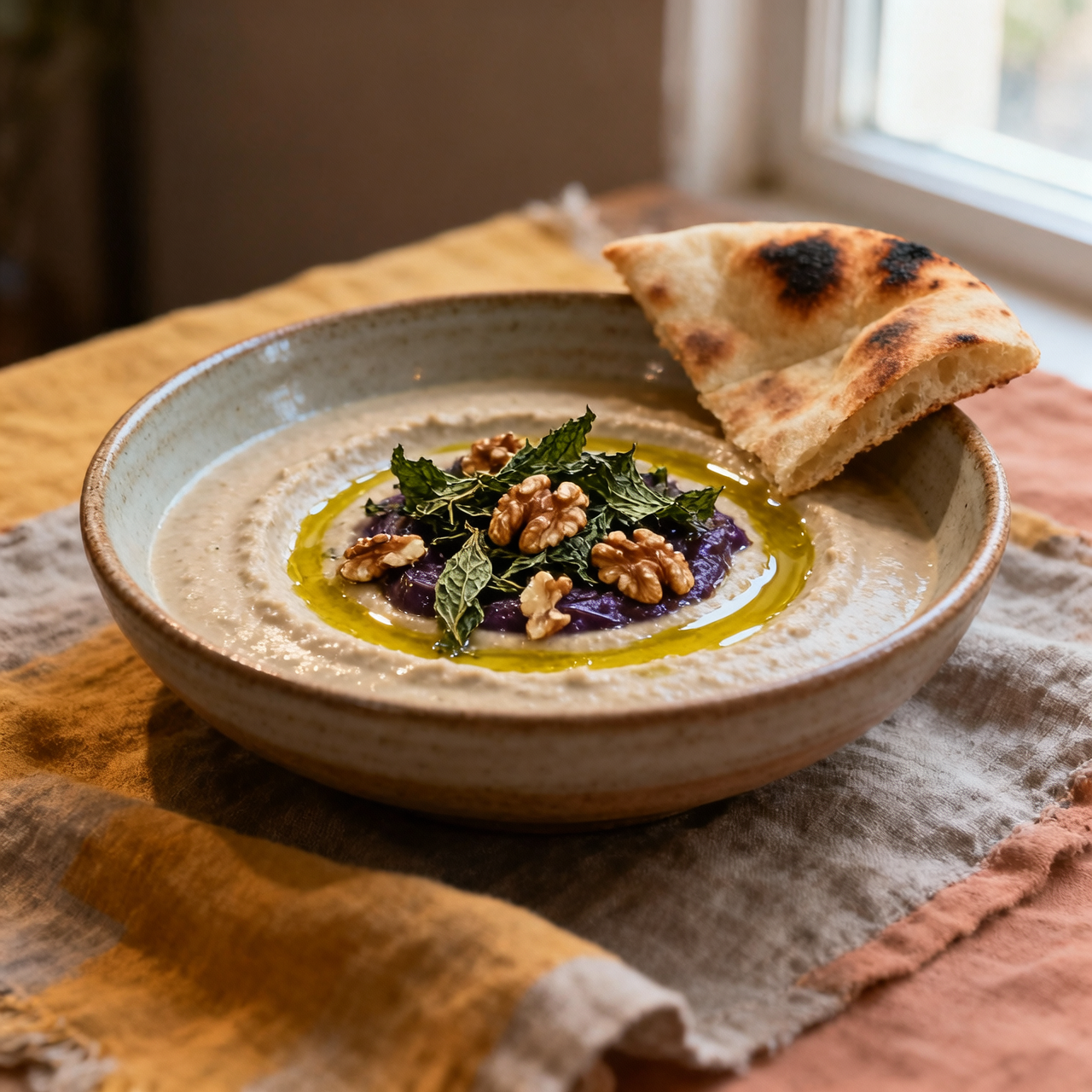
Kashk-e Bademjan
When I first learned to make kashk-e bademjan, I quickly realized it is far more than a simple eggplant dip; it is a quiet testament to Persian hospitality and the art of slow transformation. The dish traces its roots to the resourceful kitchens of ancient Iran, where cooks learned to coax deep, smoky richness from humble ingredients. At its heart lies a beautiful tension: the earthy bitterness of roasted eggplant, the sharp, fermented tang of kashk, and the golden warmth of fried mint and onions. What matters most to me about this recipe is its insistence on patience. Modern shortcuts often lead to a mushy, one-note puree, but the true magic happens when you allow the eggplant to break down gradually, stirring until the fibers surrender to a silky, almost custard-like consistency. I have seen too many home cooks rush the frying stage, leaving the onions and garlic raw-tasting, or drown the dish in oil until it feels heavy rather than comforting. Another frequent misstep is using weak or pasteurized kashk that lacks the characteristic tang; a good-quality, traditionally fermented whey is non-negotiable. When balanced correctly, the dish becomes a study in contrasts, rich yet bright, rustic yet refined. It has always been my favorite way to gather people around a table, because it demands presence. Every stir, every careful fold of garnish, is an invitation to slow down and savor a flavor that has survived centuries by refusing to compromise on depth.
Nutrition
| Per serving | Calories | Protein | Carbs | Fat | Sat fat | Fibre | Sugar | Sodium |
|---|---|---|---|---|---|---|---|---|
| beginner | 320kcal | 10g | 25g | 21g | 2g | 9g | 11g | 1700mg |
| intermediate | 320kcal | 10g | 25g | 21g | 2g | 9g | 11g | 1700mg |
| expert | 320kcal | 10g | 25g | 21g | 2g | 9g | 11g | 1700mg |
Per serving · Ava-estimated — a guide, not a clinical figure.
- 800 geggplant— firm, glossy skin with heavy weight
- 250 gkashk (Persian whey)— traditional fermented dairy product
- 200 gyellow onion— thinly sliced
- 20 ggarlic— freshly minced
- 15 gdried mint— whole leaf preferred
- 60 mlsunflower oil— neutral high-heat oil
- 5 gturmeric— ground
- 40 gwalnut half— roughly chopped
- 0.5 gsaffron thread— high-grade Persian
- 2 gblack pepper— freshly cracked
- 8 gsalt— fine sea salt
This version is built for confidence, not compromise. You’ll lean on reliable shortcuts like store-bought kashk and straightforward oven roasting to keep the process predictable while still delivering authentic flavor. The main focus here is heat management and timing, two areas where beginners often stumble. You’ll bake the eggplant until completely tender, then mash it directly in the bowl to avoid transferring hot, slippery vegetables. The mint and onion garnish is kept simple: cook them slowly over medium heat so the mint releases its oils without turning bitter. I’ve added explicit visual and tactile cues throughout so you know exactly when each stage is ready. Watch for the onions to turn translucent before adding the mint, and always remove the pan from the heat the second the leaves darken. When combining everything, thin the kashk with a splash of warm water first to prevent shocking the dairy and keep the dip silky instead of grainy. You don’t need a culinary degree to make this shine—just steady hands, a timer, and the willingness to follow the cues.
Equipment
- Heavy-bottomed skillet— non-stick works well for gentle frying
- Baking sheet— lined with parchment for easy cleanup
- Potato masher— standard wire type
- Small mixing bowl— for thinning kashk
Method
- 1
Preheat your oven to 200°C and pierce the eggplants several times with a sharp fork.
Prevents bursting and allows even steam release.
roasting~ 10 min - 2
Place the eggplants on the prepared baking sheet and bake until completely collapsed and tender.
A knife should slide through the center with zero resistance.
roasting~ 30 min - 3
Scoop the softened flesh into a large mixing bowl and mash until mostly smooth.
Leave a few small chunks for texture.
mashing~ 5 min - 4
Heat half the oil in the skillet over medium heat and sauté the onion until soft and translucent.
Do not rush this step or the onions will brown too quickly.
sautéing~ 5 min - 5
Stir in the garlic, turmeric, and dried mint, then immediately remove the pan from heat to prevent scorching.
Mint turns bitter past 10 seconds of direct heat.
blooming~ 1 minTricky bit - 6
Fold the onion-mint mixture into the mashed eggplant, season, and serve topped with thinned kashk and walnuts.
Warm kashk slightly in microwave before pouring.
folding~ 2 min