
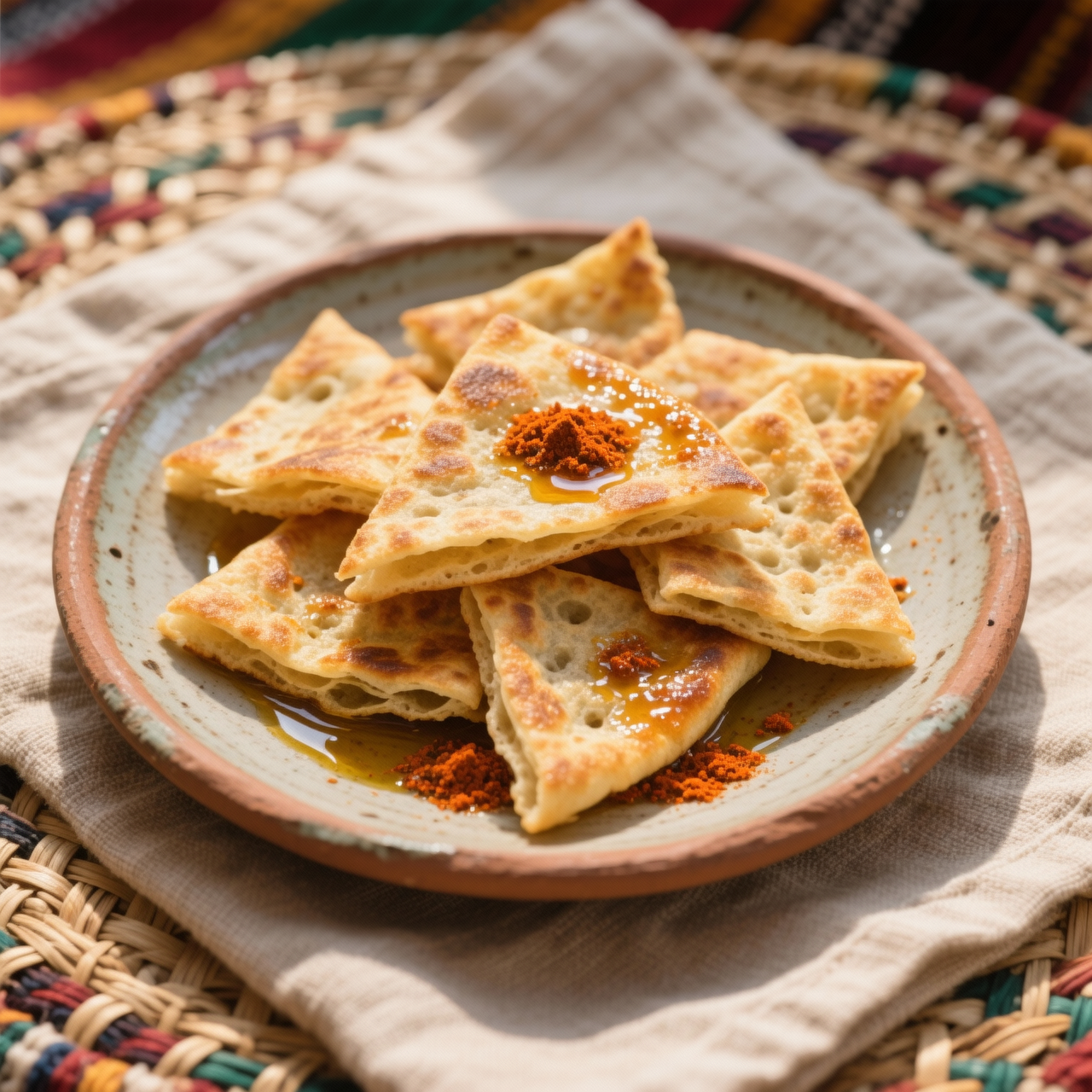
Kategna (toasted injera snack)
I first learned to make kategna not in a bustling Addis Ababa kitchen, but through the quiet thrift of Ethiopian home cooks who refused to let a single piece of leftover injera go to waste. Traditionally, it is born from day-old flatbread, torn and crisped until it snaps, then brushed with a warm, aromatic oil infused with toasted fenugreek, sweet paprika, and a whisper of berbere. What matters most here is the philosophy behind it: transforming humble, fermented grain into something deeply satisfying without relying on industrial shortcuts. The shop-bought versions you will find in international aisles usually run around seven dollars for a flimsy plastic bag, but they taste aggressively of dehydrated seasoning dust and cheap palm oil, completely missing the sour, nutty tang that comes from properly fermented teff. When you make this yourself, you control every layer of flavor, and you avoid the hollow, chemical crunch of factory-pressed crackers. The most common pitfall is rushing the toasting. Injera's delicate, porous structure demands gentle, medium-low heat so it dries out evenly before crisping. If the pan runs too hot, the edges scorch while the center stays leathery. Another frequent mistake is drowning it in oil; kategna should be kissed by fat, not soaked in it, or it turns soggy the moment it cools. I always warm the spiced oil separately, brush it on while the flatbread is still slightly warm from the pan, and let it rest uncovered so the steam escapes. This is not just a snack; it is a testament to resourceful cooking, where patience and real spices outperform any packaged substitute.
Nutrition
| Per serving | Calories | Protein | Carbs | Fat | Sat fat | Fibre | Sugar | Sodium |
|---|---|---|---|---|---|---|---|---|
| beginner | 330kcal | 5g | 48g | 12g | 1g | 4g | 1g | 240mg |
| intermediate | 310kcal | 6g | 36g | 15g | 2g | 5g | 2g | 350mg |
| expert | 290kcal | 6g | 32g | 14g | 2g | 4g | 1g | 150mg |
Per serving · Ava-estimated — a guide, not a clinical figure.
- 300 ginjera— preferably day-old for optimal crispness
- 60 mlvegetable oil— niger seed oil is traditional but any neutral oil works
- 15 gberbere— adjust to taste for heat level
- 10 ggarlic— finely minced
- 3 gsalt
This beginner-friendly version strips kategna down to its essentials, focusing on safe pan-toasting and a simple, from-scratch spiced oil that replaces expensive commercial crisps and flavoured crackers. Shop-bought snacks cost roughly four to six dollars per bag, rely on highly refined seed oils, artificial flavourings, and excess sodium, and offer minimal nutritional value. Here, you will build a vibrant coating by gently warming neutral oil with ground spices in a small bowl, eliminating the need for pre-mixed pastes or packet blends. Watch the oil temperature closely; spices should perfume the oil without turning dark, which takes only a few seconds off direct heat. The injera pieces are toasted in a dry, heavy pan until rigid and lightly golden, then immediately brushed with the warm spiced oil while still hot so the flavours absorb into the porous crumb. The key to success at this level is patience during the dry toast, as crowding the pan steams the bread instead of crisping it, so work in two batches if your skillet is small. Once coated, the pieces cool completely on a wire rack, transforming from soft flatbread into a satisfying, shelf-stable snack that delivers authentic Ethiopian warmth without preservatives.
Equipment
- Heavy-bottomed skillet— cast iron or carbon steel holds steady heat for even crisping
- Small heatproof bowl— for gently warming the oil and spices
- Pastry brush(optional)— ensures thin, even coating without pooling
Method
- 1
Cut or tear the injera sheets into uniform bite-sized triangles and arrange them on a clean dry tray.
Uniform size ensures consistent crisping across the batch.
portioning~ 2 min - 2
Warm the neutral oil in a small heatproof bowl over a pot of simmering water until it reaches a gentle heat.
Oil should feel warm to the touch but never smoke or shimmer.
tempering~ 1 min - 3
Stir the ground spices, finely minced garlic, and fine salt into the warm oil until the mixture turns fragrant and deeply coloured.
Gentle heat blooms the essential oils without scorching the delicate powders.
blooming~ 1 min - 4
Arrange a single layer of injera pieces in a dry, preheated heavy-bottomed skillet over medium heat.
Leaving gaps between pieces allows trapped steam to escape efficiently.
dry-frying~ 3 minTricky bit - 5
Press each piece firmly with a flat spatula and flip once the underside feels rigid and shows light golden spots.
Listen for a dry, papery rustle to confirm moisture loss before turning.
pressing~ 2 minTricky bit - 6
Transfer the hot crisped pieces to a wide mixing bowl and immediately drizzle the spiced oil evenly across the surface.
Applying oil while hot allows the porous teff structure to absorb the seasoning fully.
tossing~ 1 min - 7
Spread the coated snack onto a wire cooling rack and let it rest undisturbed until completely room temperature and fully crisp.
Skipping the cooling step leaves the centre chewy and causes the coating to slide off.
resting~ 10 min
Cooking from frozen
Toast directly from frozen in a dry skillet over medium heat for three minutes until fully crisp.
Storage times are a guide — always use your judgement and store food safely.