
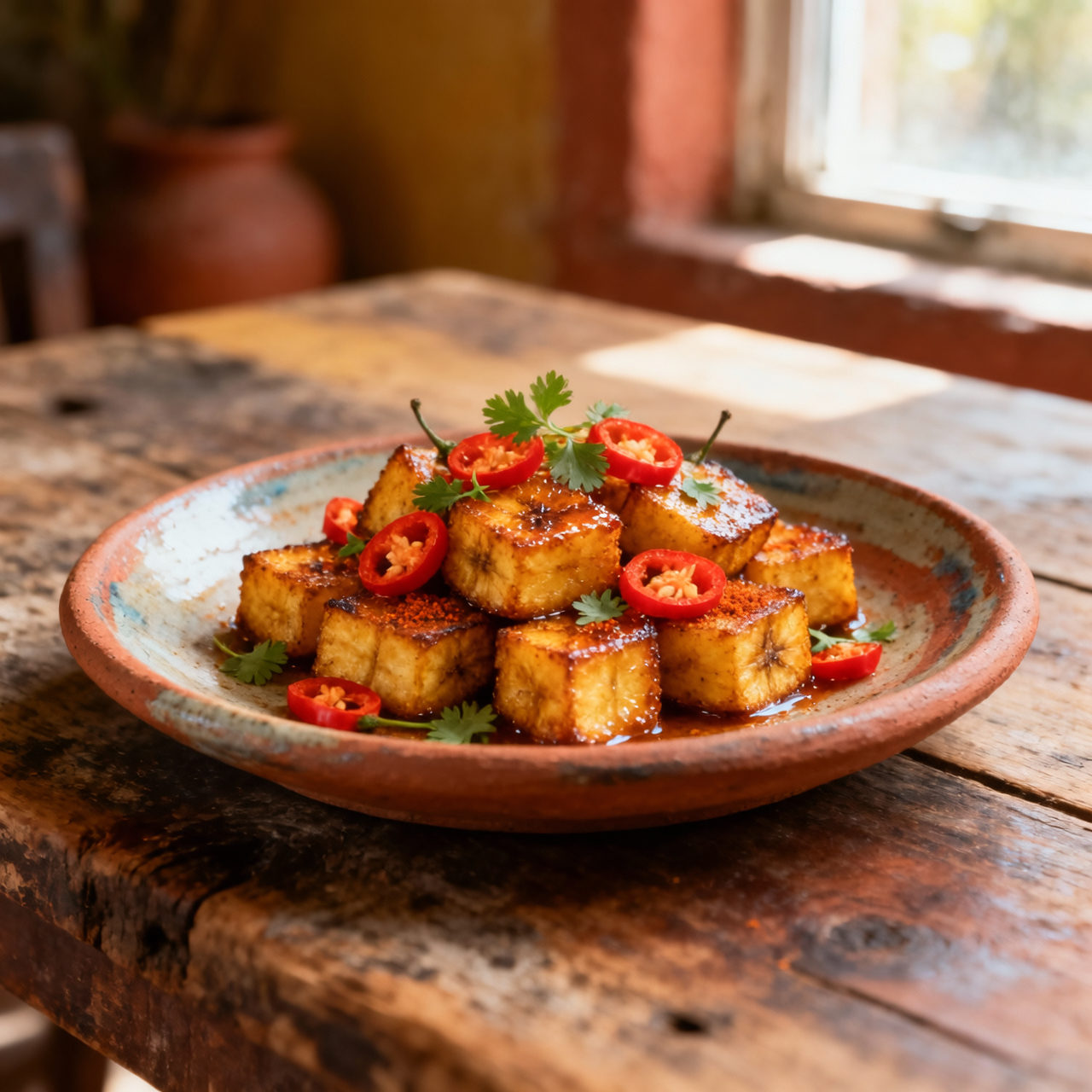
Kelewele
I’ve always believed that Kelewele is more than just fried plantains; it’s a rhythm, a memory, and a testament to West Africa’s vibrant street food culture. Hailing from Ghana, this beloved snack traditionally transforms ripe plantains into golden, spice-kissed cubes that crackle with every bite. The magic lies in the balance—sweetness from the fruit meeting the sharp warmth of ginger, the earthy depth of cloves, and the bright heat of cayenne. When I first learned to make it, I was struck by how effortlessly it brings people together, often served at dusk as a casual evening treat or alongside heavier stews to brighten the palate. Yet, for something so simple, it’s surprisingly easy to get wrong. I’ve seen countless well-meaning cooks drown the plantains in sugar, masking their natural caramel notes, or rush the frying process until the outside burns while the inside remains stubbornly raw. The biggest pitfall, though, is neglecting the spice rub’s resting time. Those spices need at least twenty minutes to marry with the plantains’ moisture; skip that, and you’re just frying seasoned cardboard. I also urge you to respect the oil temperature—too cool, and they soak up grease; too hot, and the sugars scorch. When done right, Kelewele becomes a celebration of patience and precision, a naturally vegan delight that requires nothing but ripe fruit, bold spices, and a steady hand. It reminds me that the best food doesn’t need complexity; it just needs respect for its roots.
Nutrition
| Per serving | Calories | Protein | Carbs | Fat | Sat fat | Fibre | Sugar | Sodium |
|---|---|---|---|---|---|---|---|---|
| beginner | 385kcal | 1g | 52g | 21g | 3g | 4g | 24g | 490mg |
| intermediate | 385kcal | 1g | 52g | 21g | 3g | 4g | 24g | 490mg |
| expert | 385kcal | 1g | 52g | 21g | 3g | 4g | 24g | 490mg |
Per serving · Ava-estimated — a guide, not a clinical figure.
- 600 gripe yellow plantain— firm but yielding to gentle pressure, with speckled black skin
- 40 gfresh ginger— peeled, about a two-inch knob
- 15 gscotch bonnet pepper— seeds removed for mild heat, keep for traditional spice
- 80 gyellow onion— coarsely chopped
- 2 gground nutmeg— freshly grated preferred
- 1 gground clove— finely powdered
- 5 gfine sea salt— kosher or flaked salt acceptable
- 500 mlneutral vegetable oil— for frying, such as sunflower or grapeseed
This version prioritizes accessibility and confidence over strict tradition. Instead of building a spice paste from raw aromatics, you will use a high-quality jarred ginger-pepper blend that already contains the foundational heat and warmth. The technique shifts to a controlled shallow fry in a heavy skillet, which gives you direct visibility and makes flipping straightforward. Watch your oil temperature closely; without a thermometer, test it by dropping a single cube in. If it sizzles gently and rises immediately, you are ready. Overcrowding the pan is the primary trap here, as it drops the oil temperature and turns your kelewele soggy rather than crisp. Keep the cubes uniform and work in two batches if necessary. The marinade step is shortened to a quick five-minute toss, which is plenty for the pre-blended spices to adhere. You will finish with a light dusting of salt to wake up the caramelized sugars. This approach strips away the friction of prep while preserving the essential sweet-heat profile. It is designed to deliver reliable, restaurant-style results on a busy weeknight without specialized tools. Focus on steady heat management, and your first attempt will be deeply satisfying.
Equipment
- heavy-bottomed skillet— cast iron or stainless steel preferred
- slotted spoon— for safe oil transfer
- paper towels— for draining
Method
- 1
Peel the ripe yellow plantains and cut them into uniform one-inch cubes.
Keep pieces even for consistent cooking.
dicing~ 5 min - 2
Toss the plantain cubes with the jarred spice paste, ground nutmeg, ground clove, and fine sea salt.
Ensure every piece is evenly coated.
tossing~ 2 min - 3
Heat the neutral vegetable oil in the skillet over medium heat until shimmering.
Drop a test cube in to verify a steady sizzle.
shallow frying~ 3 minTricky bit - 4
Carefully lower the plantains into the hot oil in a single layer and cook until deeply golden.
Flip only once to preserve the crust.
pan frying~ 8 minTricky bit - 5
Transfer the fried kelewele to a paper towel-lined plate to absorb excess oil.
Season with a pinch of extra salt while hot.
draining~ 1 min