
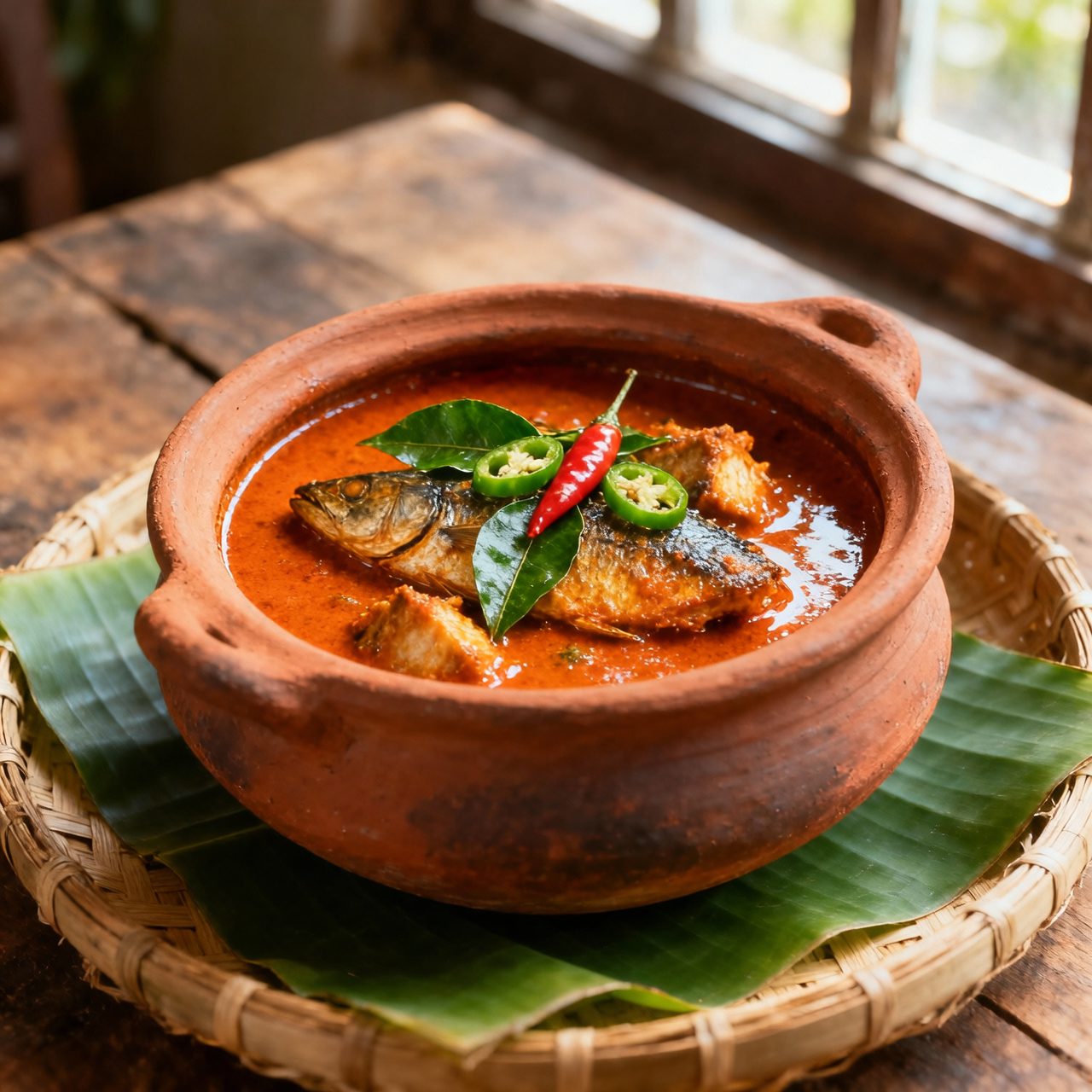
Kerala Fish Curry
When I first learned to balance the sharp tang of raw mango with the deep earthiness of roasted spices, I realized that Kerala fish curry is less a recipe and more a conversation with the coast. Born along the backwaters where the Arabian Sea meets lush tropical rivers, this dish has sustained generations of fishermen and home cooks alike, serving as both daily sustenance and a symbol of regional pride. What makes it truly remarkable is its reliance on kudampuli, or fish tamarind, which imparts a smoky sourness that cannot be replicated by substitutes. I have watched countless cooks rush this process, boiling the curry too vigorously and breaking the delicate flesh of the pomfret or king mackerel, or worse, skipping the crucial step of tempering mustard seeds and curry leaves in coconut oil. That initial bloom of aromatics is non-negotiable; it is the foundation upon which the entire flavor profile rests. Another frequent misstep lies in the coconut milk. Many add it too early, causing the oil to separate unpredictably, or they use canned alternatives that lack the fresh, grassy sweetness of hand-grated coconut. I always simmer the gravy gently, coaxing the spices to meld before ever introducing the fish, then finish it with a quiet rest off the heat. This patience transforms a simple stew into something that tastes like monsoon rain and sun-baked shores. When done right, the curry does not just coat the palate; it lingers, reminding you that true coastal cooking demands respect for time, tide, and tradition.
Nutrition
| Per serving | Calories | Protein | Carbs | Fat | Sat fat | Fibre | Sugar | Sodium |
|---|---|---|---|---|---|---|---|---|
| beginner | 390kcal | 27g | 16g | 25g | 20g | 4g | 5g | 897mg |
| intermediate | 390kcal | 27g | 16g | 25g | 20g | 4g | 5g | 897mg |
| expert | 390kcal | 27g | 16g | 25g | 20g | 4g | 5g | 897mg |
Per serving · Ava-estimated — a guide, not a clinical figure.
- 500 gfirm white fish— cut into 5cm steaks, washed and dried
- 10 gkudampuli— soaked in warm water until softened
- 45 mlcoconut oil— cold-pressed preferred
- 150 gshallot— thinly sliced
- 15 gginger— freshly grated
- 6 piecesgarlic clove— crushed
- 2 piecesgreen chili— slit lengthwise
- 2 gfenugreek seed— toasted lightly
- 5 gmustard seed— whole
- 3 gturmeric powder— pure, not blended
- 8 gkashmiri chili powder— finely ground
- 5 gcoriander powder— freshly ground
- 15 gcurry leaf— fresh, not dried
- 200 mlcoconut milk— full-fat, unsweetened
- 8 gsea salt— to taste
This pathway removes the friction of spice preparation so you can focus entirely on timing and texture. Instead of grinding raw aromatics, you will use a high-quality store-bought Kerala curry paste that contains the foundational spice blend, allowing you to bypass the most technical prep stage. The goal here is confidence and consistency. You will learn how to properly bloom the paste in oil without burning it, how to gently introduce the coconut milk to avoid splitting, and how to read the visual cues of a perfectly simmering gravy. Watch the heat closely when adding the fish; the liquid should barely tremble, never boil vigorously. Overcooking is the most common beginner mistake, so set a timer and check the fish after eight minutes. The flesh is ready when it flakes easily with a fork but still holds its structural integrity. If your curry looks too thin, simply simmer uncovered for a few extra minutes to reduce the liquid. This version guarantees a deeply aromatic result with minimal active prep, making it perfect for weeknight cooking while still honoring the dish’s coastal soul.
Equipment
- Heavy-bottomed pan— non-stick is fine here
- Measuring spoons— for accurate paste ratios
- Silicone spatula— heat resistant
Method
- 1
Heat the coconut oil in a heavy-bottomed pan over medium heat until shimmering.
Oil should ripple but not smoke.
blooming~ 1 min - 2
Add the jarred curry paste and stir constantly until fragrant and slightly darkened.
Commercial pastes contain wheat starch, so watch closely.
blooming~ 2 minTricky bit - 3
Pour in the soaked kudampuli water and coconut milk, then bring to a gentle simmer.
Stir continuously to prevent splitting.
reducing~ 3 min - 4
Carefully slide the fish pieces into the liquid without overcrowding the pan.
Arrange in a single layer.
poaching~ 1 minTricky bit - 5
Cover the pan and maintain a low simmer until the fish flakes easily with a fork.
Set a timer for eight minutes.
poaching~ 8 minTricky bit - 6
Remove from heat and let the curry rest for ten minutes before serving.
Resting firms the fish and deepens flavor.
resting~ 10 min