
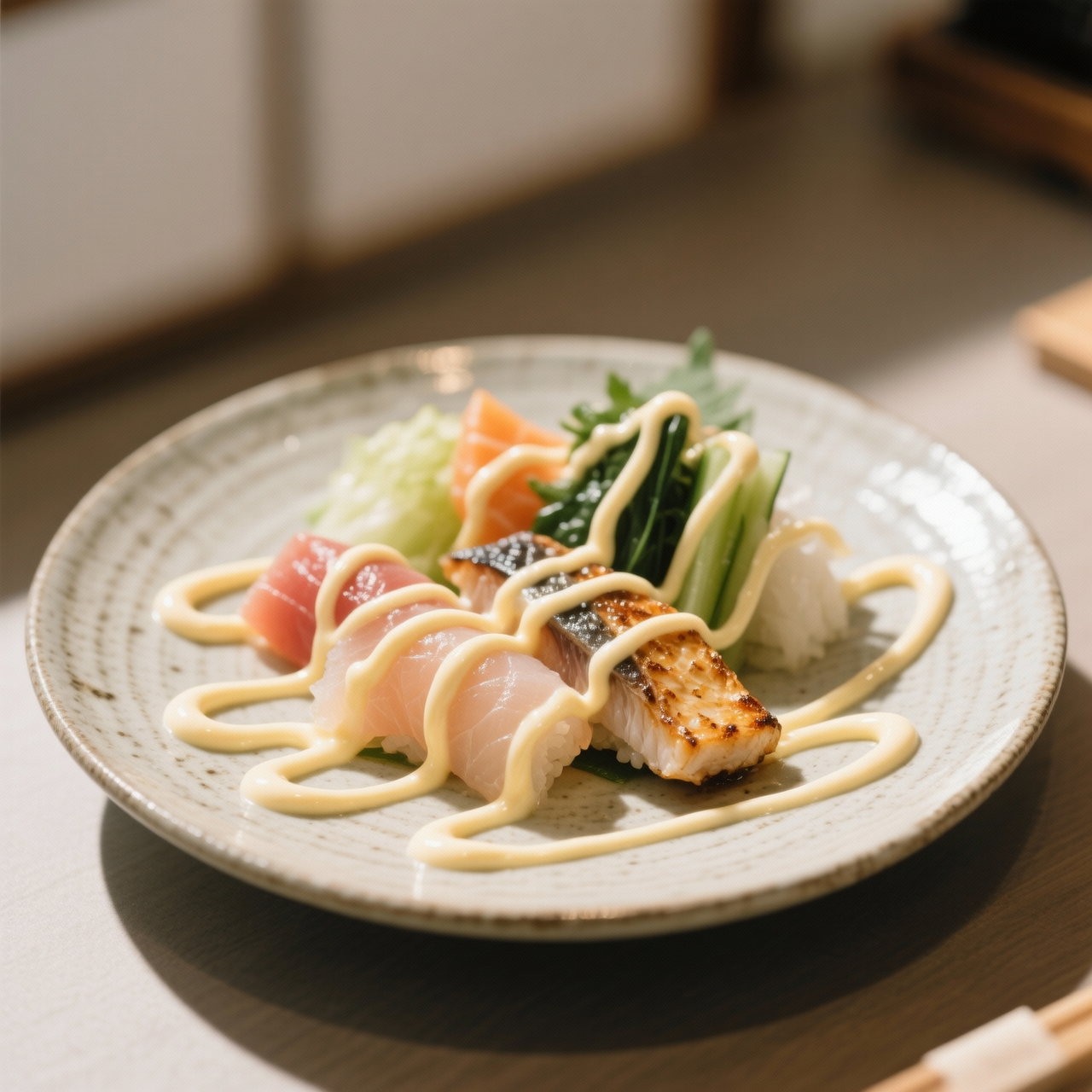
Kewpie-Style Japanese Mayo
I’ve always been fascinated by how a simple emulsion can define an entire culinary culture, and Japanese mayonnaise is a masterclass in that quiet precision. Kewpie, born in the 1920s as Japan’s first commercially produced mayonnaise, was never meant to mimic its Western counterparts. It leans heavily on egg yolks alone, forgoing the whites to achieve a profoundly rich, custard-like mouthfeel, and swaps distilled vinegar for a delicate rice vinegar that introduces a softer, sweeter acidity. When I first attempted to replicate it at home, I quickly learned why this condiment matters so deeply in Japanese kitchens: it’s the invisible backbone of okonomiyaki, takoyaki, and countless rice bowls, delivering umami without overpowering the dish. The most common pitfall, in my experience, is rushing the emulsion. Mayonnaise is a fragile marriage of fat and liquid, and adding your oil too quickly guarantees a broken, greasy puddle. Temperature plays a silent but crucial role; cold ingredients resist blending, while room-temperature components welcome each other into a stable suspension. Another frequent misstep is leaning on the wrong vinegar. Apple cider or white wine vinegar will skew the flavor profile entirely, missing that signature clean, slightly sweet tang. I also learned the hard way that skipping the MSG or a touch of dashi powder leaves the sauce flat, no matter how perfectly whipped it becomes. When I finally slowed down, drizzling the oil drop by drop while whisking with intention, the result was that unmistakable silkiness—a bright, deeply savory ribbon that transforms anything it touches.
Nutrition
| Per serving | Calories | Protein | Carbs | Fat | Sat fat | Fibre | Sugar | Sodium |
|---|---|---|---|---|---|---|---|---|
| beginner | 180kcal | 1g | 1g | 19g | 3g | 0g | 1g | 240mg |
| intermediate | 145kcal | 1g | 1g | 15g | 2g | 0g | 1g | 130mg |
| expert | 520kcal | 3g | 2g | 55g | 7g | 0g | 1g | 180mg |
Per serving · Ava-estimated — a guide, not a clinical figure.
- 3 largeegg yolk— Room temperature for optimal emulsification
- 240 mlneutral oil— Canola, sunflower, or refined soybean oil
- 15 mlrice vinegar— Unseasoned
- 2.5 gfine salt— Fine sea salt or kosher salt
- 1 gsugar— White granulated
- 0.5 gmonosodium glutamate— Essential for authentic umami profile
- 5 mlmustard(optional)— Dijon or yellow, aids emulsion stability
This beginner-friendly version prioritizes reliability over traditional technique, using a standard countertop blender to guarantee a stable emulsion without the wrist fatigue of hand-whisking. Instead of sourcing specialty rice vinegar and umami boosters separately, you will use accessible pantry staples that closely mimic Kewpie’s signature tangy profile. The absolute key to success is temperature control: ensure your egg yolks and oil are at room temperature before starting to prevent splitting. Add the oil in a slow, steady stream during the first thirty seconds of mixing, as this initial window builds the foundational structure. If the mixture looks too thick or threatens to break, simply pause, add a teaspoon of warm water, and pulse until it smooths out completely. We skip the traditional squeeze-bottle aging process; instead, you will chill the finished condiment for twenty minutes to let the flavors harmonize. Watch for a pale, glossy finish and listen for the motor’s pitch to drop from a high whir to a slower, heavier churn. This streamlined method yields a rich, pourable dressing ready for immediate use on rice bowls and grilled dishes with zero guesswork.
Equipment
- Countertop blender or food processor— immersion blender works in a tall cup
- Measuring spoons and cups— precision prevents broken emulsions
- Rubber spatula— for scraping down sides mid-blend
- Clean glass jar with tight lid— replaces commercial squeeze bottle for storage
Method
- 1
Place egg yolks and neutral oil on the counter to reach room temperature.
Cold ingredients will refuse to bind and cause separation.
tempering~ 5 min - 2
Combine the room-temperature yolks, rice vinegar, Dijon mustard, sugar, and salt in the blender cup.
Do not add the oil yet.
combining~ 1 min - 3
Secure the lid, blend on low, and slowly drizzle the oil through the top opening in a thin, steady stream.
Pouring too fast will break the emulsion immediately.
emulsifying~ 2 minTricky bit - 4
Stop the blender, scrape down any unmixed edges, and pulse until completely smooth.
Add one teaspoon of warm water if the texture looks stiff.
adjusting~ 1 minTricky bit - 5
Transfer the finished mayo to your clean glass jar and refrigerate before serving.
Chilling allows the rice vinegar to mellow and the texture to set.
resting~ 0 min
Storage times are a guide — always use your judgement and store food safely.