
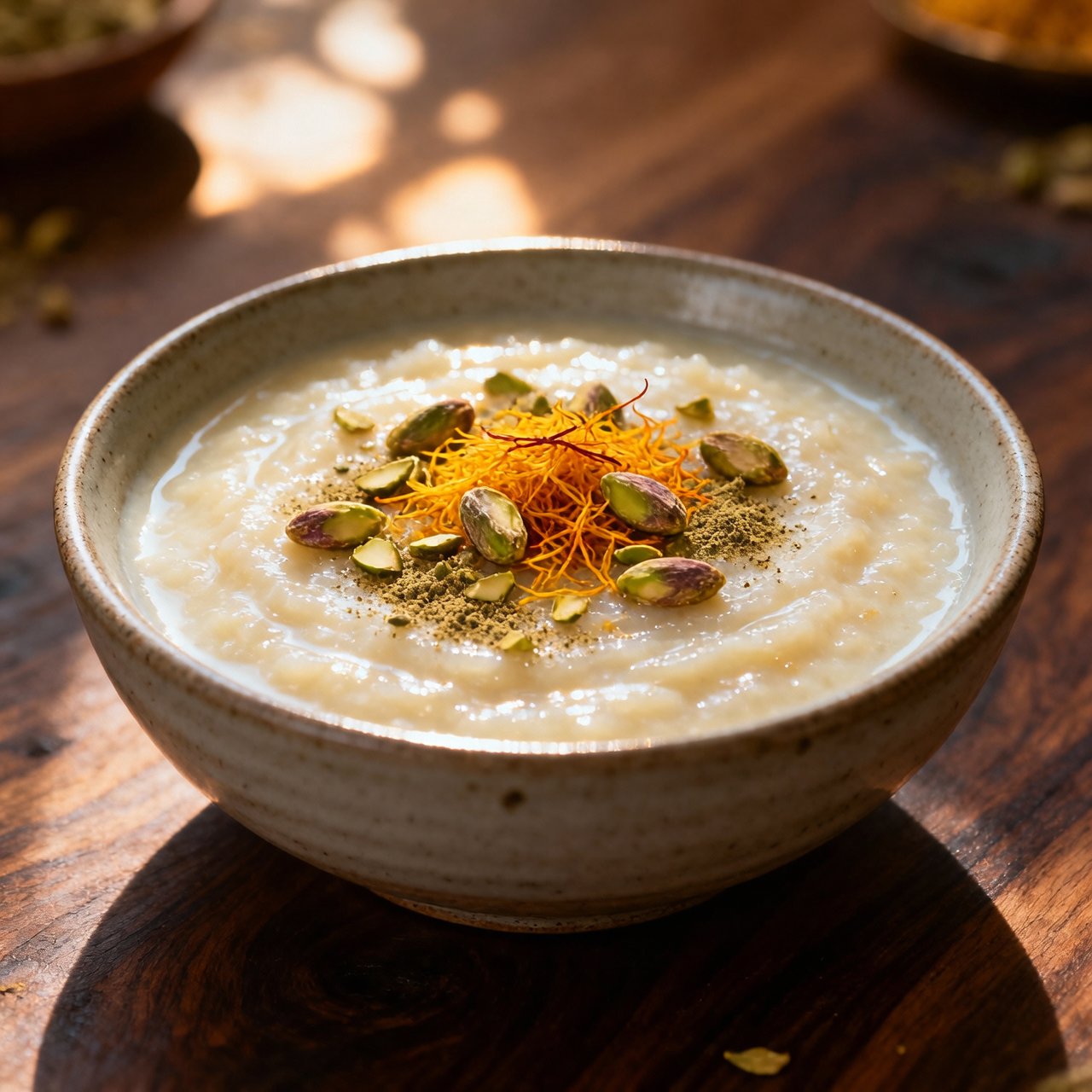
Kheer
When I first learned to simmer milk over a low flame, watching it slowly surrender to the gentle patience of time, I wasn’t just making a dessert. I was stepping into a centuries-old lineage that stretches from the royal kitchens of ancient India to the humble courtyards of village homes. Kheer, or payasam as it’s known across the south, is far more than a sweetened rice pudding; it is a cultural anchor, traditionally offered during festivals, weddings, and moments of quiet celebration. Its origins trace back to the Vedic era, where milk, rice, and sugar were considered sacred ingredients symbolizing prosperity and abundance. For me, mastering this dish means honoring that legacy while embracing the quiet alchemy of reduction. The true magic lies not in speed but in surrender. Too many rush the process, cranking the heat and watching the milk scorch or separate, leaving behind a bitter, grainy disappointment. Others overcomplicate it with heavy spices or artificial thickeners, forgetting that the beauty of kheer rests in restraint. A heavy-bottomed pot, constant stirring with a wooden spoon, and the willingness to listen for that soft, rhythmic sigh of thickening milk are non-negotiable. I’ve learned the hard way that skipping the slow simmer or adding sugar too early can halt the reduction entirely, leaving you with a thin, underwhelming bowl. When done right, however, the result is a velvety, fragrant embrace of cardamom, toasted nuts, and caramelized milk solids that tastes exactly like memory.
Nutrition
| Per serving | Calories | Protein | Carbs | Fat | Sat fat | Fibre | Sugar | Sodium |
|---|---|---|---|---|---|---|---|---|
| beginner | 410kcal | 12g | 58g | 15g | 6g | 2g | 43g | 110mg |
| intermediate | 410kcal | 12g | 58g | 15g | 6g | 2g | 43g | 110mg |
| expert | 410kcal | 12g | 58g | 15g | 6g | 2g | 43g | 110mg |
Per serving · Ava-estimated — a guide, not a clinical figure.
- 1000 mlmilk— full-fat, unhomogenized preferred
- 60 gbasmati rice— aged, long-grain
- 120 gcane sugar
- 6 wholegreen cardamom pod— freshly harvested
- 0.5 gsaffron thread— grade one, pure
- 30 graw pistachio— unsalted, shelled
- 30 gslivered almond— skin-on
- 100 mlwater— for initial rice parboil
This path removes the intimidation of traditional reduction by using a high-quality, pre-mixed spice blend and a pre-toasted nut garnish. You will skip the tedious pod-cracking and thread-steeping, focusing instead on heat control and timing. The goal here is a confident first attempt that teaches you how milk behaves under sustained warmth. Watch the pot closely once the sugar dissolves; the mixture will foam aggressively as it approaches a simmer. Keep the flame strictly on low and stir with a flat wooden spoon, scraping the bottom and corners to prevent a scorched skin from forming. Do not rush the rice. Even with a quick-rinse shortcut, the starch needs exactly twenty minutes of gentle bubbling to soften without turning the pudding into a heavy paste. Taste for sweetness only after the final simmer, as sugar intensifies slightly during cooling. If your jarred spice blend contains wheat starch or anti-caking agents, this version will no longer qualify as strictly gluten-free, so check the label if that matters to your kitchen. The shortcut is meant to build muscle memory, not compromise flavor. Once you see how the milk coats the spoon and how the rice blooms into the liquid, you will understand the rhythm of this dish.
Equipment
- Heavy-bottomed pan— non-stick is fine here
- Wooden spatula— flat edge preferred for scraping
Method
- 1
Rinse the basmati rice under cold water until the runoff runs clear.
Removes surface starch to prevent gumminess.
rinsing~ 1 min - 2
Pour the milk into a heavy pan and bring it to a gentle simmer over medium-low heat.
Do not let it boil vigorously.
scalding~ 5 min - 3
Stir in the rinsed rice and maintain a bare bubble for twenty minutes.
Stir every two minutes to prevent sticking.
simmering~ 20 min - 4
Add the sugar and pre-mixed spice blend, stirring until fully dissolved.
Sugar will temporarily thin the mixture.
dissolving~ 2 min - 5
Remove from heat and gently fold in the garnish nuts and saffron.
Let residual heat bloom the flavors.
folding~ 1 min