
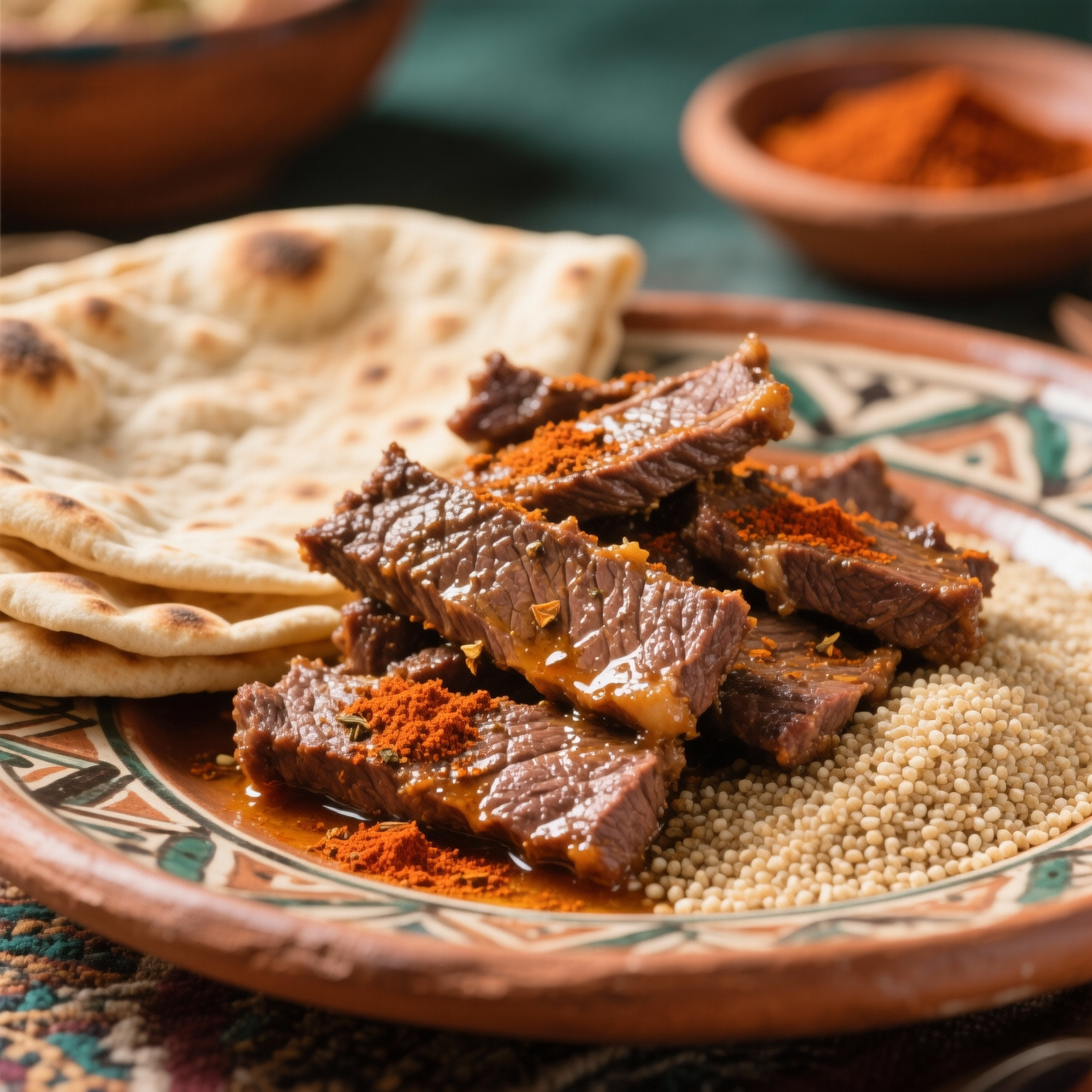
Khlea (preserved spiced beef)
When I first learned to make khlea in a sunlit courtyard in Fez, I watched my host slowly render beef into a deep, rust-colored confit that smelled of cumin, garlic, and time. This is not just a preservation method; it is a centuries-old Moroccan survival strategy born from necessity, transforming humble cuts into a pantry staple that outlasts harsh winters and lean seasons. I make it now because it bridges generations, offering a deeply savoury, melt-in-the-mouth foundation for tagines, eggs, and couscous that no modern shortcut can replicate. You will find jarred preserved meat or heavily processed beef crumbles in some supermarkets, usually priced around eight to twelve pounds, but they are little more than salty, gelatinous pastes loaded with stabilisers and artificial smoke flavour. They completely lack the slow, deliberate transformation of real fat and spice. Making khlea from scratch means honouring the process: cutting the beef into uniform strips, salting it heavily with cumin, paprika, and garlic, drying it thoroughly, then gently poaching it in its own fat. The most common pitfall is rushing the drying stage. If the meat retains too much surface moisture before it hits the pot, it will steam instead of confit, turning mushy and prone to spoilage. Another mistake is skimping on the fat layer. Without a solid, airtight seal of rendered suet or olive oil, oxygen creeps in and ruins your batch. When done patiently, the result is intensely aromatic, deeply nourishing, and keeps beautifully. It is a quiet act of culinary preservation that rewards your patience with months of profound flavour.
Nutrition
| Per serving | Calories | Protein | Carbs | Fat | Sat fat | Fibre | Sugar | Sodium |
|---|---|---|---|---|---|---|---|---|
| beginner | 460kcal | 36g | 3g | 32g | 13g | 1g | 1g | 780mg |
| intermediate | 510kcal | 36g | 2g | 34g | 9g | 1g | 0g | 720mg |
| expert | 610kcal | 40g | 3g | 48g | 20g | 1g | 1g | 950mg |
Per serving · Ava-estimated — a guide, not a clinical figure.
- 1000 gbeef round— trimmed of excess fat and cut into 3cm strips
- 300 gbeef suet— diced small for rendering
- 500 mlolive oil— for confit and sealing
- 8 clovesgarlic clove— minced into a paste
- 25 gground cumin— toasted lightly if possible
- 15 gground coriander
- 20 gsweet paprika
- 35 gcoarse sea salt— for initial dry cure
- 10 gblack pepper— freshly cracked
This beginner-friendly Khlea skips the traditional multi-day air-drying phase, replacing it with a single-pan confit method that guarantees tender, shelf-stable results without guesswork. Instead of relying on expensive jarred preserved meats or canned confit blends that often cost over twelve dollars, contain nitrates, and taste muted, you will build authentic Moroccan spice depth from scratch using fresh garlic and whole pantry spices. The key difference is a forgiving, one-vessel simmer that gently breaks down tough beef fibers while infusing them directly into the fat. Watch for two critical moments: first, ensure your spice paste is evenly massaged into the meat and rests long enough to draw out surface moisture; second, maintain a barely bubbling simmer so the meat cooks evenly without frying or drying out. When jarring, the rendered fat must completely blanket the meat to create an airtight seal that prevents oxidation and spoilage. This streamlined approach delivers restaurant-quality preserved beef in a single afternoon, giving you full control over salt, spice intensity, and fat quality while costing a fraction of artisanal shop-bought versions.
Equipment
- Dutch oven or heavy-bottomed pot— Must have a tight-fitting lid to trap steam
- Sterilized glass jars with lids— Standard 12oz mason jars work perfectly
Method
- 1
Trim the beef chuck into uniform 1-inch strips and pat them completely dry with paper towels.
Uniform cuts ensure even cooking and consistent fat absorption.
trimming~ 5 min - 2
Combine minced garlic, ground cumin, smoked paprika, ground coriander, black pepper, and coarse salt, then massage firmly into every piece of meat.
Press until the meat feels tacky and evenly coated.
rubbing~ 8 min - 3
Let the seasoned meat rest uncovered at room temperature to draw out surface moisture and bloom the spices.
Do not cover tightly; brief air circulation helps the cure penetrate.
curing~ 30 min - 4
Transfer the meat and any released juices into the heavy pot, add beef tallow and olive oil, and bring to a bare simmer over medium-low heat.
The fat and oil mixture must completely submerge the meat.
submerging~ 6 minTricky bit - 5
Cover tightly with a lid and maintain the lowest possible heat, cooking until a fork slides through the meat with zero resistance.
Bubbles should barely break the surface; high heat will toughen the fibers.
confiting~ 150 minTricky bit - 6
Pack the cooked meat into the sterilized jars, strain the cooking liquid, and pour the hot fat over the top until fully sealed.
Leave no air gaps; the fat layer acts as a natural preservative.
potting~ 10 min - 7
Cool the jars uncovered at room temperature until the fat solidifies completely, then secure with lids and refrigerate.
Store in the back of the fridge for long-term preservation.
sealing~ 60 min
Cooking from frozen
Thaw overnight in the fridge, then gently warm in a pan with a splash of broth or water to restore the fat's silkiness before using.
Storage times are a guide — always use your judgement and store food safely.