
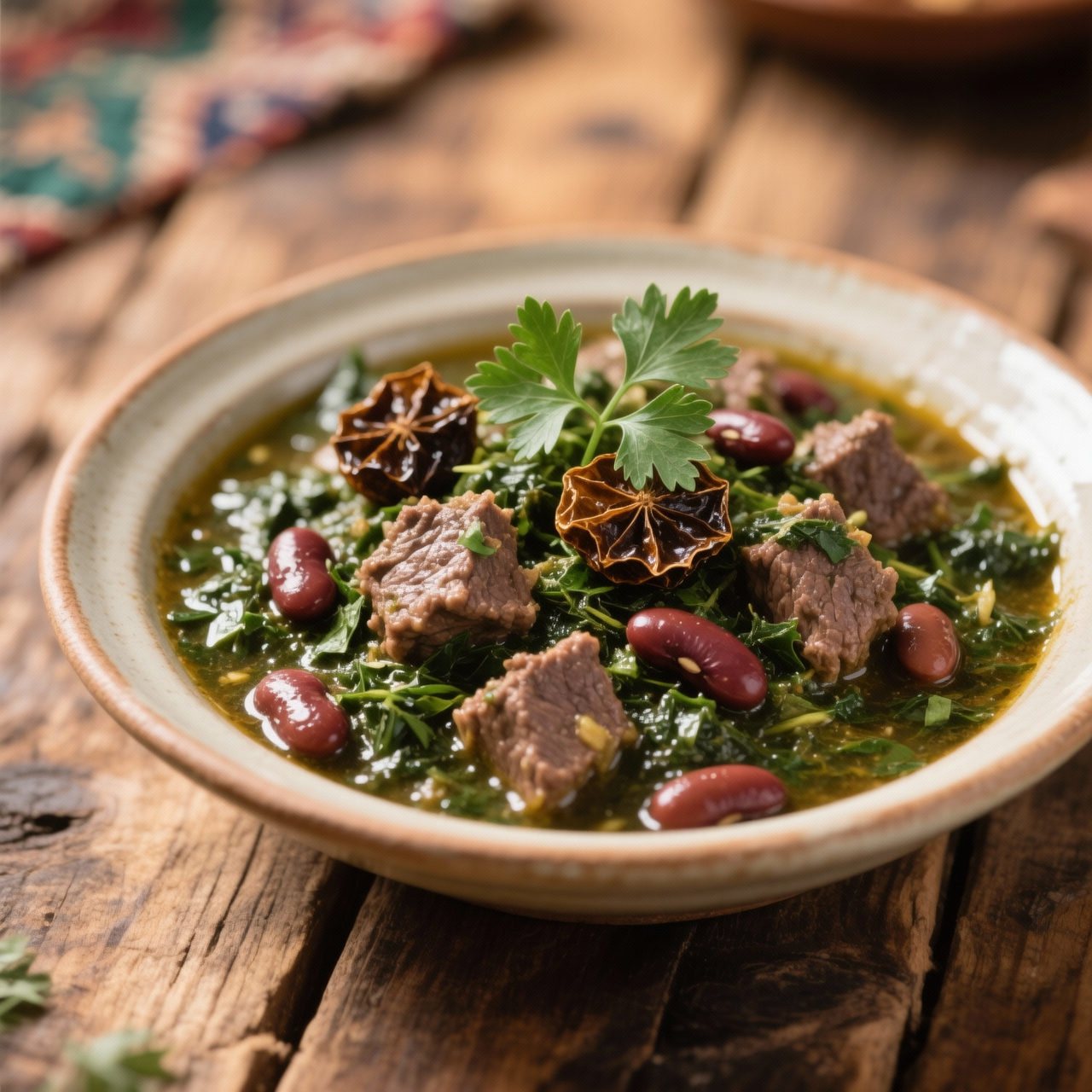
Khoresh-e Ghormeh Sabzi
When I first learned to coax life into a pot of Ghormeh Sabzi, I quickly understood why this stew is so often called the soul of Persian cooking. Its origins stretch back centuries, born in the mountainous regions of Iran where foraged herbs, slow-braised meats, and dried limes became a necessary alchemy of survival and celebration. For me, this dish is less about rigid measurements and more about patience and intuition. It matters because it carries the quiet rhythm of Iranian family life—the long simmer that fills a home with an earthy, deeply savory aroma, signaling that someone is waiting at the table. Yet, I’ve watched countless cooks stumble over the same pitfalls. The most common is rushing the herbs. If you don’t fry the chopped parsley, cilantro, chives, and spinach until they darken to a deep, almost olive hue, you’ll never achieve that signature glossy, emerald-black sheen or the complex, layered bitterness that defines the dish. Another frequent misstep is adding the dried limes too early or piercing them carelessly, which floods the broth with an aggressive, astringent sourness instead of a bright, citrusy warmth. And then there’s the temptation to boil rather than simmer; a rolling boil will shatter the delicate herb leaves and turn your tender lamb or beef into tough, stringy shreds. I’ve learned to treat the pot like a living thing, stirring occasionally, tasting slowly, and letting time do the heavy lifting. When done right, the stew doesn’t just feed you—it anchors you.
Nutrition
| Per serving | Calories | Protein | Carbs | Fat | Sat fat | Fibre | Sugar | Sodium |
|---|---|---|---|---|---|---|---|---|
| beginner | 730kcal | 40g | 34g | 48g | 15g | 14g | 4g | 1600mg |
| intermediate | 730kcal | 40g | 34g | 48g | 15g | 14g | 4g | 1600mg |
| expert | 730kcal | 40g | 34g | 48g | 15g | 14g | 4g | 1600mg |
Per serving · Ava-estimated — a guide, not a clinical figure.
- 600 glamb shoulder— trimmed of excess fat and cubed
- 200 gyellow onion— finely diced
- 150 gfresh parsley— washed and thoroughly dried
- 150 gfresh cilantro— washed and thoroughly dried
- 50 gfresh chives— washed and thoroughly dried
- 30 gfresh fenugreek leaf— washed and thoroughly dried
- 150 gdried red kidney bean— soaked overnight
- 4 piecesdried persian lime— pierced before use
- 5 gground turmeric— freshly ground preferred
- 3 gblack peppercorn— freshly cracked
- 15 gkosher salt— adjust to taste
- 60 mlneutral cooking oil— high smoke point variety
Focuses on confidence and accessible shortcuts. Uses pre-soaked canned beans to bypass legume timing, and relies on a high-quality commercial herb paste to guarantee even frying. The priority here is avoiding the common grassy bitterness by letting the paste brown properly before adding liquids. Watch your heat closely; medium-low is your friend. The stew simmers just long enough to meld flavors without risking over-reduction. This version strips away the anxiety of herb prep and bean soaking, delivering a deeply comforting bowl in under two hours. Pay attention to the oil separation on the surface, which signals the emulsion has stabilized. Taste before adding salt, as commercial pastes and canned beans often carry hidden sodium. The dried limes still require piercing to prevent bursting, and a brief twenty-minute rest off the heat allows the starches to settle. You will emerge with a perfectly balanced stew that honors the dish’s core identity while respecting your busy schedule. Trust the process, keep the lid slightly ajar, and let the gentle bubbles do the heavy lifting.
Equipment
- Large heavy-bottomed pot— non-stick coating acceptable
- Fine mesh strainer— for rinsing beans
- Wooden spoon— for gentle stirring
Method
- 1
Drain and rinse the canned kidney beans thoroughly under cold running water.
Pat dry with paper towels to prevent splattering.
rinsing~ 1 min - 2
Heat the neutral oil in a large pot over medium heat.
Oil should shimmer but never smoke.
heating~ 1 min - 3
Add the commercial herb paste and sauté until the color darkens slightly.
Stir constantly to prevent scorching on the bottom.
sweating~ 5 minTricky bit - 4
Stir in the diced onion, ground turmeric, and cracked black pepper until fragrant.
Onions should become completely translucent.
blooming~ 4 min - 5
Pour in the pierced dried limes and enough warm water to cover the ingredients by two inches.
Maintain a gentle simmer throughout cooking.
simmering~ 60 min - 6
Let the stew rest off the heat with the lid slightly ajar before serving.
Skim any excess oil from the surface.
resting~ 15 min