
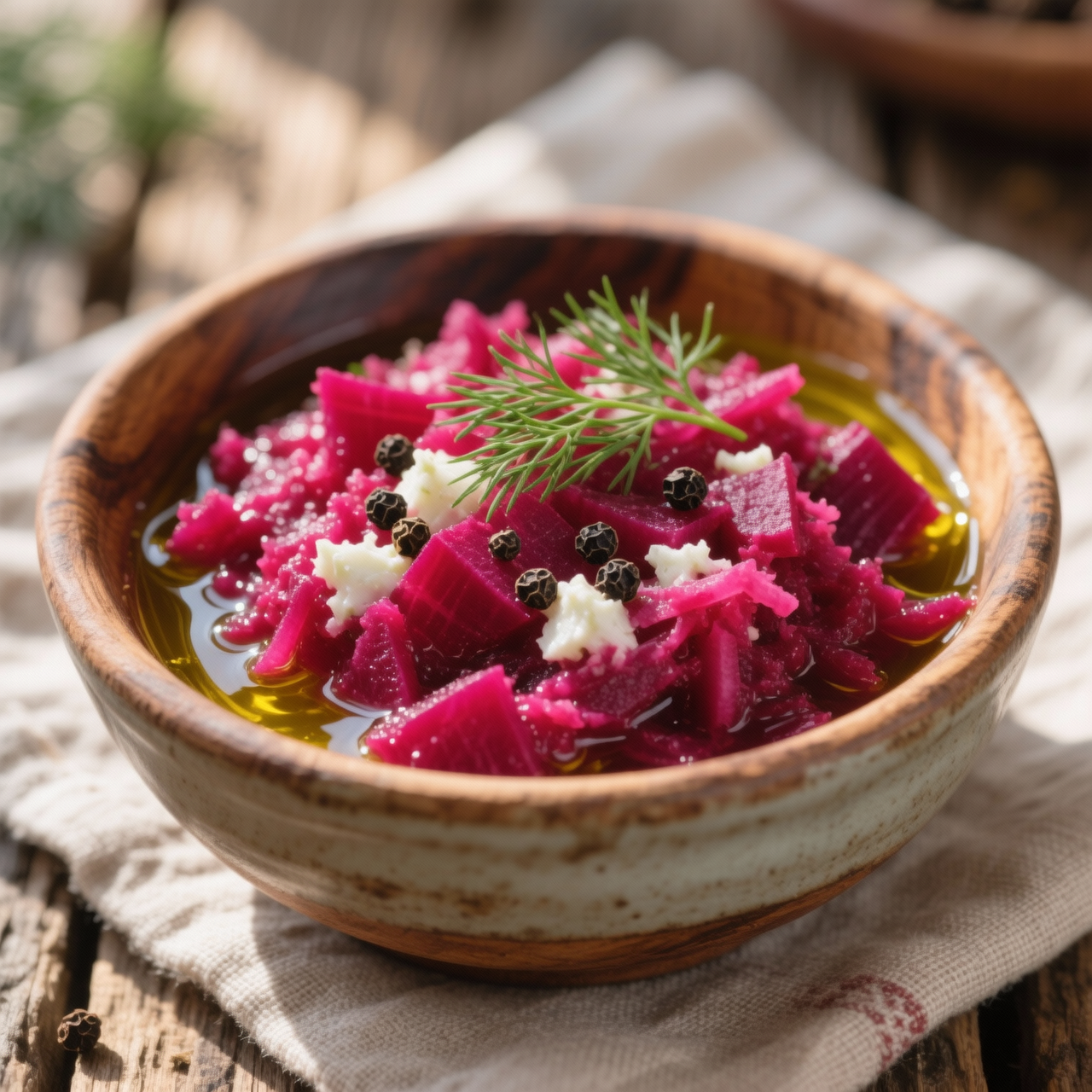
Khrin (beet horseradish)
Khrin, the fiery Ukrainian beet and horseradish relish, holds a deeply sacred place on the Easter table, sitting proudly beside paska and kovbasa. As Ava, I find that this vibrant condiment is much more than just a palate cleanser; it is a culinary symbol of resilience and the awakening of spring. The name itself derives from the Ukrainian word for horseradish, and its striking magenta hue is believed to ward off evil spirits. What makes Khrin so special is its aggressive, sinus-clearing heat, which perfectly cuts through the richness of traditional Easter meats and rich breads. However, making authentic Khrin comes with a few common pitfalls that I always warn my readers about. The most critical mistake is cooking the beets for too long or at too high a temperature, which dulls their natural sweetness and turns the relish mushy rather than keeping a pleasant, slight crunch. Another frequent error is adding the grated horseradish while the beets are still hot; the heat will instantly neutralize the volatile oils in the horseradish, robbing your Khrin of its signature fiery kick. Always let the grated beets cool completely before folding in the freshly grated horseradish and a splash of vinegar to brighten the flavor. Some modern recipes tempt you to add sugar or garlic, but I urge you to resist. Traditional Khrin relies on the pure, unadulterated tension between the earthy sweetness of the beet and the sharp, aggressive bite of the root. When you get the balance right, this batch hero will be the most talked-about element of your holiday feast.
Nutrition
| Per serving | Calories | Protein | Carbs | Fat | Sat fat | Fibre | Sugar | Sodium |
|---|---|---|---|---|---|---|---|---|
| beginner | 145kcal | 2g | 32g | 0g | 0g | 4g | 22g | 450mg |
| intermediate | 85kcal | 2g | 18g | 0g | 0g | 3g | 12g | 350mg |
| expert | 115kcal | 3g | 27g | 0g | 0g | 3g | 21g | 950mg |
Per serving · Ava-estimated — a guide, not a clinical figure.
- 150 ghorseradish root— peeled
- 300 gbeet— cooked, peeled, and cooled
- 30 mlapple cider vinegar— white vinegar or lemon juice can be substituted
- 15 gsugar— granulated
- 5 gsalt— fine
This beginner-friendly approach to traditional Ukrainian Khrin swaps the tear-inducing task of grating fresh horseradish root for convenient jarred prepared horseradish and pre-cooked or canned beets. It is the perfect shortcut for achieving that signature fiery, sweet, and earthy beet relish without the fuss. The key technique here is a gentle simmer, which allows the sharp bite of the horseradish to mellow slightly while melding beautifully with the sweet beet puree and a touch of sugar and vinegar. Watch the heat carefully during the simmering stage; you want a low, steady bubble to reduce the mixture to a thick, jammy consistency without scorching the natural sugars in the beets. Because this version uses simple pantry staples, it is incredibly forgiving and perfect for a confident first attempt at home. It yields a vibrant, ruby-red condiment that is absolutely essential for the Easter table, pairing flawlessly with roasted meats, hard-boiled eggs, or hearty breads.
Equipment
- Heavy-bottomed pan— non-stick or enameled to prevent reacting with vinegar
- Food processor or box grater— for breaking down the cooked beets
- Mixing bowl— glass or stainless steel to avoid staining
Method
- 1
Drain and roughly chop the pre-cooked or canned beets, then pulse in a food processor or grate until finely minced.
If using a grater, wear gloves to avoid staining your hands red.
grating~ 5 min - 2
Transfer the grated beets to a heavy-bottomed pan and stir in the jarred horseradish, sugar, salt, and vinegar.
Jarred horseradish loses potency over time, so ensure it is relatively fresh for the best kick.
combining~ 2 min - 3
Place the pan over medium-low heat and simmer gently, stirring frequently, until the mixture thickens to a jammy consistency.
Keep the heat low to prevent the natural sugars in the beets from scorching.
simmering~ 20 minTricky bit - 4
Remove the pan from the heat and let the Khrin cool completely before transferring to sterilized jars for storage.
The flavors will continue to develop and meld as it cools and rests in the fridge.
resting~ 30 min
Storage times are a guide — always use your judgement and store food safely.