
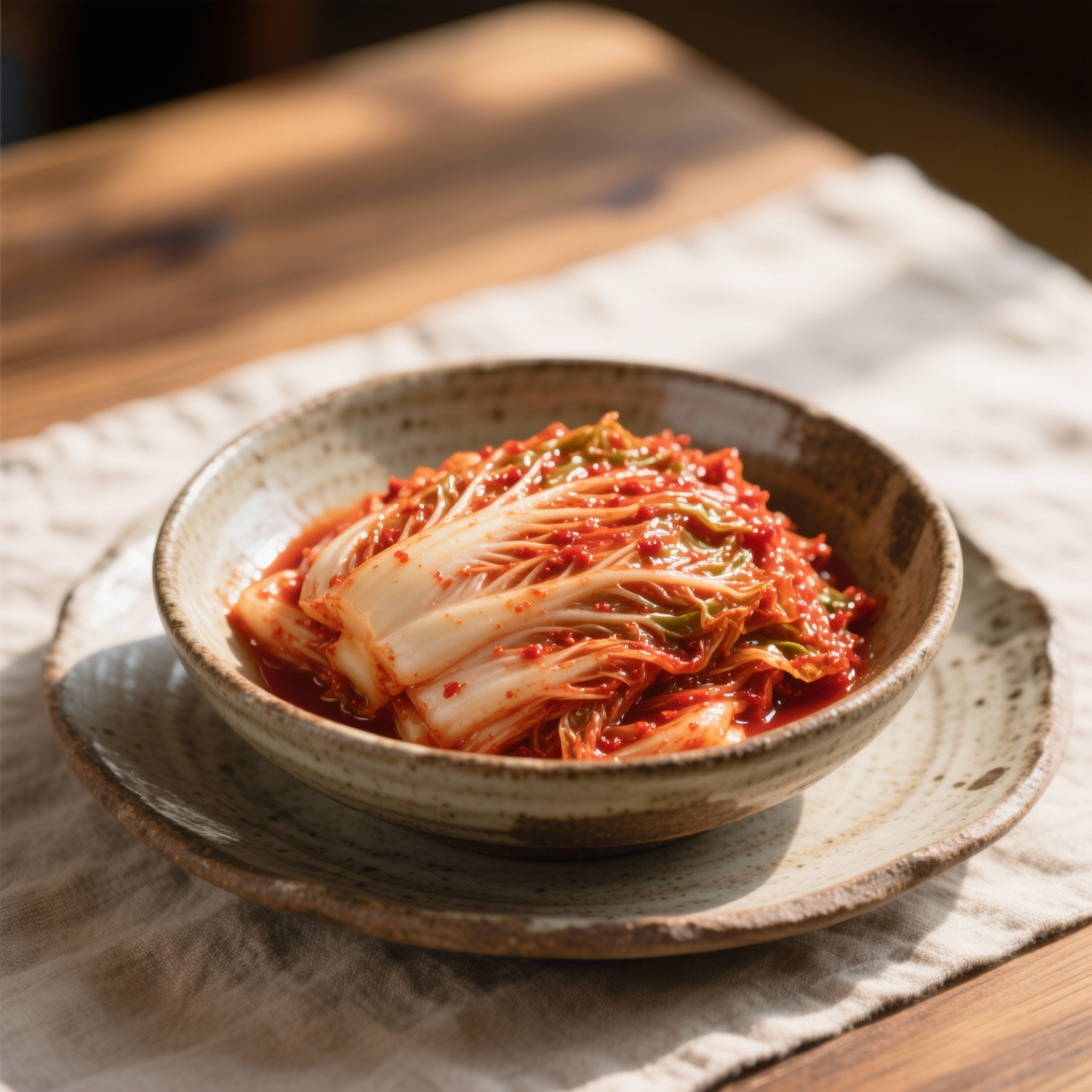
Kimchi (Baechu)
I’ve watched generations of Korean families turn humble napa cabbage into something alive, but store-bought kimchi has quietly betrayed that legacy. A typical jar from the supermarket runs eight to twelve dollars, yet it arrives pasteurized, stripped of its probiotics, and drowned in cheap preservatives and corn syrup to mimic fermentation. The texture is often waterlogged, the spice one-dimensional, and the complex umami entirely absent. Making baechu kimchi at home reclaims that depth. It starts with the quiet alchemy of dry salting whole leaves, drawing out excess moisture so the brine can carry the gochugaru, garlic, ginger, and fermented seafood deep into the vegetable’s core. I use a traditional fish sauce base, which gives it that essential savory backbone that shortcuts simply cannot replicate. The real magic happens in the crock, where time does the heavy lifting. Common pitfalls usually come from rushing or overcomplicating. Many beginners skip the two-hour salt rest, leaving the cabbage soggy and prone to spoilage. Others drown the paste in sugar or skip rinsing thoroughly enough, which throws off the delicate salt balance needed for a steady, bubbling fermentation. Keep your vessels clean, pack the cabbage tightly to eliminate air pockets, and trust the room temperature to do its work before moving it to cold storage. This isn’t just a side dish; it’s a living archive of patience, meant to be made in generous batches that reward you with evolving flavors for months.
Nutrition
| Per serving | Calories | Protein | Carbs | Fat | Sat fat | Fibre | Sugar | Sodium |
|---|---|---|---|---|---|---|---|---|
| beginner | 25kcal | 2g | 5g | 1g | 0g | 2g | 2g | 650mg |
| intermediate | 38kcal | 2g | 6g | 0g | 0g | 3g | 3g | 780mg |
| expert | 40kcal | 2g | 7g | 1g | 0g | 3g | 4g | 900mg |
Per serving · Ava-estimated — a guide, not a clinical figure.
- 2500 gNapa cabbage— Trimmed and quartered lengthwise
- 250 gCoarse sea salt— For brining the cabbage leaves
- 350 gKorean radish— Peeled and julienned
- 180 gKorean chili powder— Coarse grind preferred for texture
- 120 mlFish sauce— Anchovy-based for umami depth
- 70 gGarlic— Peeled and minced
- 30 gFresh ginger— Peeled and finely grated
- 100 gScallion— Cut into 5 cm segments
- 25 gWhite sugar(optional)— Helps kickstart initial fermentation
- 30 gSalted fermented shrimp(optional)— Traditional flavor enhancer
Store-bought kimchi often relies on excessive preservatives, artificial coloring, and heavily salted pastes to mask rushed fermentation, costing upwards of eight dollars per jar while delivering a flat, one-note sourness. This beginner version strips away the intimidation without sacrificing authenticity or resorting to jarred shortcuts. You will brine whole napa cabbage leaves in a straightforward saltwater soak, then blend fresh aromatics with a simple rice-flour slurry and traditional fish sauce to build a vibrant, deeply savory paste from scratch. The technique prioritizes forgiving ratios and clear visual cues over rigid precision, making your first fermentation highly approachable. Watch closely for the cabbage to bend pliable without snapping during the brining stage, which signals the perfect moisture extraction. When massaging the paste, ensure every leaf is thoroughly coated but not bruised. Pack the mixture tightly into your fermentation vessel to eliminate air pockets, which prevents unwanted mold and encourages the clean, tangy lactic acid development kimchi is famous for. Trust the slow room-temperature rest before refrigerating, and let patience transform your simple ingredients into a complex, probiotic-rich side dish that far outshines any supermarket alternative.
Equipment
- Large non-reactive bowl— Glass or stainless steel works best
- Food processor(optional)— For a smooth, consistent paste
- Fermentation crock— Wide-mouth glass jars with loose lids work too
- Cotton gloves(optional)— Protects hands from capsaicin
Method
- 1
Halve the napa cabbage lengthwise, quarter it, and submerge the pieces in a heavy saltwater brine for two hours.
Keep the cut side up to ensure even penetration.
brining~ 120 min - 2
Whisk rice flour into cold water, then simmer gently over low heat until it thickens into a translucent paste.
Stir constantly to prevent scorching on the pan bottom.
gelatinization~ 5 min - 3
Blend fresh garlic, ginger, scallions, and red pepper flakes into the cooled paste, then stir in the fish sauce.
The mixture should smell sharp and deeply savory.
pureeing~ 3 min - 4
Rinse the brined cabbage thoroughly under cold water three times, then squeeze firmly to remove excess moisture.
Taste a small piece to confirm the saltiness is balanced, not harsh.
rinsing~ 7 minTricky bit - 5
Layer the drained cabbage in a large bowl and massage the prepared paste evenly between every leaf.
Work gently to avoid tearing the delicate outer leaves.
massaging~ 10 min - 6
Pack the seasoned cabbage tightly into a clean glass jar, pressing down firmly until the brine rises above the vegetables.
Leave at least two inches of headspace for active fermentation gases.
packing~ 5 minTricky bit
Cooking from frozen
Thaw overnight in the fridge; the leaves soften considerably, making thawed batches best suited for simmering into stews or frying with rice rather than fresh serving.
Storage times are a guide — always use your judgement and store food safely.