
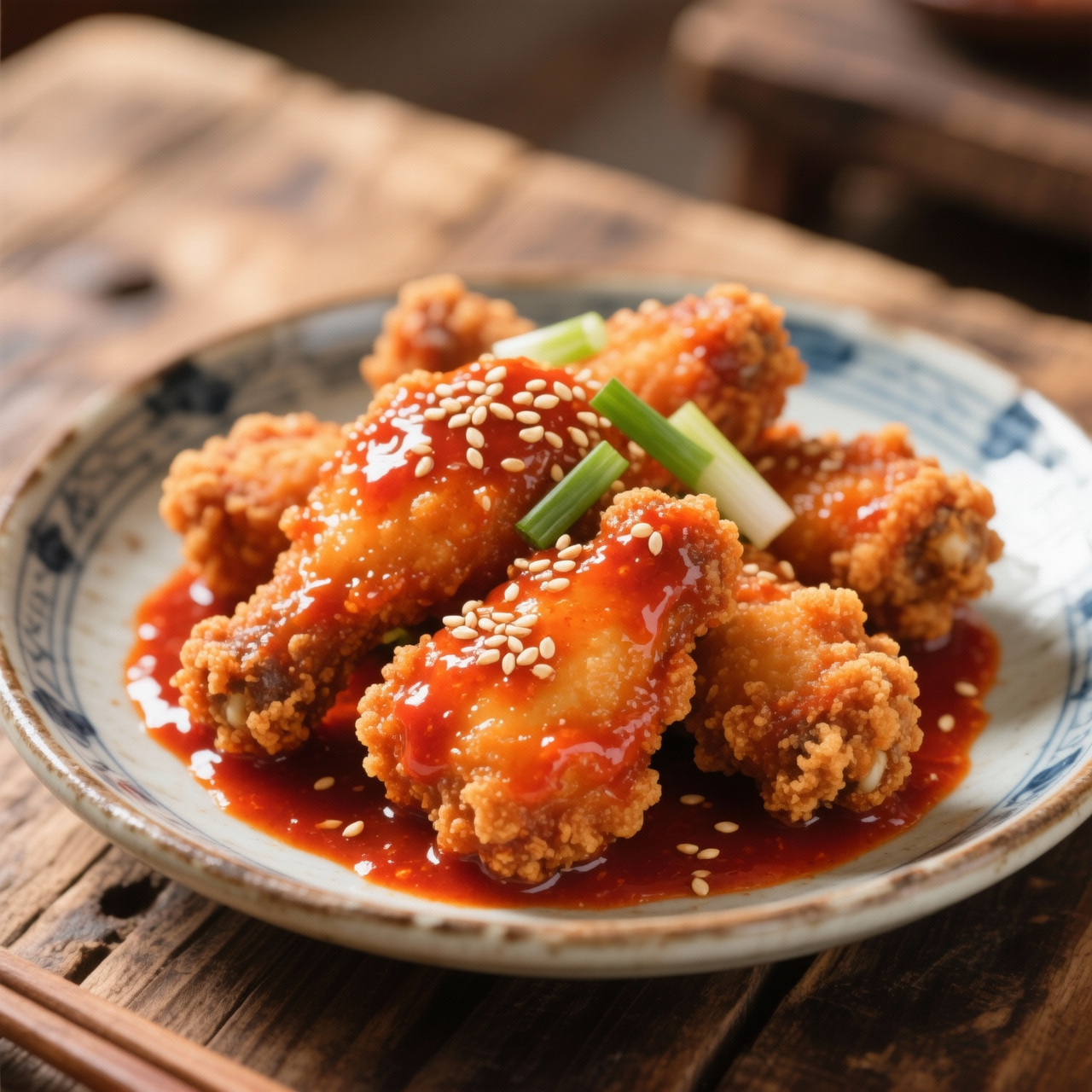
Korean Fried Chicken Sauce (Yangnyeom)
Yangnyeom literally means "seasoned," and it’s the soul of modern Korean street food. In the 1980s, it transformed plain fried chicken into a sticky, glossy masterpiece that quickly became a national obsession. As Ava, I’ve spent years perfecting this vegan glaze, realizing the true magic lies entirely in the sauce itself. It matters because it bridges nostalgic comfort food and plant-based cooking, proving that deep umami and bright heat don’t rely on animal products. The foundation is gochujang, a fermented chili paste with profound earthy sweetness, balanced by rice syrup for that signature lacquer and soy sauce for savory depth. The biggest pitfall I consistently see is rushing the reduction. Yangnyeom demands gentle, steady heat to meld without scorching the sugars into bitter ash. Another common misstep is using thin or overly fresh gochujang; you need a thick, aged paste to withstand the simmer without turning watery. Many cooks also overcomplicate the balance with too many extra spices, forgetting that restraint is key. The chili, the sweet, the savory, and a whisper of toasted sesame oil should simply harmonize. When executed properly, it coats crispy tofu or roasted vegetables with an addictive, restaurant-quality finish. I always remind myself that patience in the pan yields the deepest flavor, and a careful taste adjustment before thickening is absolutely non-negotiable. This sauce stands as proof that a few humble pantry staples, treated with quiet respect, can create something both deeply traditional and entirely new.
Nutrition
| Per serving | Calories | Protein | Carbs | Fat | Sat fat | Fibre | Sugar | Sodium |
|---|---|---|---|---|---|---|---|---|
| beginner | 105kcal | 2g | 21g | 2g | 0g | 1g | 14g | 510mg |
| intermediate | 110kcal | 1g | 16g | 5g | 1g | 1g | 12g | 480mg |
| expert | 145kcal | 2g | 32g | 2g | 0g | 2g | 24g | 820mg |
Per serving · Ava-estimated — a guide, not a clinical figure.
- 120 ggochujang— Verify vegan certification as traditional versions may contain fermented seafood
- 45 mlsoy sauce— Low-sodium variety recommended to balance sweetness
- 60 mlmaple syrup— Pure grade A or B works equally well for vegan substitution
- 15 mlrice vinegar— Use unseasoned type to control salt and sugar levels
- 20 ggarlic— Peeled and finely minced or crushed
- 10 gfresh ginger— Peeled and finely grated or microplaned
- 10 mltoasted sesame oil— Add off heat to preserve volatile aromatic compounds
- 40 mlwater— Adjust incrementally to achieve preferred glaze viscosity
- 5 gcornstarch(optional)— Optional thickener for a high-gloss finish
This beginner-friendly version of Yangnyeom sauce prioritizes accessibility and foolproof technique, making it the perfect starting point for your Korean fried chicken journey. Instead of building flavors from scratch, we lean on high-quality, store-bought gochujang and pantry staples like soy sauce, rice vinegar, and a touch of maple syrup for balance. The key to success here is patience during the simmer: keep the heat strictly on low-medium and stir frequently to prevent the natural sugars and chili paste from scorching on the bottom of your pan. Watch for the moment the bubbles transition from large and rapid to small, slow pops—that’s your cue that the starches have gelatinized and the glaze has reached its signature glossy, syrupy consistency. Remove from heat immediately to stop the cooking process, as residual heat will continue to thicken the sauce. If it looks too thick, simply whisk in a teaspoon of warm water until it coats the back of a spoon smoothly. Once cooled slightly, it’s ready to toss with crispy chicken or drizzle over roasted vegetables for an instant flavor upgrade.
Equipment
- Small saucepan— heavy-bottomed to prevent hot spots and scorching
- Silicone spatula— flexible edge scrapes corners easily
- Measuring cups and spoons— accuracy ensures the sweet-spicy balance stays consistent
Method
- 1
Measure and combine the gochujang, soy sauce, rice vinegar, sweetener, minced garlic, and sesame oil in a mixing bowl.
Whisk until completely smooth with no clumps of chili paste.
emulsifying~ 2 min - 2
Transfer the mixture to a saucepan and place it over medium-low heat.
Do not rush to high heat, or the sugars will burn.
tempering~ 1 min - 3
Bring the sauce to a gentle simmer while stirring constantly.
Listen for the change in bubble sound from aggressive popping to a soft sigh.
simmering~ 2 minTricky bit - 4
Reduce the heat to low and continue cooking until the glaze thickens enough to coat the back of a spoon.
Test by dragging your finger through the coating on the spoon.
reduction~ 5 min - 5
Remove the pan from the heat and let the sauce rest for two minutes before tossing.
Resting allows the starch network to fully set for maximum cling.
resting~ 2 min
Cooking from frozen
Thaw overnight in the refrigerator and gently rewarm in a saucepan over low heat, stirring in a splash of water to restore the glossy consistency.
Storage times are a guide — always use your judgement and store food safely.