
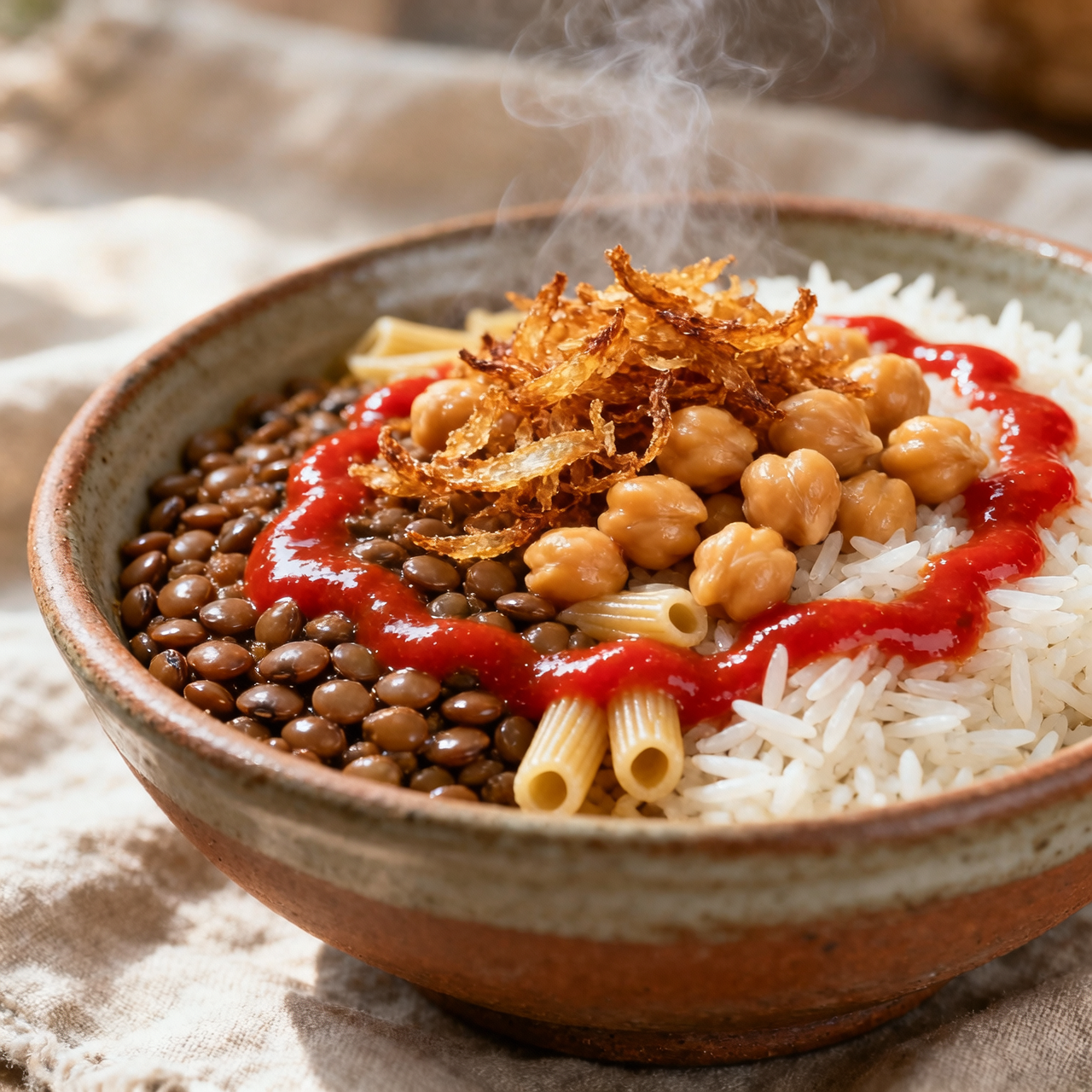
Koshari
When I first encountered Koshari, I was struck by how a dish born on the bustling streets of Cairo managed to weave itself into the broader tapestry of North African comfort food, even finding a quiet place in Moroccan kitchens as a testament to our shared love of hearty, plant-based sustenance. To me, it matters because it is a masterclass in resourcefulness. Lentils, rice, pasta, and chickpeas layered beneath a tangy tomato sauce and crisp fried onions create a symphony of textures that proves vegan cuisine was never about deprivation, but about abundance. Yet, for all its simplicity, Koshari is surprisingly easy to misstep with. The most common pitfall I see is rushing the caramelized onions. They require patience and low heat to achieve that deep, mahogany crunch without burning. Another mistake is under-seasoning the tomato-spice base, which needs a generous hand with cumin, coriander, and a touch of heat to cut through the starches. Many also forget to cook the pasta slightly firmer than usual, since it will continue to absorb moisture when layered. When I make it, I treat each component as its own small project, giving the lentils and rice their proper time to breathe before bringing them together in a warm, communal bowl. It is a dish that asks for attention, but rewards you with something deeply nourishing and profoundly satisfying, bridging generations and borders one forkful at a time.
Ingredients
- 150 gbrown lentil— rinsed and picked over
- 200 glong-grain rice— rinsed until water runs clear
- 150 gshort pasta— ditalini or elbow macaroni
- 400 gcanned chickpea— drained and rinsed
- 2 wholeyellow onion— thinly sliced
- 4 wholegarlic clove— finely minced
- 30 gtomato paste— concentrated
- 45 mlapple cider vinegar— raw and unfiltered
- 60 mlolive oil— extra virgin
- 200 mlvegetable oil— neutral, high smoke point
- 5 gground cumin— toasted
- 3 gsmoked paprika— sweet variety
- 15 gkosher salt— fine grain
- 2 gblack pepper— freshly ground
Method
Pick a skill levelThis version prioritizes confidence and clarity over culinary complexity. You will rely on straightforward boiling methods and a simplified sauce assembly that brings all the flavors together without demanding constant attention. The key difference here is the streamlined approach to the spice base and onion topping, allowing you to focus entirely on timing and temperature control. I have designed the workflow so that you can manage multiple pots simultaneously without feeling overwhelmed. Watch closely for the exact moment the pasta reaches al dente, as it will continue to soften once drained. The sauce should bubble gently rather than boil aggressively, which preserves its natural acidity and prevents scorching. When frying the onions, keep the heat at a steady medium and stir only when necessary to encourage even browning. Trust the visual and olfactory cues provided in each step rather than the clock. If the mixture looks too thick, a splash of water will restore the proper consistency without diluting the flavor. This method guarantees a reliable, deeply satisfying bowl that proves you do not need advanced techniques to achieve authentic results. Practice the rhythm of the steps, and you will build a solid foundation for future variations.
Method
- 1
Bring a large pot of heavily salted water to a rolling boil.
Water should taste like the sea to season grains from the inside out.
boiling~ 5 min - 2
Add the brown lentils and simmer until tender but still holding their shape.
Check for softness every five minutes to avoid mushiness.
simmering~ 15 minTricky bit - 3
Cook the rice in a separate pot using a two-to-one water ratio until fluffy.
Keep the lid on tightly during the resting phase.
steaming~ 18 min - 4
Boil the short pasta according to package directions and drain immediately.
Rinse briefly under cool water to halt the cooking process.
parboiling~ 8 min - 5
Heat vegetable oil in the skillet and fry the sliced onions until golden.
Patience prevents burning; adjust heat if edges darken too quickly.
frying~ 10 minTricky bit - 6
Sauté the garlic in olive oil, stir in tomato paste and spices, then add vinegar and a cup of water.
Simmer until slightly thickened, about five minutes.
reducing~ 5 min - 7
Layer the cooked rice, lentils, pasta, and chickpeas in a large bowl and drizzle generously with the sauce.
Top with fried onions and serve immediately while components are warm.
plating~ 2 min
This iteration shifts from basic assembly to intentional layering and flavor development. You will build the sauce foundation by properly toasting the spices before introducing the tomato base, which unlocks deeper aromatic compounds and eliminates any raw metallic notes. The cooking process requires you to monitor starch release more carefully, ensuring that the rice and lentils maintain distinct, separate grains rather than clumping together. I want you to pay special attention to the vinegar balance, adding it incrementally so the final sauce retains a bright, palate-cleansing tang without becoming sharp. The onion frying step demands active temperature management, moving between medium-high and medium heat to achieve a uniform golden crust while keeping the interior tender. You will also learn to deglaze the pan effectively, capturing every bit of caramelized fond to enrich the tomato reduction. Timing becomes more synchronized here, as you will coordinate the simmering of the legumes with the pasta cooking to ensure everything reaches peak readiness simultaneously. Trust your senses over rigid timers, and adjust seasoning at the end rather than during the initial stages. This approach yields a more complex, restaurant-quality depth while remaining firmly within the realm of practical weeknight cooking.
Method
- 1
Toast the cumin and paprika in a dry Dutch oven until fragrant, then immediately remove to prevent burning.
The aroma will intensify rapidly; keep the pan moving.
toasting~ 2 minTricky bit - 2
Simmer the rinsed lentils in lightly salted water until al dente, reserving half a cup of cooking liquid.
Starch-rich liquid will later help bind the sauce.
simmering~ 15 min - 3
Rinse the rice thoroughly, then cook it in fresh water until grains separate cleanly.
Fluff gently with a fork to preserve structure.
absorbing~ 15 min - 4
Boil the pasta until just shy of al dente, then shock in cold water and toss with a teaspoon of oil.
This prevents sticking and allows for a final heat pass later.
shocking~ 8 min - 5
Slow-fry the onions in vegetable oil over medium heat until deeply caramelized, stirring only every few minutes.
Crowding the pan will steam them instead of crisping.
caramelizing~ 15 minTricky bit - 6
Sauté minced garlic in olive oil, bloom the toasted spices, then stir in tomato paste until it darkens slightly.
Darkening paste indicates developed sugars and deeper flavor.
blooming~ 3 minTricky bit - 7
Deglaze with apple cider vinegar, reduce until syrupy, then whisk in reserved lentil water to form the sauce.
Taste and adjust salt and pepper before combining.
deglazing~ 5 min - 8
Assemble the bowl by arranging each component distinctly, ladle sauce over the center, and crown with crispy onions.
Serve immediately to preserve textural contrast.
plating~ 2 min
This level demands precision, patience, and a deep respect for traditional technique. You will begin by dry-toasting whole spices in a preheated vessel, then grinding them immediately to capture volatile oils that pre-ground blends inevitably lose. The onion preparation transforms into a controlled, low-and-slow Maillard reaction, where you carefully monitor moisture evaporation and oil temperature to achieve a shatteringly crisp exterior without bitter undertones. I expect you to treat the grains as independent components, rinsing them until the water runs completely clear, then cooking them with exact water-to-grain ratios and finishing with a steam-rest to lock in structure. The sauce requires a deliberate reduction process, where you balance the acidity of the vinegar against the natural sweetness of the tomatoes through careful evaporation and tasting. You will also master the technique of tempering the spices into hot oil before adding the paste, preventing scorching while maximizing flavor extraction. Every step is interconnected, requiring you to anticipate carryover cooking and adjust heat zones dynamically. Watch the viscosity closely as the sauce cools slightly, which is the true indicator of proper seasoning balance. This method produces a profoundly layered dish where each component retains its distinct identity while harmonizing into a cohesive whole.
Method
- 1
Toast whole cumin seeds in a dry pan until they release a nutty aroma, then grind coarsely.
Fresh grinding preserves essential oils lost in pre-packaged dust.
toasting~ 3 minTricky bit - 2
Rinse lentils and rice separately in cold water until runoff remains perfectly clear.
Removing excess surface starch prevents gummy textures.
washing~ 4 min - 3
Simmer lentils in precisely measured water until just tender, then drain and reserve the liquid.
Overcooking now will ruin the final bite.
simmering~ 15 minTricky bit - 4
Cook rice using a tight lid and exact water ratio, then rest off heat for ten minutes before fluffing.
Steam-resting completes gelatinization without overworking grains.
steaming~ 20 min - 5
Boil pasta until firm, rinse under cold water, and toss with oil to prevent sticking.
This step ensures perfect al dente finish during assembly.
parboiling~ 7 min - 6
Fry sliced onions in hot oil at exactly 160°C until golden, then transfer to parchment to drain.
Maintaining oil temperature prevents greasy or burnt results.
deep-frying~ 10 minTricky bit - 7
Bloom freshly ground spices in warm olive oil, stir in tomato paste until it caramelizes, then deglaze with vinegar.
Watch the paste darken to a deep mahogany for optimal umami.
tempering~ 4 minTricky bit - 8
Simmer the sauce gently until it coats the back of a spoon, adjusting salt and pepper to taste.
Proper viscosity indicates balanced water-to-solids ratio.
reducing~ 8 min - 9
Layer components strategically in a warm bowl, pour sauce over the center, and crown with fried onions.
Serve immediately to experience the full textural architecture.
plating~ 2 min