
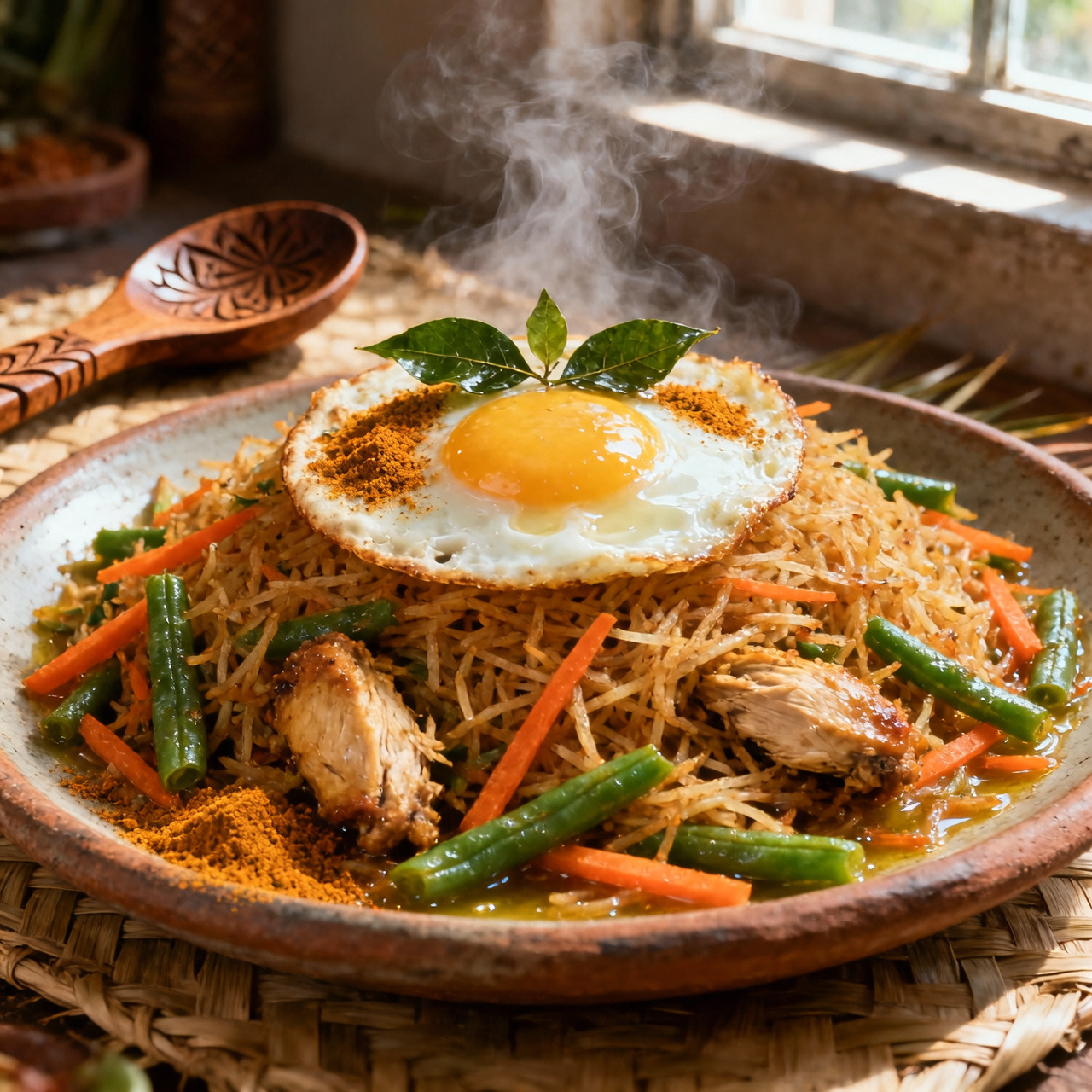
Kottu Roti
When I first heard the rhythmic clanging of metal spatulas against a flat griddle echoing through Colombo’s late-night streets, I knew I had stumbled upon something far deeper than street food. Kottu roti, born in the 1960s among Sri Lanka’s Tamil and Muslim communities, was originally a brilliant solution to food waste—leftover godamba roti shredded and tossed with vegetables, eggs, or meat, then chopped and sizzled into a cohesive, deeply flavorful dish. That improvisational spirit is exactly why this recipe matters to me. It’s not just a meal; it’s a living archive of resilience, community, and the beautiful chaos of urban Sri Lankan life. Every time I make it, I’m reminded that great cooking doesn’t demand perfection—it demands presence. Yet, I’ve watched countless home cooks and even seasoned travelers stumble over a few predictable pitfalls. The most common mistake is overloading the pan with too much roti at once, which steams the bread instead of crisping it. Others rush the aromatics, skipping the slow bloom of curry leaves, mustard seeds, and onions that form the flavor foundation. And perhaps the gravest error of all is treating the dish as a static formula rather than a conversation with your ingredients. When you respect the heat, listen to the sizzle, and let the components marry gradually over a fiercely hot surface, kottu roti transforms from a simple stir-fry into a symphony of texture and spice that tastes unmistakably like home.
Nutrition
| Per serving | Calories | Protein | Carbs | Fat | Sat fat | Fibre | Sugar | Sodium |
|---|---|---|---|---|---|---|---|---|
| beginner | 780kcal | 32g | 64g | 46g | 27g | 8g | 8g | 890mg |
| intermediate | 780kcal | 32g | 64g | 46g | 27g | 8g | 8g | 890mg |
| expert | 780kcal | 32g | 64g | 46g | 27g | 8g | 8g | 890mg |
Per serving · Ava-estimated — a guide, not a clinical figure.
- 400 ggodhamba roti— day-old, thinly sliced into strips
- 300 gchicken thigh— boneless, skinless, diced
- 200 gyellow onion— finely sliced
- 150 gcarrot— julienned
- 100 ggreen bean— trimmed and finely chopped
- 100 gleek— white and light green parts only
- 3 piecelarge egg— lightly beaten
- 30 gSri Lankan curry powder— toasted blend
- 200 mlcoconut milk— full-fat, unsweetened
- 60 mlcoconut oil— refined or virgin
- 3 piecegreen chili— sliced lengthwise
- 6 piecegarlic clove— minced
- 25 gginger— freshly grated
- 2 piecepandan leaf(optional)— knotted
- 15 gfresh curry leaf— whole sprigs
- 5 gfine salt— adjust to taste
This version prioritizes confidence over complexity, using store-bought shortcuts that guarantee flavor without demanding advanced knife skills or spice knowledge. You will work with a ready-made kottu paste or a reliable jarred Sri Lankan curry base, which handles the delicate balance of toasted spices for you. The flatbread is purchased pre-sliced or quickly shredded with a food processor, eliminating the tedious hand-chopping phase. I have designed the steps to hold your hand through the most crucial moments: how to properly bloom the paste without burning it, when to add the egg so it scrambles evenly, and how to fold everything together until the moisture is perfectly absorbed. Keep your heat at medium to prevent the coconut milk from splitting or the bread from scorching. Watch closely for the moment the mixture transitions from wet to cohesive; that is your signal to stop stirring. The goal here is a reliable, deeply satisfying first attempt that teaches you the rhythm of the dish without overwhelming your workspace. Trust the timing cues, keep your ingredients prepped in small bowls, and do not worry if your first batch is not restaurant-shredded.
Equipment
- Heavy-bottomed pan— non-stick is fine here
- Silicone spatula— for gentle folding
- Food processor(optional)— optional, for quick shredding
Method
- 1
Heat the coconut oil in a heavy-bottomed pan over medium heat.
Wait until it shimmers but does not smoke.
heating~ 1 min - 2
Add the curry powder and jarred paste, then stir constantly for one minute.
Spices should release their aroma immediately.
blooming~ 1 min - 3
Toss in the diced chicken, garlic, ginger, and green chilies.
Cook until the meat loses its pink color.
searing~ 5 min - 4
Pour in the coconut milk and add the pandan leaf.
Simmer gently until the liquid reduces by half.
reducing~ 7 min - 5
Fold in the sliced onions, carrots, green beans, and leeks.
Vegetables should soften slightly but keep their crunch.
wilting~ 3 min - 6
Push the mixture to one side and pour the beaten eggs into the empty space.
Scramble quickly before combining with the curry.
scrambling~ 2 minTricky bit - 7
Add the pre-sliced roti and stir vigorously to coat every strip.
Listen for the sizzle as moisture absorbs into the bread.
tossing~ 2 min - 8
Season with salt, toss once more, and remove from heat immediately.
Let it rest for two minutes before plating.
resting~ 2 min