
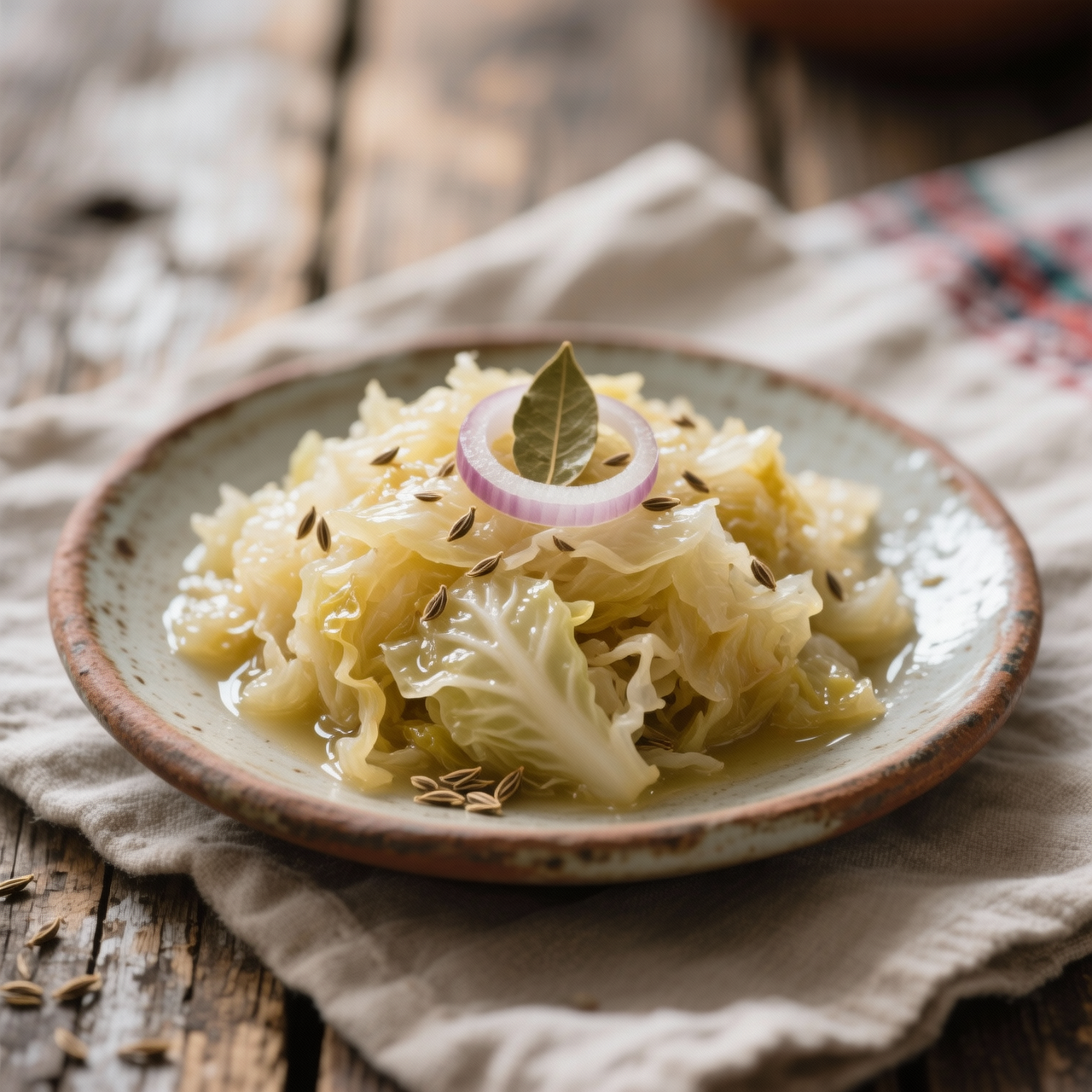
Kvashena kapusta (sauerkraut)
Kvashena kapusta is the beating heart of the Ukrainian winter pantry, a tradition that stretches back centuries before the advent of modern refrigeration. When the first autumn frosts kiss the late-harvest cabbage, my babusya would gather us to shred mountains of it, mixing it with coarse salt and sometimes a handful of tart Antonov apples or caraway seeds. This isn't just a condiment; it's a vital source of vitamin C that kept our ancestors scurvy-free through the long, dark months. The magic of kvashena kapusta lies in lacto-fermentation, a beautiful alchemy where naturally occurring bacteria transform simple cabbage and salt into a complex, tangy, probiotic-rich treasure. It matters because it connects us to the rhythm of the seasons and the resilience of Ukrainian culture, turning humble, cheap ingredients into something profoundly nourishing. However, there are common pitfalls that can ruin your batch. The most frequent mistake is using iodized table salt, which can inhibit the good bacteria and impart a metallic taste; always use pure, non-iodized sea salt or kosher salt. Another trap is chopping the cabbage too finely, which leads to a mushy texture rather than a satisfying crunch. You must massage the cabbage thoroughly until it releases enough of its own brine to submerge itself completely. If the cabbage is exposed to air, it will mold rather than ferment. Finally, patience is key. While it might taste okay after a few days, true kvashena kapusta needs at least three to four weeks in a cool, dark place to develop its signature deep, sour complexity. Trust the process, keep it submerged, and let time do the work.
Nutrition
| Per serving | Calories | Protein | Carbs | Fat | Sat fat | Fibre | Sugar | Sodium |
|---|---|---|---|---|---|---|---|---|
| beginner | 20kcal | 1g | 4g | 0g | 0g | 2g | 2g | 450mg |
| intermediate | 24kcal | 1g | 5g | 0g | 0g | 2g | 3g | 750mg |
| expert | 25kcal | 1g | 5g | 0g | 0g | 3g | 3g | 650mg |
Per serving · Ava-estimated — a guide, not a clinical figure.
- 3000 gcabbage— Late-season white cabbage, outer leaves and core removed
- 300 gcarrot— Peeled and coarsely grated
- 60 gsalt— Non-iodized coarse salt, exactly 2 percent of the cabbage weight
This beginner-friendly approach to traditional Ukrainian kvashena kapusta simplifies the winter batch-hero project into a manageable, foolproof quart-jar ferment. Instead of intimidating ceramic crocks and complex brine calculations, we rely on the cabbage's natural moisture, coaxed out through a vigorous hand massage. The biggest shortcut here is utilizing pre-shredded coleslaw mix, completely bypassing the tedious knife work and saving you at least twenty minutes of prep. If you prefer fresh cabbage, a standard sharp knife and some elbow grease will do just fine. The key technique to watch for is ensuring every single shred of vegetable remains submerged under the brine; oxygen is the enemy of lacto-fermentation and causes mold. We solve this with a clever, accessible hack: a small ziplock bag filled with water acts as a perfect, custom-fit follower weight. Keep the jar at a stable room temperature, away from direct sunlight, and taste it daily after day four. You are looking for a pleasantly sour tang and a tender-crisp texture. Once it reaches your preferred level of sourness, simply move it to the fridge to halt the fermentation.
Equipment
- 1-quart wide-mouth mason jar— ensure it is thoroughly sanitized
- Large mixing bowl— glass or stainless steel preferred over reactive metals
- Small ziplock bag— fill with water to use as a fermentation weight
Method
- 1
Combine the pre-shredded cabbage mix and salt in the large mixing bowl.
If using fresh cabbage, shred it finely first.
preparing~ 2 min - 2
Massage the cabbage vigorously with clean hands until it wilts and releases enough liquid to form a brine.
This takes about 5 to 10 minutes of hard squeezing.
massaging~ 7 minTricky bit - 3
Tightly pack the cabbage and all extracted juices into the mason jar, pressing down firmly to eliminate air pockets.
The brine must completely cover the vegetables.
packing~ 3 min - 4
Place the water-filled ziplock bag directly on top of the cabbage to keep everything submerged under the brine.
Leave no cabbage exposed to the air.
submerging~ 1 min - 5
Cover the jar loosely with its lid and let it ferment at room temperature out of direct sunlight for 5 to 7 days.
Burp the jar daily to release built-up gases.
fermenting~ 1 minTricky bit
Cooking from frozen
Thaw in the fridge overnight; best used in cooked dishes like soups or stews since freezing softens the crunch.
Storage times are a guide — always use your judgement and store food safely.