
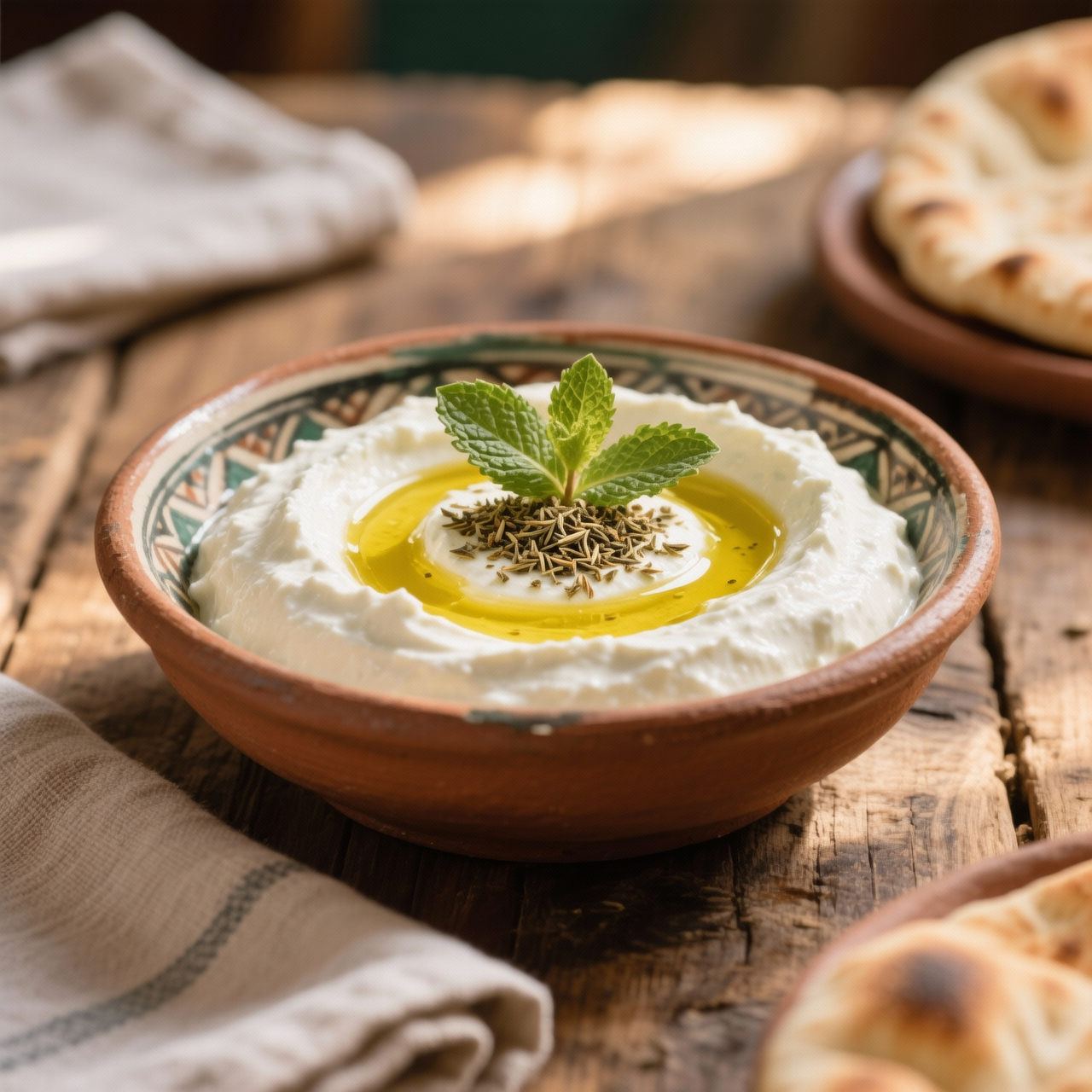
Labneh
I first encountered labneh not in a glossy cookbook, but in the quiet, sunlit kitchens of my grandmother’s village in the Bekaa Valley. It is, at its heart, profoundly simple: just salt, time, and the gentle pull of gravity transforming fresh yogurt into something luxuriously thick and tangy. Yet, this simplicity is exactly where so many modern cooks stumble. We rush it, using high-fat commercial tubs that already contain stabilizers and gums, which yield a rubbery, lifeless paste when drained. True labneh demands patience and a proper full-fat, live-culture yogurt, preferably one with a clean ingredient list. When you strain it slowly through cheesecloth, letting the whey drip away over twelve to twenty-four hours, you are not just removing liquid; you are concentrating the milk proteins and lactic cultures into a spread that carries centuries of Levantine hospitality. This matters because labneh is the edible canvas of Lebanese breakfasts, mezze tables, and quick weeknight suppers alike. It bridges the gap between preservation and indulgence, a testament to how our ancestors stretched dairy through hot months without refrigeration. The most common pitfalls I see today involve over-salting, which turns the spread harsh, and squeezing the cloth to force out moisture, which compresses the curds and ruins that signature pillowy texture. Trust the drip. Let it rest. When you finally fold in a drizzle of olive oil and a pinch of za’atar, you are not just eating a condiment; you are tasting the quiet rhythm of time, salt, and milk, exactly as it was meant to be.
Nutrition
| Per serving | Calories | Protein | Carbs | Fat | Sat fat | Fibre | Sugar | Sodium |
|---|---|---|---|---|---|---|---|---|
| beginner | 145kcal | 11g | 5g | 9g | 6g | 0g | 4g | 180mg |
| intermediate | — | — | — | — | — | — | — | — |
| expert | — | — | — | — | — | — | — | — |
Per serving · Ava-estimated — a guide, not a clinical figure.
- 1000 gfull-fat plain yogurt— Use traditional unflavored yogurt without added thickeners or stabilizers
- 12 gfine sea salt— Mixed thoroughly into the yogurt before straining to draw out whey
This beginner-friendly approach strips away the need for specialty muslin bags or traditional cheesecloth setups, relying instead on everyday kitchen items like a fine-mesh strainer and standard coffee filters. You will combine full-fat plain yogurt with a precise amount of salt, which draws out the moisture and naturally thickens the mixture over time. Watch for a few key signs: the whey will pool in the bowl below, and the spread will gradually pull away from the sides as it firms up. Do not rush the chilling period; a full twenty-four hours guarantees a smooth, scoopable texture without becoming crumbly. Once drained, simply fold in a quick drizzle of olive oil and a pinch of your favorite dried herbs if desired, or keep it plain to replace store-bought tubbed labneh entirely. This version prioritizes confidence and predictability, giving you clear checkpoints so you know exactly when it has reached that perfect, tangy consistency. Store it in a sealed container in the refrigerator, where it will stay fresh and ready for spreading, dipping, or garnishing for up to a week.
Equipment
- Fine-mesh sieve— must fit snugly inside a medium bowl
- Basket coffee filters or paper towels— double-layer for safety
- Medium mixing bowl— collects draining whey
Method
- 1
Combine the plain yogurt and salt in a bowl until completely smooth and evenly distributed.
Use a spatula to scrape the sides and eliminate any graininess.
combining~ 1 min - 2
Line the fine-mesh sieve with two coffee filters or a double layer of paper towels, then set it securely over the mixing bowl.
Press the filters gently against the mesh so they do not slip.
lining~ 1 min - 3
Scoop the yogurt mixture into the lined sieve, cover loosely with plastic wrap, and refrigerate undisturbed.
Check at twenty hours; longer chilling yields a thicker, drier spread.
straining~ 1440 minTricky bit - 4
Lift the filter from the sieve, scrape the thickened labneh into a clean storage jar, and discard the collected liquid.
A silicone spatula will help you get every last bit without tearing the filter.
transferring~ 2 min
Storage times are a guide — always use your judgement and store food safely.