
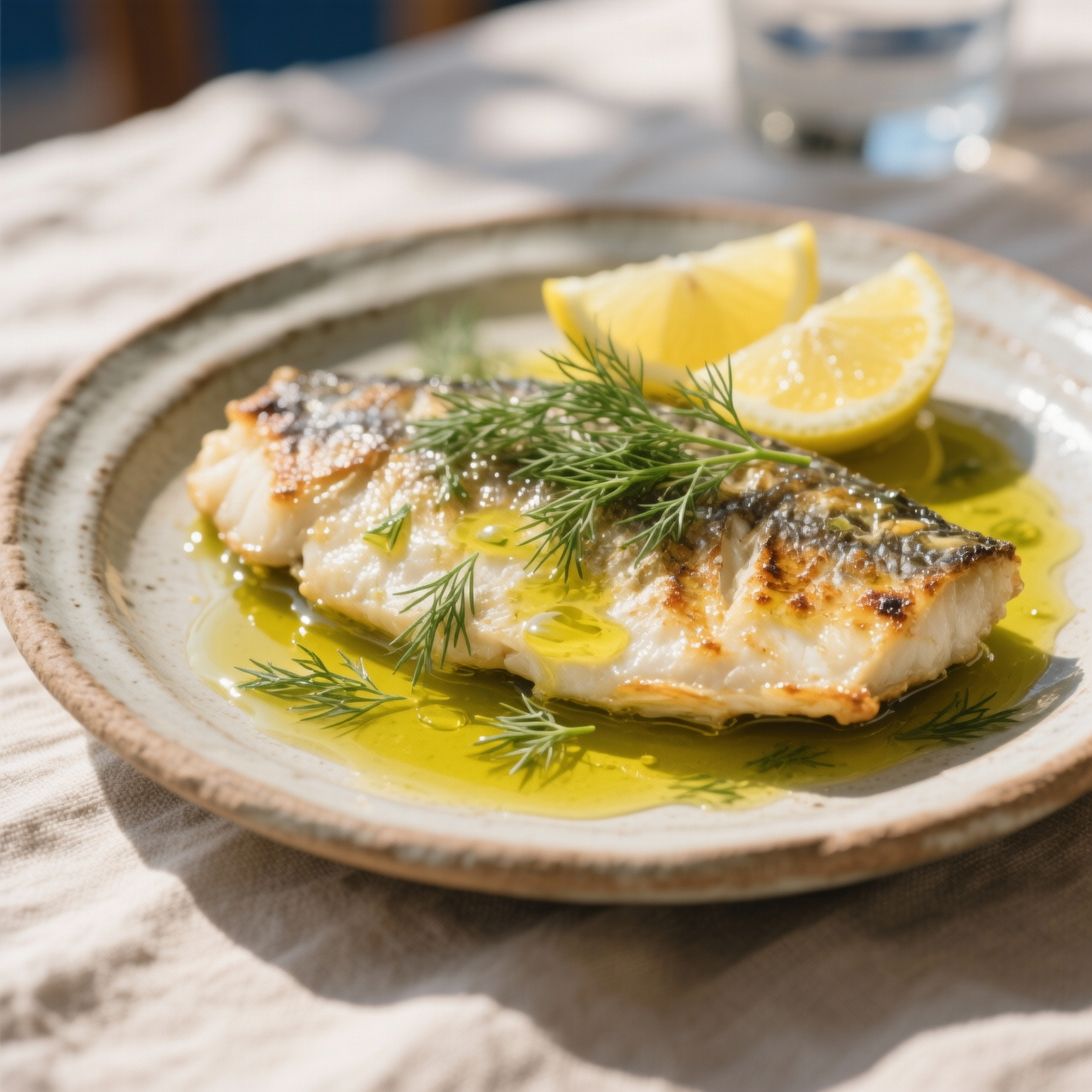
Ladolemono
When I first learned to shake ladolemono in a glass jar during a summer spent along the Aegean coast, I quickly realized that its magic lies not in complexity, but in restraint. The name itself translates directly to oil and lemon, yet this unassuming emulsion has anchored Greek tables for centuries, transforming humble grilled fish, roasted vegetables, and even plain boiled greens into something vibrant. What makes it matter is its role as a culinary equalizer: it cuts through rich, oily seafood with bright acidity while letting the primary ingredient sing. The most common pitfall I see is rushing the emulsion or using the wrong olive oil. A harsh, overly peppery extra virgin can overpower the delicate citrus, while a refined oil lacks the grassy depth the dish demands. You must also respect the balance; too much lemon turns it into a sharp marinade rather than a finishing sauce, and adding the juice too quickly without constant whisking will leave you with a separated, broken mixture. Another frequent mistake is treating it as a shelf-stable pantry item. Because it contains fresh citrus juice, the emulsion degrades quickly, and the oil will cloud and turn bitter if left to sit too long. I always recommend making it fresh, letting it rest for exactly ten minutes so the flavors marry, and tasting it on a piece of plain bread before committing it to your plate. When done right, it is a liquid snapshot of the Mediterranean, proof that two ingredients, handled with patience and intention, can outshine the most elaborate reductions. It is not just a dressing; it is the quiet heartbeat of Greek coastal cooking.
Nutrition
| Per serving | Calories | Protein | Carbs | Fat | Sat fat | Fibre | Sugar | Sodium |
|---|---|---|---|---|---|---|---|---|
| beginner | 240kcal | 0g | 1g | 28g | 4g | 0g | 1g | 240mg |
| intermediate | 235kcal | 0g | 3g | 26g | 4g | 0g | 1g | 180mg |
| expert | 125kcal | 0g | 2g | 14g | 2g | 0g | 1g | 290mg |
Per serving · Ava-estimated — a guide, not a clinical figure.
- 120 mlextra virgin olive oil— Use a high-quality Greek olive oil for authentic flavor
- 60 mlfresh lemon juice— Freshly squeezed from about 2 medium lemons, strained
- 5 gdried oregano— Crushed between fingers before adding to release oils
- 3 gsalt— Fine sea salt preferred
- 1 gblack pepper— Freshly ground
This beginner-friendly ladolemono strips away the fuss of traditional emulsification, relying on a simple jar-shaking method that guarantees a silky texture every time. We lean on convenient, pantry-ready shortcuts like bottled lemon juice and pre-minced garlic in a jar, saving you the prep work without sacrificing the bright, herbaceous Greek flavor profile. The key to success here is the resting period: letting the mixture sit for at least ten minutes allows the dried oregano to rehydrate fully and the sharp acidity of the lemon to mellow into the olive oil. Watch for separation as it sits; a quick shake right before pouring will bring it back together. Because olive oils vary widely in bitterness and fruitiness, always taste your blend after the initial rest and adjust with an extra pinch of salt or a splash more lemon if it feels heavy. Store any leftovers in the refrigerator for up to one week, though bringing it back to room temperature before serving will restore its fluidity. You do not need a blender or immersion stick for this method; the mechanical agitation from shaking is entirely sufficient to create a stable, glossy coating that clings beautifully to delicate fillets.
Equipment
- Mason jar or squeeze bottle with tight lid— ensure lid seals completely to prevent leaks while shaking
- Measuring spoons and liquid measuring cup— accuracy keeps the oil-to-acid ratio balanced
Method
- 1
Measure 1/2 cup of extra-virgin olive oil and 1/4 cup of bottled lemon juice into a clean jar.
Use a liquid measuring cup for the oil to avoid overpouring.
measuring~ 1 min - 2
Add 1 teaspoon of pre-minced jarred garlic, 1 teaspoon of dried oregano, 1/2 teaspoon of kosher salt, and 1/4 teaspoon of freshly ground black pepper.
Taste a pinch of the dried oregano first to ensure it still has a strong aroma.
seasoning~ 1 min - 3
Screw the lid on tightly and shake the jar vigorously for 30 seconds until the mixture turns pale and slightly thick.
The dressing will look cloudy and emulsified when properly combined.
emulsifying~ 1 min - 4
Let the jar rest at room temperature for 10 minutes, then give it one final shake before drizzling over your dish.
Resting allows the dried herbs to bloom and the flavors to harmonize.
resting~ 10 min
Storage times are a guide — always use your judgement and store food safely.