
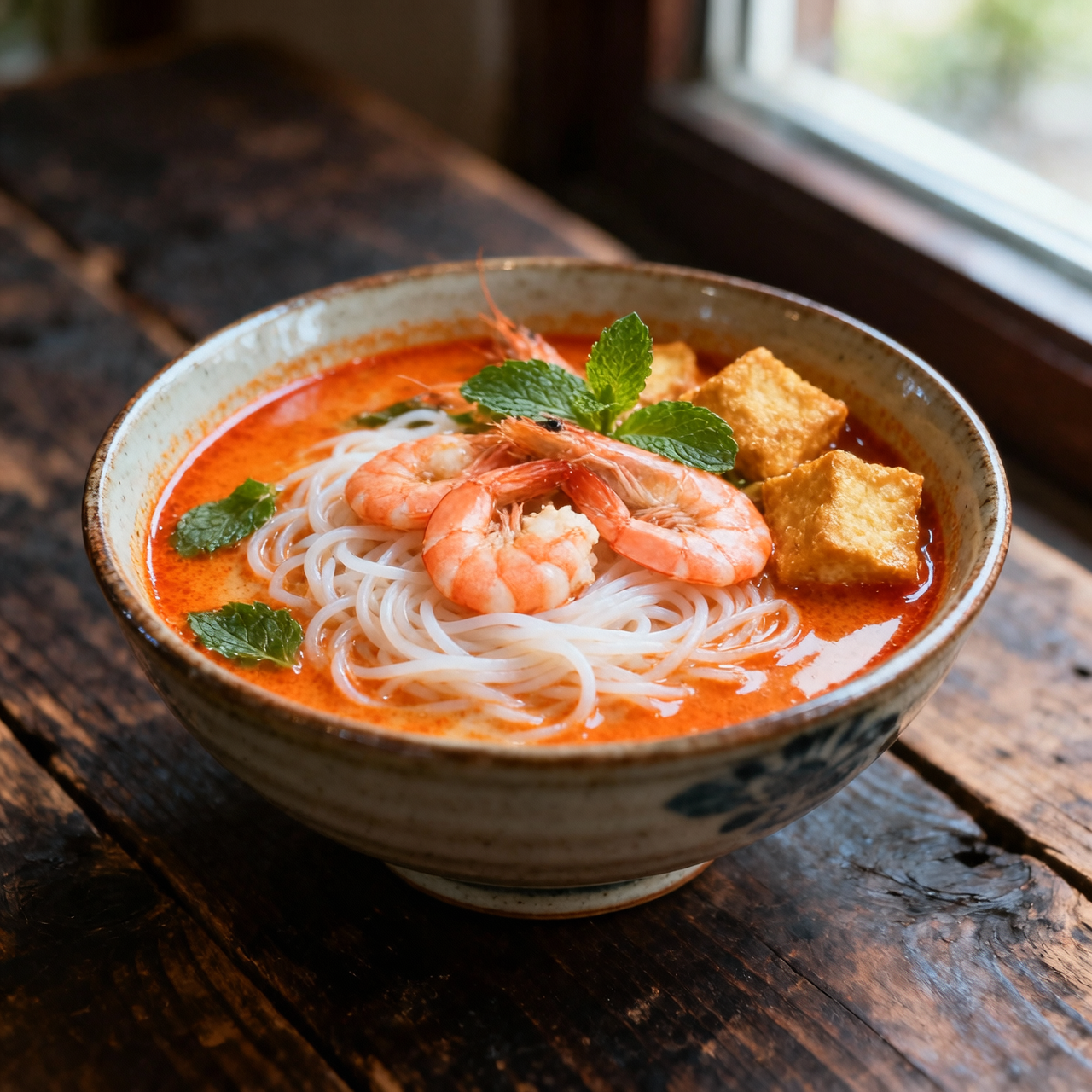
Laksa Lemak
When I first tasted Laksa Lemak in a bustling Penang hawker stall, I understood why this dish is considered a cornerstone of Malaysian culinary identity. Unlike its tangier Asam counterpart, Laksa Lemak embraces the comforting richness of coconut milk, creating a velvety broth that coats every strand of thick rice noodle. Its origins trace back to the coastal Malay communities, where fishermen would blend fresh coconut, aromatic lemongrass, and fiery chilies to stretch precious seafood into a nourishing, deeply flavorful meal. To me, this dish matters because it represents the delicate balance of Malaysia’s cultural tapestry—indigenous ingredients meeting centuries of trade and migration, all simmered into a single, harmonious bowl. Yet, so many home cooks stumble when attempting it. The most frequent pitfall is rushing the rempah paste; if you do not patiently grind or blend the shallots, galangal, turmeric, and shrimp paste until completely smooth, the broth will taste gritty and disjointed. Another common mistake is boiling the coconut milk too aggressively. High heat will cause it to split, ruining that signature silky texture and leaving an oily film on the surface. I always advise gently warming the broth while stirring constantly, allowing the spices to bloom without shocking the fats. Finally, do not skip the garnishes. The crisp bean sprouts, fresh mint, and hard-boiled egg are not mere decorations; they cut through the richness and provide the necessary textural contrast that elevates the entire experience. When executed with patience and respect for tradition, Laksa Lemak becomes more than a meal—it becomes a memory.
Nutrition
| Per serving | Calories | Protein | Carbs | Fat | Sat fat | Fibre | Sugar | Sodium |
|---|---|---|---|---|---|---|---|---|
| beginner | 740kcal | 28g | 51g | 43g | 21g | 4g | 6g | 900mg |
| intermediate | 740kcal | 28g | 51g | 43g | 21g | 4g | 6g | 900mg |
| expert | 740kcal | 28g | 51g | 43g | 21g | 4g | 6g | 900mg |
Per serving · Ava-estimated — a guide, not a clinical figure.
- 200 grice noodle— dried, flat
- 200 gprawn— shell-on, deveined
- 150 gchicken thigh— boneless, skinless
- 400 mlcoconut milk— full-fat, unsweetened
- 500 mlchicken stock— low-sodium
- 15 gdried chili— seeds removed for mild heat
- 2 piecelemongrass stalk— white part only
- 30 ggalangal— fresh, peeled
- 20 gfresh turmeric— or 1 tsp ground
- 50 gshallot— Asian red variety preferred
- 20 ggarlic clove— peeled
- 10 gshrimp paste— belacan, toasted
- 30 gcandlenut— substitute macadamia if unavailable
- 100 gtofu puff— halved
- 100 gbean sprout— tails removed
- 50 gfish cake— sliced thinly
- 1 piecelime— quartered
- 10 gmint leaf— fresh, rinsed
- 30 mlcooking oil— neutral high-heat
- 5 gsalt— fine sea salt
- 10 gsugar— palm or white
This version prioritizes accessibility without sacrificing the core flavor profile of a true Laksa Lemak. By utilizing a high-quality jarred laksa paste, you bypass the labor-intensive process of grinding fresh spices, making this approach ideal for weeknight dinners or first-time cooks. The primary focus here is technique management: keeping the heat moderate to prevent the coconut milk from splitting, and timing the protein additions so they remain tender rather than tough. Watch your simmer closely, as coconut-based broths can boil over rapidly. You will rely on a single pot to build the base, streamlining cleanup while still achieving a deeply aromatic result. The key to success at this level is trusting your palate for the final seasoning. Jarred pastes vary wildly in salt and spice concentration, so taste the broth before adding any extra salt or sugar. Keep the garnishes simple and fresh to contrast the rich, shortcut-friendly base. Follow the assembly order strictly to ensure the noodles absorb just the right amount of hot broth without turning soggy. This pathway guarantees a comforting, restaurant-style bowl with minimal friction, proving that shortcuts can still deliver authentic warmth when executed with care.
Equipment
- Heavy-bottomed pan— non-stick is fine here
- Colander— for draining noodles and sprouts
- Measuring spoons— standard set
Method
- 1
Soak the dried rice noodles in warm water until pliable, then drain thoroughly.
Do not use boiling water, or they will turn mushy.
soaking~ 5 min - 2
Heat the cooking oil in a large heavy-bottomed pan over medium heat.
The pan should be hot before adding ingredients.
heating~ 1 min - 3
Add the jarred laksa paste to the pan and stir constantly until fragrant.
This step replaces grinding and toasting the raw spices.
blooming~ 2 min - 4
Pour in the chicken stock and coconut milk, then bring to a gentle simmer.
Stir continuously to prevent the coconut milk from splitting.
simmering~ 5 minTricky bit - 5
Add the prawns and chicken thighs to the simmering broth until fully cooked.
Prawns should curl and turn opaque.
poaching~ 8 min - 6
Divide the noodles, toppings, and hot broth into bowls, then garnish with fresh mint and lime.
Serve immediately while piping hot.
plating~ 3 min