
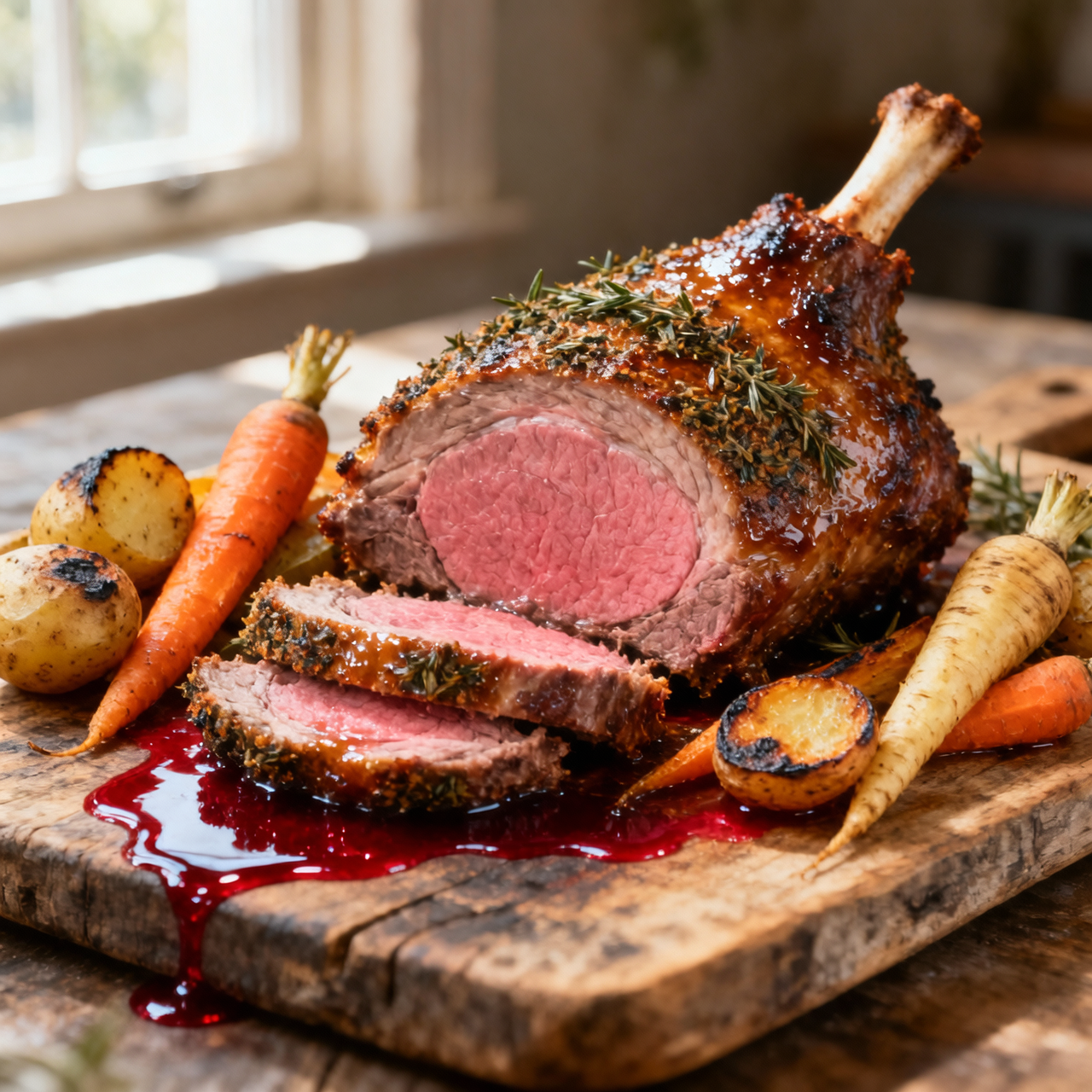
Lamb Roast
When I first learned to cook a proper lamb roast, it wasn’t from a cookbook but from my grandmother’s weathered kitchen in regional Victoria, where Sunday afternoons always smelled of rosemary, rendered fat, and slow-cooked meat. The tradition itself traces back to early British settlers who adapted their Sunday roast customs to the hardy, grass-fed sheep thriving in the Antipodean climate. Over generations, it evolved into something distinctly ours—a centerpiece that anchors family tables, celebrates seasonal harvests, and quietly honors the pastoral backbone of Australian and New Zealand life. Getting it right matters because a well-executed roast is more than just dinner; it’s an exercise in patience and respect for the ingredient. Yet, so many home cooks stumble at the same hurdles. The most common mistake is treating the oven like a race track, cranking the heat and hoping for the best, which inevitably yields a dry, leathery result. Another frequent misstep is neglecting to score the fat cap or skipping the crucial resting phase, both of which ruin the texture and moisture retention. I’ve also seen countless roasts ruined by timid seasoning or an overcrowded baking dish that steams instead of roasts. The secret isn’t complicated: start with quality cuts, season generously, roast low and slow until the internal temperature hits your target, and then let it rest under a loose tent of foil. That quiet ten minutes makes all the difference between a forgettable meal and a memory you’ll chase for years.
Nutrition
| Per serving | Calories | Protein | Carbs | Fat | Sat fat | Fibre | Sugar | Sodium |
|---|---|---|---|---|---|---|---|---|
| beginner | 1170kcal | 95g | 6g | 81g | 28g | 2g | 1g | 1880mg |
| intermediate | 1170kcal | 95g | 6g | 81g | 28g | 2g | 1g | 1880mg |
| expert | 1170kcal | 95g | 6g | 81g | 28g | 2g | 1g | 1880mg |
Per serving · Ava-estimated — a guide, not a clinical figure.
- 1500 glamb leg roast— boneless, tied securely
- 6 clovesgarlic— fresh, unpeeled
- 15 gfresh rosemary— leaves stripped from stems
- 10 gfresh thyme— leaves stripped from stems
- 60 mlextra virgin olive oil— high smoke point preferred
- 15 gsea salt— coarse grind
- 5 gblack peppercorns— whole
- 30 gdijon mustard— smooth or wholegrain
- 120 mldry red wine— full-bodied varietal
- 250 mllamb stock— unsalted preferred
- 30 gunsalted butter— cold, cubed
This version prioritizes confidence and consistency, relying on streamlined prep and forgiving techniques. You will use convenient shortcuts like pre-minced garlic and pre-ground pepper to eliminate tedious chopping. The cooking method follows a straightforward high-then-low oven schedule, which naturally prevents drying while still building a pleasant crust. Your primary focus should be monitoring the internal temperature with a digital probe rather than guessing by touch. Watch the oven closely as it shifts, and avoid opening the door unnecessarily, which causes dangerous heat drops. Once the meat hits your target temperature, remove it immediately and tent it with foil. This resting phase is absolutely essential, as it allows the fibers to relax and retain their natural juices. The pan drippings are quickly transformed into a simple gravy using ready-made stock and a spoonful of mustard. Do not worry if the center appears deeply pink at first glance; lamb shines when cooked medium-rare to medium, and resting will firm it up beautifully. Keep your counter organized, follow the timer, and let these reliable steps deliver a comforting, crowd-pleasing centerpiece.
Equipment
- digital probe thermometer— essential for accuracy
- rimmed baking sheet— parchment-lined for easy cleanup
- small mixing bowl— glass or ceramic
Method
- 1
Preheat oven to 220°C and line a baking tray with parchment paper.
Set rack to middle position.
preheating~ 10 min - 2
Combine garlic, rosemary, thyme, mustard, and oil in a small bowl until evenly mixed.
Use a fork for quick blending.
emulsifying~ 2 min - 3
Pat the lamb completely dry with paper towels and rub the herb mixture over the entire surface.
Dry meat browns faster.
seasoning~ 3 min - 4
Roast the lamb for 30 minutes at 220°C, then reduce heat to 170°C and cook until internal temperature reaches 60°C.
Insert thermometer into thickest part, avoiding fat.
roasting~ 75 minTricky bit - 5
Remove the roast, tent loosely with foil, and let it rest on a cutting board.
Resting is mandatory for juiciness.
resting~ 10 min - 6
Whisk the pan juices with stock and mustard until slightly thickened.
Keep heat low to prevent splitting.
reducing~ 5 min