
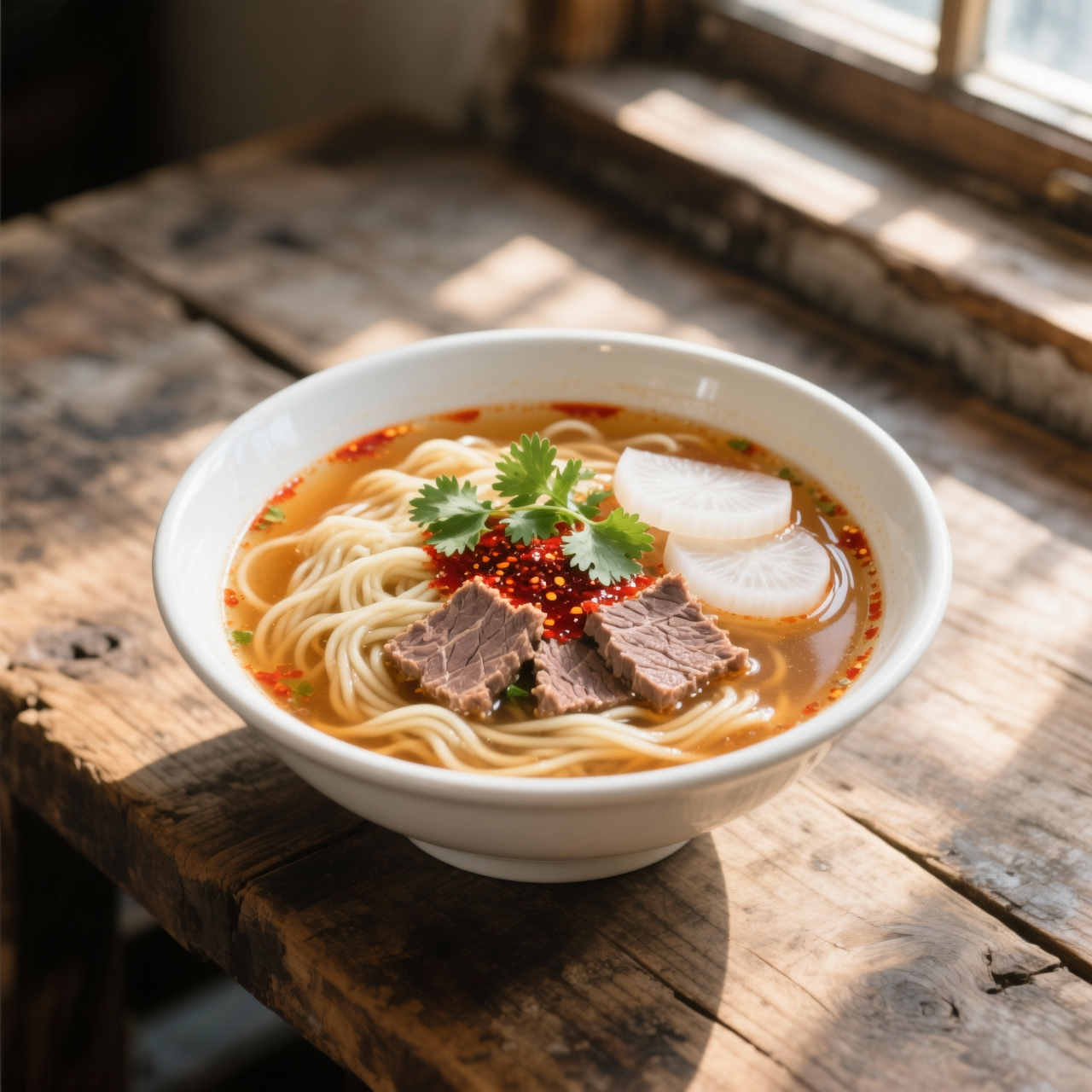
Lanzhou Beef Noodle Soup
I've spent years chasing the perfect bowl of Lanzhou beef noodle soup, a dish that feels less like a recipe and more like a quiet conversation with history. Born in the arid highlands of Gansu province along the ancient Silk Road, this soup was originally crafted by Hui Muslim cooks who understood how to coax profound depth from humble ingredients. What makes it so vital isn't just its comforting warmth, but the meticulous balance it demands: clear broth, tender beef, hand-pulled noodles, chili oil, cilantro, and radish slices, each playing a distinct role in a harmonious whole. I've watched countless home cooks rush the process, mistaking speed for efficiency, only to end up with a cloudy stock or rubbery noodles. The broth must simmer gently for hours, never boiling aggressively, or it turns murky and loses that signature crystalline clarity. Many skip the alkaline treatment for the dough, forgetting that it is what gives the noodles their springy resilience and subtle yellow hue. I've learned that patience isn't optional here; it is the invisible thread holding the dish together. When you finally lift a spoonful, the aroma should carry notes of star anise, toasted cumin, and slow-cooked marrow, while the noodles slip effortlessly between chopsticks. This soup matters because it honors a legacy of craftsmanship passed down through generations of noodle masters. It reminds us that true nourishment requires respect for time, technique, and tradition. Every bowl I serve is my small tribute to that enduring artistry.
Nutrition
| Per serving | Calories | Protein | Carbs | Fat | Sat fat | Fibre | Sugar | Sodium |
|---|---|---|---|---|---|---|---|---|
| beginner | 820kcal | 38g | 76g | 38g | 10g | 5g | 3g | 1600mg |
| intermediate | 820kcal | 38g | 76g | 38g | 10g | 5g | 3g | 1600mg |
| expert | 820kcal | 38g | 76g | 38g | 10g | 5g | 3g | 1600mg |
Per serving · Ava-estimated — a guide, not a clinical figure.
- 1000 gbeef bone— knuckle or marrow, cracked
- 500 gbeef brisket— trimmed of excess fat
- 400 gdaikon radish— peeled and cut into thick half-moons
- 400 gwheat noodle— fresh, medium thickness
- 50 gginger root— unpeeled, lightly smashed
- 100 gscallion— white parts separated from green tops
- 3 wholestar anise— intact pods
- 10 gcinnamon stick— broken into pieces
- 5 gSichuan peppercorn— toasted and lightly crushed
- 3 gfennel seed— whole seeds
- 5 gdried tangerine peel— soaked until pliable
- 30 gdried chili flake— preferably Chinese facing heaven chilies
- 30 mlsoy sauce— regular or light variety
- 15 gsalt— fine sea salt
- 50 mlShaoxing wine— for deglazing and aromatics
- 20 gcilantro— roughly chopped
- 15 ggarlic chive— thinly sliced
- 100 mlvegetable oil— neutral high-smoke point oil
This pathway prioritizes confidence and speed without sacrificing the foundational flavor profile. Instead of toasting and grinding individual spices, you will use a pre-mixed five-spice paste and a ready-made chili crisp to build the aromatic base, saving significant prep time while maintaining the essential sweet-heat balance. The beef broth is simplified by simmering store-bought bones with a single aromatic bundle rather than clarifying a multi-day stock. Watch closely for the boiling point when adding the wheat noodles; overcooking will quickly turn them mushy and ruin the textural contrast against the rich broth. Keep your heat at a steady medium when blooming the jarred chili paste in oil, as high temperatures will scorch the sugars and introduce a bitter aftertaste that masks the delicate beef notes. Taste the broth aggressively before serving, adjusting salt in small increments to ensure the spices remain supportive rather than dominant. The goal here is to understand the architecture of the dish through streamlined execution. Once you master the timing and seasoning balance at this level, you will have a reliable framework to eventually transition into the more hands-on techniques required for the intermediate and expert versions.
Equipment
- Heavy-bottomed pan— non-stick is fine here
- Large stockpot— with tight-fitting lid
- Fine mesh strainer— for skimming broth
Method
- 1
Simmer the beef bones and water in a large pot over medium heat for forty-five minutes.
Skim foam as it rises.
simmering~ 45 min - 2
Heat the vegetable oil in a skillet and gently warm the pre-mixed spice paste.
Low heat prevents burning.
blooming~ 2 minTricky bit - 3
Add the beef brisket, soy sauce, and salt to the broth and cook until tender.
Test with a fork for easy shredding.
braising~ 30 min - 4
Blanch the wheat noodles in vigorously boiling salted water until just tender.
Stir immediately to prevent sticking.
parboiling~ 3 minTricky bit - 5
Assemble the bowls by layering noodles, sliced beef, daikon, and broth, then garnish with herbs and chili crisp.
Pour broth last to preserve toppings.
plating~ 2 min