
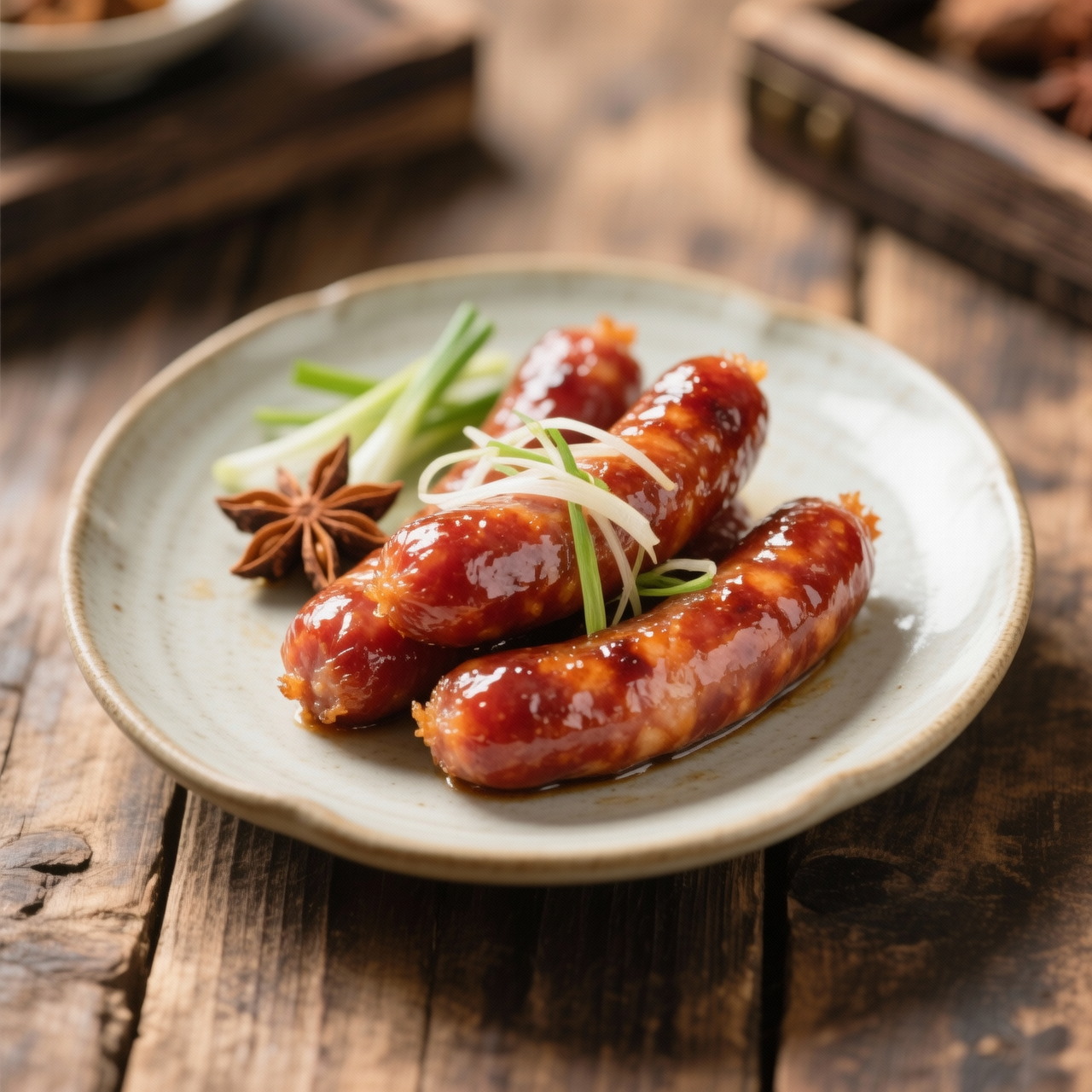
Lap Cheung (Chinese Sausage)
There is something quietly revolutionary about making your own lap cheong in a modern kitchen, a slow cure that bridges centuries of Cantonese preservation wisdom with the simple reality of a home pantry. Traditionally hung in cool, breezy courtyards across Guangdong and Guangxi, these sweet-savory pork links were born from necessity, transforming humble cuts into deeply flavored staples that anchor everything from claypot rice to quick stir-fries. When I first tried making them, I was struck by how the process itself becomes a meditation—grinding meat, balancing rock sugar with Shaoxing wine and soy, stuffing, and waiting for the alchemy of time and air. The packaged versions you find in supermarkets often cost upwards of eight dollars for a flimsy pack of five, yet they rely heavily on sodium nitrites, artificial casings, and cloying corn syrup to mimic what patience and proper fermentation naturally achieve. That shortcut sacrifices texture and depth, leaving you with a waxy, one-note bite that never truly crisps or blooms in the pan. The most common pitfall I see is rushing the drying stage or neglecting the fat-to-lean ratio; aiming for seventy percent lean pork to thirty percent back fat is non-negotiable if you want that signature melt-in-the-mouth snap. Too lean, and the sausage turns into brittle jerky. Too much moisture, and it spoils before it cures. By grinding your own meat, using natural hog casings, and letting the links rest in a controlled, cool environment for ten to fourteen days, you reclaim the process entirely. You control the salt, the sweetness, and the smoke of time. What emerges is a profoundly superior ingredient that transforms from a mere side into the beating heart of your cooking.
Nutrition
| Per serving | Calories | Protein | Carbs | Fat | Sat fat | Fibre | Sugar | Sodium |
|---|---|---|---|---|---|---|---|---|
| beginner | 430kcal | 24g | 9g | 33g | 12g | 0g | 8g | 710mg |
| intermediate | 415kcal | 26g | 21g | 27g | 10g | 0g | 16g | 880mg |
| expert | 385kcal | 18g | 12g | 32g | 11g | 0g | 10g | 950mg |
Per serving · Ava-estimated — a guide, not a clinical figure.
- 600 gpork shoulder— Trimmed of silverskin and cut into 1-inch cubes
- 400 gpork fatback— Cut into 1/4-inch cubes
- 100 ggranulated sugar
- 40 mllight soy sauce
- 60 mlrose wine— Shaoxing wine can be substituted
- 3 gcuring salt— Use Prague powder #2 for safe air-drying
- 10 mnatural hog casing— Soaked in warm water and flushed before use
- 10 gkosher salt
- 2 gfive-spice powder
- 1 gground white pepper
This beginner-friendly approach strips away the intimidating fermentation chambers and professional casing machines of traditional lap cheung, focusing instead on a straightforward, hand-stuffed method that guarantees consistent flavor without the guesswork. Store-bought Chinese sausage typically costs eight to ten dollars for a small pack, relying heavily on sodium nitrite, artificial collagen casings, and excessive refined sugar to mask low-quality trim. By making it at home, you control the pork-to-fat ratio, skip the chemical preservatives, and achieve that signature sweet-savory snap using only recognizable pantry staples. Watch your meat temperature closely during mixing; keeping the pork and fat chilled until the exact moment you combine them prevents the emulsion from breaking and ensures a tender, cohesive bite. The drying phase is forgiving here—we use a shorter controlled air-drying window followed by a gentle steam to set the casing, making it completely safe for standard home kitchens without specialized humidity control. Take your time filling the casings to avoid air pockets, and tie tight, even links for uniform drying and cooking.
Equipment
- Large stainless steel bowl— chill in freezer for fifteen minutes before mixing
- Wide-mouth funnel— replaces professional sausage stuffer
- Kitchen twine— for tying links securely
- Wire cooling rack— elevates links for airflow during drying
Method
- 1
Dice the chilled pork shoulder and fatback into uniform half-inch cubes and freeze for twenty minutes until firm but not solid.
Cold meat binds better and stays safe during handling.
temperature control~ 20 min - 2
Combine the chilled meat, soy sauce, sugar, rice wine, five-spice powder, and curing salt in a chilled bowl, then mix vigorously by hand until the mixture becomes sticky and glossy.
The proteins must extract fully to form a natural binder.
protein extraction~ 10 minTricky bit - 3
Thread the rinsed hog casings onto a wide-mouth funnel, tie a secure knot at the far end, and gently push the seasoned meat into the casing using steady, even pressure.
Avoid overfilling; casings will shrink slightly during drying.
stuffing~ 15 minTricky bit - 4
Twist the filled casing at regular intervals and tie tightly with kitchen twine to create individual links, then prick any visible air bubbles with a sterilized needle.
Popping bubbles prevents casing rupture during the drying phase.
linking~ 10 min - 5
Hang the sausages on a wire rack in a cool, dry spot away from direct sunlight for twenty-four hours, then steam them for fifteen minutes before pan-searing or grilling to finish.
The steam sets the structure and ensures food safety before final cooking.
curing~ 1440 min
Cooking from frozen
Thaw overnight in the fridge, then slice and pan-fry or steam to restore texture.
Storage times are a guide — always use your judgement and store food safely.