
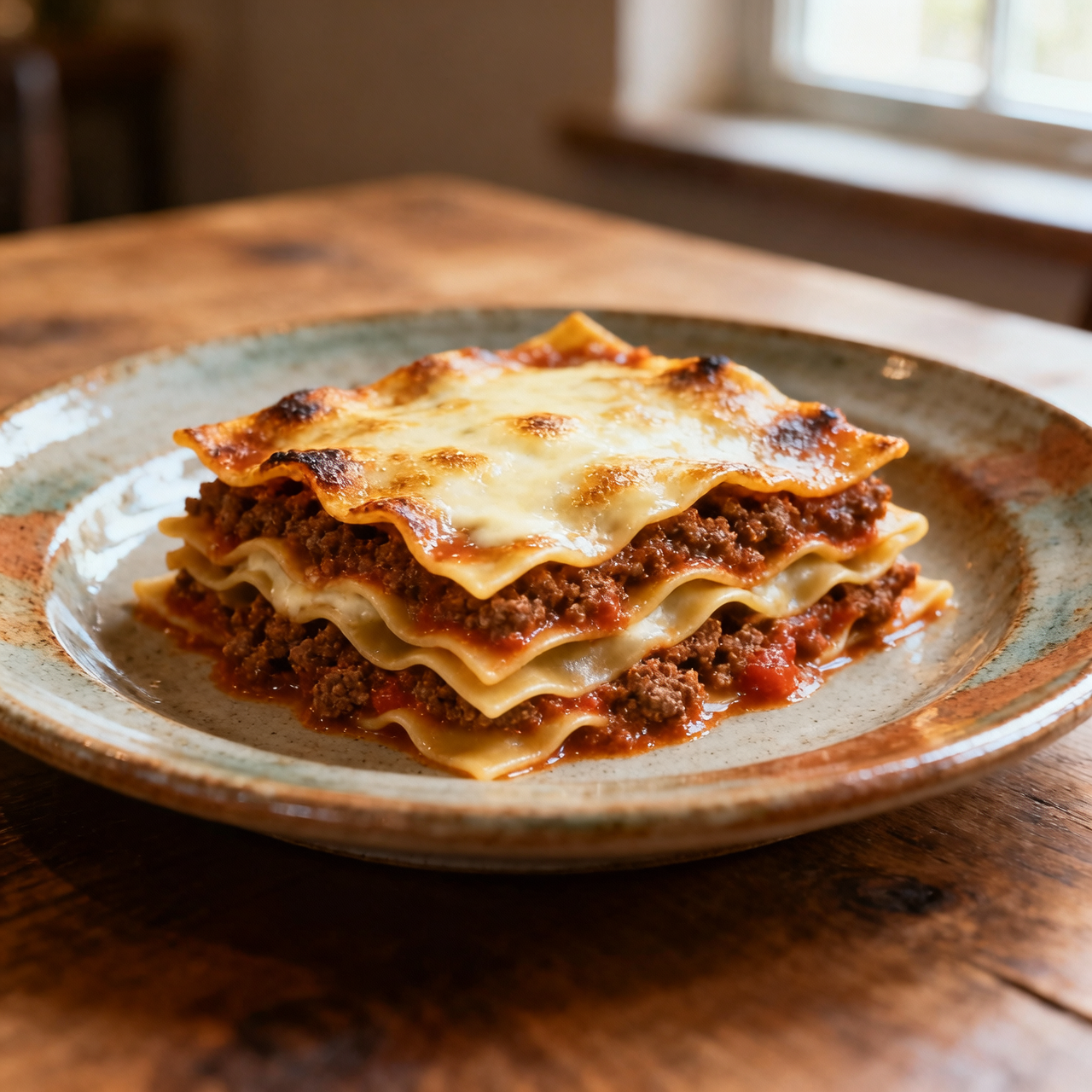
Lasagne alla Bolognese
Lasagne alla Bolognese is not merely a dish to me; it is a slow, deliberate conversation between Emilia-Romagna’s rolling hills and the patience required to honor them. I first learned its true rhythm in a sunlit kitchen outside Bologna, where the ragù was never rushed and the béchamel never an afterthought. At its heart, this lasagna belongs to a region that treats food as heritage, where every layer tells a story of agricultural abundance and generational care. What makes it matter today is precisely that refusal to compromise—each component demands respect, from the long-simmered meat sauce enriched with soffritto and a whisper of milk, to the delicate pasta sheets that must be rolled thin enough to surrender to the sauce. Yet, I see it misunderstood time and again. The most common pitfall is treating it as a casserole rather than a layered architecture. Home cooks drown it in ricotta, skip the béchamel entirely, or rush the ragù into a single hour of simmering, which strips away its depth. Others overbake it until the edges harden into a crust, forgetting that the magic happens when the layers fuse into something tender, almost molten. I always remind myself that this dish is about balance, not abundance. It asks you to listen to the pan, to trust the slow reduction, and to let the pasta do the quiet work of absorbing flavor. When you honor those rhythms, you are not just cooking dinner. You are preserving a centuries-old cadence, one careful layer at a time.
Nutrition
| Per serving | Calories | Protein | Carbs | Fat | Sat fat | Fibre | Sugar | Sodium |
|---|---|---|---|---|---|---|---|---|
| beginner | 960kcal | 43g | 68g | 55g | 25g | 5g | 11g | 1420mg |
| intermediate | 960kcal | 43g | 68g | 55g | 25g | 5g | 11g | 1420mg |
| expert | 960kcal | 43g | 68g | 55g | 25g | 5g | 11g | 1420mg |
Per serving · Ava-estimated — a guide, not a clinical figure.
- 250 gground beef— lean cut, 80/20 ratio ideal
- 150 gground pork— fatty shoulder preferred
- 150 gyellow onion— finely minced
- 80 gcarrot— finely minced
- 60 gcelery stalk— finely minced
- 80 gunsalted butter— divided for ragù and béchamel
- 30 mlextra-virgin olive oil— cold-pressed
- 500 mlwhole milk— full fat
- 100 mldry red wine— Sangiovese or Barbera
- 400 mltomato passata— smooth strained tomatoes
- 40 gall-purpose flour— for béchamel roux
- 400 gfresh egg pasta sheets— cut to fit pan
- 100 gParmigiano-Reggiano— aged 24 months, finely grated
- 2 gwhole nutmeg— freshly grated
- 10 gfine sea salt— divided use
- 2 gblack pepper— freshly cracked
This version embraces smart shortcuts to guarantee a successful first bake without sacrificing the dish’s comforting soul. Instead of building a complex roux from scratch, you will use a high-quality jarred tomato passata and simplify the béchamel with a straightforward stovetop whisking method. The focus shifts entirely to proper layering and baking, ensuring the pasta absorbs just enough moisture to become tender while the top develops a golden crust. Watch closely for sauce separation; if your pan runs dry, lower the heat and add a splash of water. Keep your layers thin and even, and resist the urge to overpack the dish with cheese, which can create a heavy, greasy barrier. The goal here is confidence: follow the assembly order, let the oven do its work, and rest the lasagne before slicing. A ten-minute cooling period allows the structure to set, transforming a messy pot into clean, photogenic squares. You will learn the rhythm of layering, the importance of resting, and how to read visual cues for doneness. By the time you pull this from the oven, you will understand why this dish has brought families together for generations.
Equipment
- 9x13-inch baking dish— glass or ceramic preferred
- large nonstick skillet— heavy bottom recommended
- medium saucepan— for béchamel
- wooden spoon— flat edge for scraping
Method
- 1
Preheat your oven to 375°F and lightly grease a 9x13-inch baking dish.
Prevent sticking at the base.
preheating~ 1 min - 2
Heat olive oil in a large skillet over medium heat and sauté diced onion, carrot, and celery until softened.
Vegetables should be translucent, not browned.
sweating~ 8 min - 3
Add ground beef and pork to the skillet, breaking it apart with a spoon until fully browned.
Drain excess fat if pooling occurs.
browning~ 10 minTricky bit - 4
Pour in tomato passata and milk, stirring gently to combine, then season with salt and pepper.
Keep heat low to prevent curdling.
simmering~ 15 minTricky bit - 5
Whisk flour into melted butter in a separate pan, then slowly add remaining milk until thickened.
Add milk gradually to avoid lumps.
emulsifying~ 7 minTricky bit - 6
Spread a thin layer of ragù in the bottom of the prepared dish to create a base.
Covers all corners evenly.
coating~ 1 min - 7
Alternate layers of pasta sheets, ragù, and béchamel, finishing with grated Parmigiano-Reggiano.
Press pasta gently into sauce.
layering~ 5 min - 8
Cover tightly with foil and bake for 30 minutes, then remove foil and bake until edges are golden.
Internal temperature should reach 165°F.
baking~ 20 min - 9
Let the lasagne rest undisturbed on a wire rack for 15 minutes before slicing and serving.
Critical for clean cuts.
resting~ 15 min