
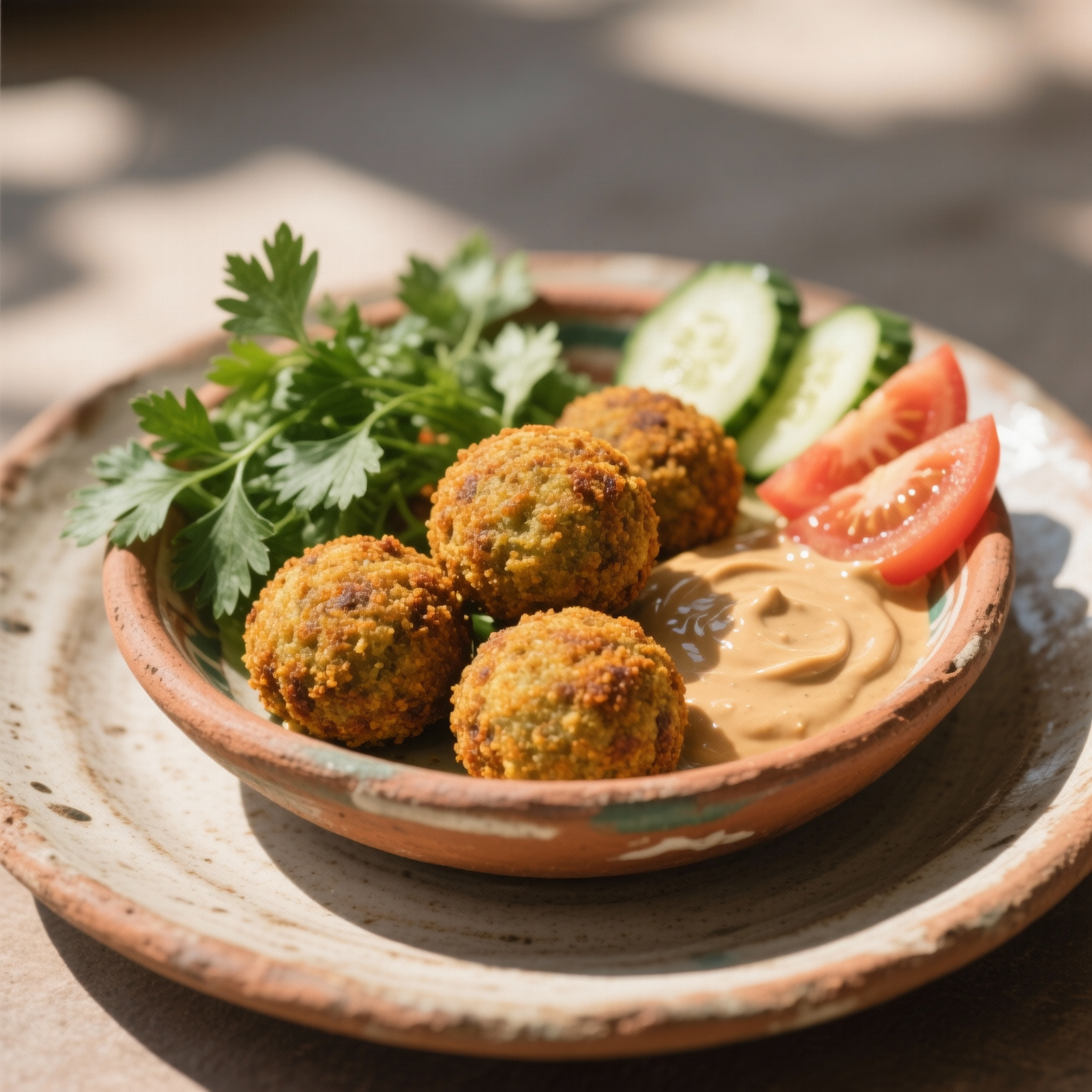
Falafel
I still remember how far the humble falafel drifted from its roots. In Lebanese kitchens, these golden spheres were never the pale, crumbly discs you find boxed in supermarket freezers. Those usually cost around three pounds and are held together by wheat flour, stabilisers, and canned chickpeas. That convenience comes at a steep cost to flavour and texture; they steam rather than fry, taste faintly of cardboard, and dissolve into mush. True falafel begins with dried chickpeas soaked overnight, because the raw starches and natural moisture are exactly what bind the paste without a single egg or shop-bought binder. When you grind them with fresh parsley, garlic, toasted coriander, cumin, and a whisper of baking soda, you get something deeply aromatic. The most common pitfall is rushing the soak or boiling the beans, which turns the mixture into a wet slurry that shatters in the oil. Another trap is overcrowding the pan, dropping the temperature and leaving you with greasy, dense patties instead of crisp, airy bites. I shape these into compact rounds and freeze them raw on a tray before bagging. This batch-hero method lets you drop them straight into shimmering oil, watching them puff into a delicate crust while the interior turns impossibly tender. Making them from scratch isn’t about nostalgia; it’s about reclaiming a street food that deserves to crackle, not crumble.
Nutrition
| Per serving | Calories | Protein | Carbs | Fat | Sat fat | Fibre | Sugar | Sodium |
|---|---|---|---|---|---|---|---|---|
| beginner | 410kcal | 15g | 45g | 19g | 3g | 13g | 4g | 380mg |
| intermediate | 390kcal | 14g | 34g | 21g | 3g | 8g | 3g | 420mg |
| expert | 390kcal | 15g | 42g | 18g | 2g | 10g | 5g | 450mg |
Per serving · Ava-estimated — a guide, not a clinical figure.
- 200 gdried chickpea— soaked overnight in cold water and drained thoroughly
- 50 gfresh parsley— leaves and tender stems only
- 30 gfresh coriander— leaves and tender stems only
- 100 gyellow onion— peeled and quartered
- 15 ggarlic clove— peeled
- 5 gbaking powder— ensures light interior texture
- 10 gground cumin
- 8 gground coriander
- 8 gfine sea salt— adjust to taste
- 3 gblack pepper— freshly ground
- 1000 mlvegetable oil— neutral oil with high smoke point for deep frying
This beginner-friendly approach skips traditional stone-grinding and complex spice toasting while preserving the authentic, herb-packed core of Lebanese falafel. Instead of canned chickpeas, which turn to mush when fried, you will use dried chickpeas soaked overnight—a single non-negotiable step that guarantees structural integrity. A standard food processor quickly pulses the soaked beans with fresh parsley, cilantro, onion, garlic, and basic spices into a coarse, workable paste. Chilling the mixture is crucial; it firms the natural starches, making shaping foolproof and preventing your patties from disintegrating in hot oil. Unlike store-bought frozen falafel, which often costs upwards of eight dollars for a small pack and relies on potato fillers, stabilizers, and oxidized frying oils, this version delivers a vibrant, crisp exterior and a tender, deeply aromatic interior for a fraction of the price. Watch your oil temperature carefully and do not skip the fridge rest before shaping. Once formed, freeze the raw patties flat on a tray, then bag them for effortless batch cooking straight from the freezer.
Equipment
- Food processor— standard blade attachment works best
- Heavy-bottomed pot— maintains steady frying temperature
- Baking sheet— lined with parchment for freezing
Method
- 1
Drain the soaked chickpeas thoroughly and transfer them to a food processor with fresh parsley, cilantro, diced onion, garlic, cumin, coriander, baking soda, and salt.
Pulse until coarse and sandy, never a smooth purée.
processing~ 2 min - 2
Transfer the mixture to a mixing bowl, cover tightly, and refrigerate until completely chilled.
Firms the natural starches to prevent crumbling during frying.
chilling~ 30 minTricky bit - 3
Scoop roughly three tablespoons of the mixture per portion and roll tightly into smooth balls or flatten into thick patties.
Press firmly to eliminate air pockets that cause splitting in hot oil.
shaping~ 5 min - 4
Place the shaped falafel in a single layer on the prepared baking sheet and freeze until completely solid.
Once solid, transfer to a freezer bag for long-term batch storage.
flash-freezing~ 2 min - 5
Heat three inches of neutral oil in the heavy pot to 350°F and carefully lower the frozen falafel into the oil.
Do not overcrowd the pot; adjust heat to maintain steady temperature.
deep-frying~ 6 minTricky bit - 6
Fry until deeply golden brown and crisp on all sides, then transfer to a wire rack or paper towels to drain.
Season lightly with salt immediately after draining if desired.
draining~ 3 min
Cooking from frozen
Reheat in a 200°C oven until crisp, or drop straight into hot oil from frozen for the best texture.
Storage times are a guide — always use your judgement and store food safely.