
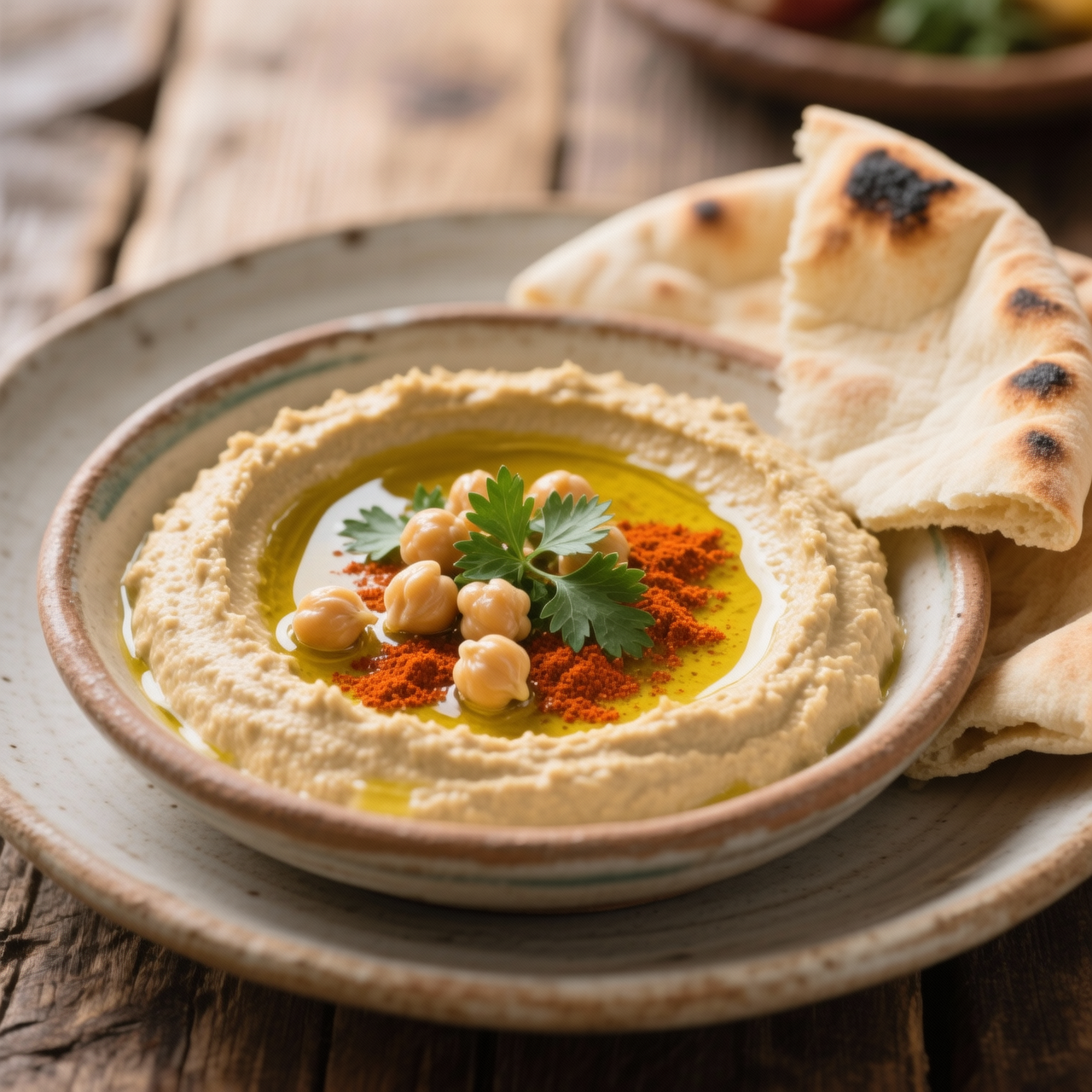
Hummus
I’ve spent years chasing the perfect hummus, not because store-bought tubs fail me, but because they strip away the soul of a dish that has anchored Levantine tables for centuries. While its exact lineage is fiercely debated across the eastern Mediterranean, the Lebanese tradition holds a particular reverence for texture and balance that I find impossible to ignore. At its core, this is a humble alchemy: soaked chickpeas, tahini, garlic, lemon, and olive oil, whipped until impossibly smooth. What matters most isn’t just the ingredients, but the patience required to coax them into harmony. I’ve watched countless cooks rush the process, skipping the crucial step of simmering the chickpeas until they surrender their skins, or worse, blending everything cold and calling it a day. The result is always the same—a grainy, heavy dip that clings to the roof of your mouth instead of melting on warm pita. True Lebanese hummus demands a slow, deliberate rhythm. You must cook the legumes until they practically dissolve, reserve that starchy cooking water, and fold the tahini in gradually while the processor hums. The pitfalls are easy to fall into: too much garlic that overpowers, lemon that breaks the paste, or tahini that’s bitter and unbalanced. I treat this recipe as a living practice, adjusting the ratios until it sings, and always finishing with a generous glug of cold-pressed olive oil. It’s a testament to how simplicity, when respected, outshines any shortcut.
Nutrition
| Per serving | Calories | Protein | Carbs | Fat | Sat fat | Fibre | Sugar | Sodium |
|---|---|---|---|---|---|---|---|---|
| beginner | 260kcal | 9g | 22g | 14g | 2g | 7g | 2g | 340mg |
| intermediate | 148kcal | 6g | 17g | 7g | 1g | 5g | 1g | 310mg |
| expert | 190kcal | 6g | 17g | 11g | 2g | 5g | 1g | 360mg |
Per serving · Ava-estimated — a guide, not a clinical figure.
- 400 gChickpea— Canned or home-cooked; drain and rinse thoroughly if using canned
- 120 mlTahini— Well-stirred to reincorporate separated oils before measuring
- 60 mlLemon juice— Freshly squeezed
- 2 cloveGarlic— Peeled
- 45 mlIce water— Added gradually to aerate the emulsion and lighten texture
- 30 mlOlive oil— Extra virgin, divided between blending and garnish
- 5 gSalt— Fine sea salt
- 2 gCumin(optional)— Ground
This beginner-friendly approach skips traditional soaking and boiling by relying on high-quality canned chickpeas and shelf-stable jarred tahini, giving you restaurant-smooth results in under twenty minutes. The key to avoiding a gritty or heavy texture lies in the blending sequence and temperature control. Always rinse your chickpeas thoroughly under cold running water until the suds disappear; this removes excess starch and sodium that can dull the flavor. When combining your ingredients, place the tahini, olive oil, lemon juice, and minced garlic in the processor first. Processing these together for thirty seconds before adding the chickpeas creates a stable emulsion that acts as a creamy foundation. Keep a small pitcher of ice-cold water nearby. As the blades spin, slowly drizzle in two to three tablespoons of water to shock the mixture into a light, whipped consistency without making it watery. Watch your processor’s motor temperature and pause if it feels warm. Taste at the end and adjust with a pinch of salt or extra lemon, remembering that chilling will mute the flavors slightly. Serve immediately or store in an airtight container for quick snacks all week.
Equipment
- Food processor— high-speed blender works but may require frequent scraping
- Rubber spatula— flexible silicone prevents scratching the bowl
- Fine-mesh sieve(optional)— speeds up chickpea rinsing and drying
Method
- 1
Rinse and drain one standard can of chickpeas under cold running water until all foam disappears.
Pat them dry with a clean towel to remove excess moisture.
rinsing~ 2 min - 2
Combine jarred tahini, olive oil, fresh lemon juice, and minced garlic in the food processor bowl.
Measure precisely to balance fat and acidity from the start.
emulsification~ 2 min - 3
Add the rinsed chickpeas, ground cumin, and kosher salt to the mixture.
Scatter evenly across the blade path for consistent blending.
loading~ 1 min - 4
Process on medium speed while slowly drizzling in two to three tablespoons of ice water until completely smooth.
Stop if the motor heats up; scraping down the sides ensures uniform texture.
whipping~ 3 minTricky bit - 5
Taste the finished dip and adjust seasoning with extra salt or a splash of lemon before transferring to a bowl.
Let it rest at room temperature for ten minutes so flavors fully meld.
balancing~ 1 min
Cooking from frozen
Thaw completely in the refrigerator, then vigorously stir or briefly blend with a splash of water or olive oil to restore the silky emulsion.
Storage times are a guide — always use your judgement and store food safely.