
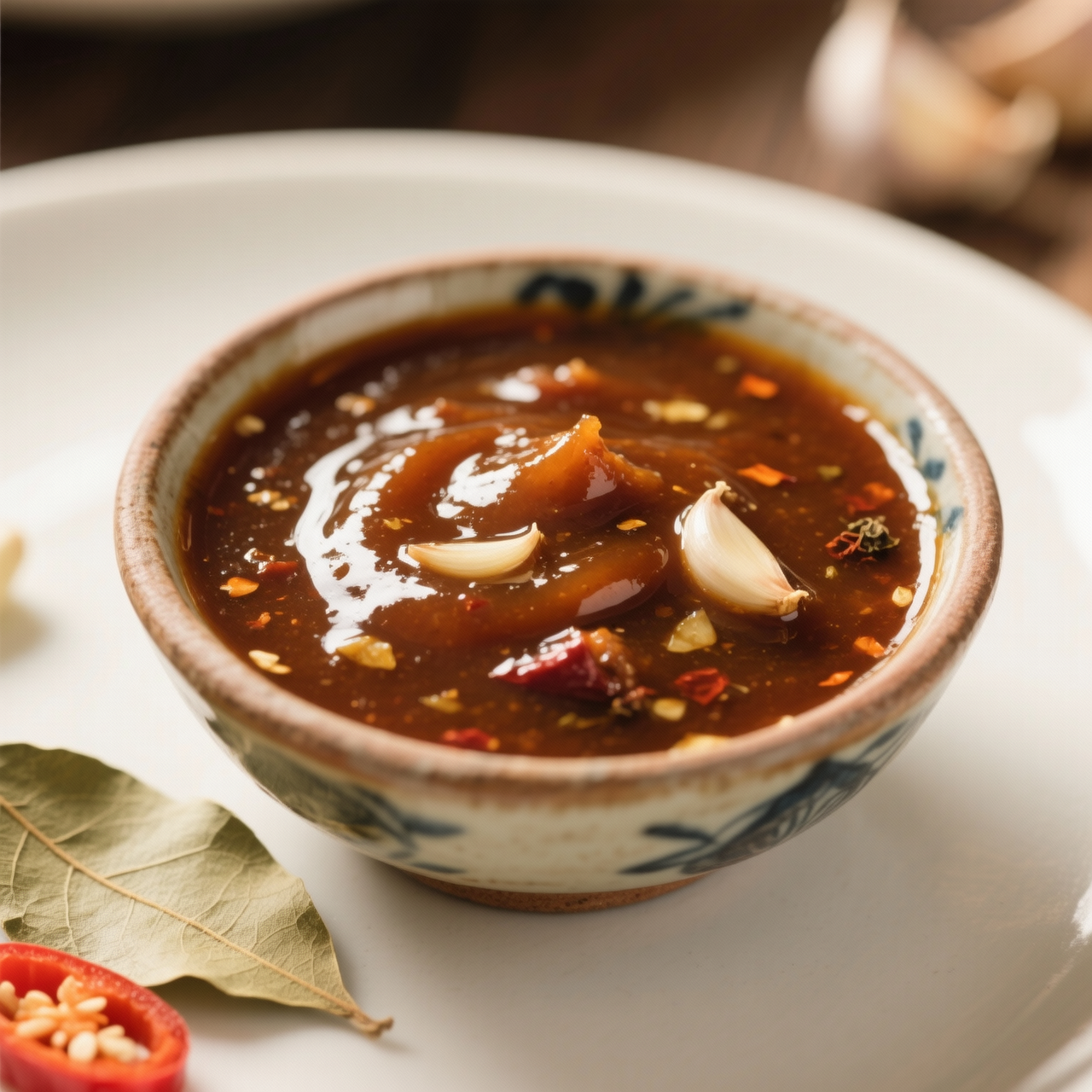
Lechon Sauce
Lechon sauce, or sarsa ng lechon, is the unsung architect of every Filipino fiesta table. Born from the practical need to transform humble pantry staples into a luxurious accompaniment for rich, slow-roasted meats, it has evolved into a cultural touchstone. In my kitchen, I’ve come to see this sweet-savory emulsion not merely as a condiment, but as the vital bridge between heavy, crackling fat and a palate craving brightness and depth. The foundation rests on simmered liver, brown sugar, vinegar, and soy sauce, a combination that demands precise calibration. Getting it right means honoring that earthy core without letting it dominate. The most frequent pitfall I encounter is aggressive boiling, which turns the liver bitter and leaves a gritty, separated texture behind. Instead, the liver must be gently poached and blended into a silken purée before it ever meets the simmering pot. Another common misstep is underestimating the resting phase. Much like a complex reduction, lechon sauce requires quiet time for the starches to fully hydrate and the sharp acidity to mellow into a rounded, glossy glaze. Tasting it too early yields a disjointed, overly sharp profile; patience allows the flavors to knit together into a cohesive, deeply savory harmony. I always approach it as a living recipe, one that carries generations of communal gatherings in its simmer. It doesn’t ask for flawless technique, only mindful balance. When you respect its sweet-tangy equilibrium, it transforms simple roasted dishes into something profoundly comforting and unmistakably rooted in Filipino tradition.
Nutrition
| Per serving | Calories | Protein | Carbs | Fat | Sat fat | Fibre | Sugar | Sodium |
|---|---|---|---|---|---|---|---|---|
| beginner | 115kcal | 4g | 16g | 5g | 2g | 1g | 12g | 410mg |
| intermediate | 165kcal | 7g | 20g | 8g | 2g | 1g | 14g | 480mg |
| expert | 165kcal | 7g | 19g | 6g | 2g | 1g | 14g | 460mg |
Per serving · Ava-estimated — a guide, not a clinical figure.
- 200 gchicken liver— cleaned and diced
- 1 mediumonion— yellow or white, roughly chopped
- 4 clovesgarlic— peeled and minced
- 15 mlcooking oil— for sautéing
- 60 mlwhite vinegar
- 80 gbrown sugar
- 30 mlsoy sauce
- 50 gbreadcrumb— plain or unseasoned
- 250 mlwater— or light broth
- 2 gblack pepper— freshly ground
- 3 gsalt(optional)— to taste
This beginner-friendly approach swaps the traditional raw liver prep for a smooth, jarred liver paste, removing the guesswork and strong odors that often intimidate new cooks. By using a pre-blended base, you can focus entirely on mastering the signature sweet-and-sour balance that defines a great Filipino lechon sauce. The key here is gentle, controlled heat. You will start by sweating your aromatics in a heavy pan until fragrant, then whisk in your paste, soy sauce, and water to create a lump-free foundation. Watch closely as you introduce the brown sugar and vinegar; the goal is a harmonious tang that cuts through rich meats without overwhelming the palate. A slow simmer is non-negotiable—keep the bubbles low and steady to prevent the natural starches from scorching or separating. Stir frequently, tasting every few minutes to adjust sweetness or acidity to your exact preference. Once thickened to a glossy, spoon-coating consistency, a quick pulse with an immersion blender guarantees a silky, restaurant-quality finish. This streamlined method builds confidence, delivering an authentic, crowd-pleasing condiment in under an hour with minimal cleanup and zero culinary stress.
Equipment
- Heavy-bottomed saucepan— ensures even heat distribution to prevent scorching
- Immersion blender— regular countertop blender works too
- Fine-mesh strainer(optional)— catches any stubborn bits for a silky texture
Method
- 1
Sweat finely chopped onion and minced garlic in oil over medium heat until soft and fragrant.
Do not let the garlic brown or it will turn bitter.
sweating~ 3 min - 2
Whisk in the jarred liver paste, soy sauce, and warm water until completely smooth and lump-free.
Break up the paste with a fork before pouring in liquids for easier mixing.
emulsifying~ 2 minTricky bit - 3
Stir in brown sugar and vinegar, then bring the mixture to a very gentle simmer.
Taste after 3 minutes and adjust with a pinch more sugar or vinegar as needed.
balancing~ 4 min - 4
Simmer uncovered, stirring often, until the sauce thickens enough to coat the back of a spoon.
Keep the heat low; boiling rapidly will cause the sauce to split or burn.
reduction~ 15 minTricky bit - 5
Remove from heat and blend until perfectly smooth, then strain through a fine mesh if desired.
Blend in short bursts to avoid splashing hot liquid.
pureeing~ 1 min
Cooking from frozen
Thaw overnight in the refrigerator, then gently reheat while whisking to restore a smooth, glossy consistency.
Storage times are a guide — always use your judgement and store food safely.